

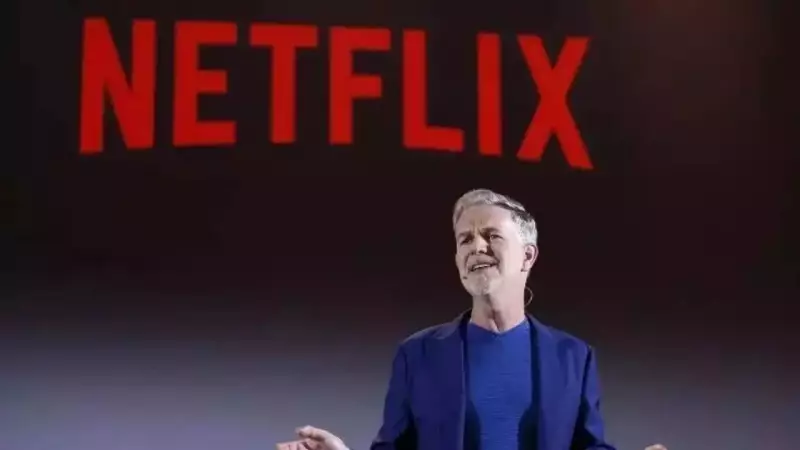
In a move that could redefine the global entertainment landscape, streaming behemoth Netflix is reportedly preparing a monumental $83 billion bid to acquire Warner Bros.. This potential mega-deal, detailed in a Fortune report, would see Netflix take control of iconic franchises like Harry Potter, the DC Universe, and the HBO Max platform. Once again, Netflix co-founder Reed Hastings finds himself at the centre of the industry's biggest story, cementing the company's evolution from a disruptive startup to a Hollywood superpower.
The Unconventional Education of a Disruptor
Reed Hastings' journey to the pinnacle of tech and entertainment reads like a masterclass in non-linear success. For students and young professionals, his life underscores how unconventional choices, early work experiences, and constant self-reinvention can fuel industry-defining innovation. His academic pathway was far from standard. After graduating from Bowdoin College in 1983 with a mathematics degree, he chose to join the Peace Corps over the Marine Corps, teaching maths in Eswatini for two years. This experience, he has often said, built his resilience, adaptability, and skill in working with limited resources—traits that later proved invaluable in Silicon Valley.
Upon returning to the US, Hastings pursued a master's in computer science at Stanford University, gaining the technical depth needed to enter the booming software industry of the early 1990s. This blend of liberal arts, global service, and advanced engineering formed a unique worldview that would later permeate Netflix's culture.

Early Lessons: Building Customer Intuition Door-to-Door
Long before algorithms recommended movies, Hastings learned to read people. His first job after high school was selling Rainbow vacuum cleaners door-to-door, a gap-year role he initially took for a summer but grew to enjoy. His sales pitch involved a practical demonstration: cleaning a carpet once with the customer's vacuum and again with the Rainbow. This hands-on experience taught him to identify pain points, adapt quickly, and understand human behaviour—instincts that became foundational to Netflix's famously user-obsessed approach. It was the first step in a career built on observing people as closely as technological trends.
From Pure Software to a Streaming Revolution
Armed with his Stanford degree, Hastings founded Pure Software in 1991, taking it public within four years. The managerial pressures honed his leadership skills. The idea for Netflix was born from a personal frustration—a $40 late fee for a misplaced Apollo 13 VHS tape. While the anecdote's accuracy has been debated, it symbolises Hastings' knack for spotting everyday friction and building scalable tech solutions. Launching in the late 1990s as a DVD-by-mail service, Netflix pivoted to streaming and altered entertainment forever. Since its 2002 IPO, the company's stock has soared by over 80,000% (adjusted for splits), a trajectory few can match.
Leadership Philosophy: Talent Density and Freedom
Netflix's distinctive culture of "freedom and responsibility" is a direct reflection of Hastings' experiences. He championed the concept of "talent density," believing one exceptional performer can outvalue many average ones. This philosophy shaped Netflix's strategy of paying top-of-market rates to retain star employees. He also popularised policies like unlimited paid time off in corporate America, using his own long vacations to model the need for creative rejuvenation. His 2023 step back from the CEO role to become Chairman, establishing a co-CEO structure with Ted Sarandos and Greg Peters, further embodied his belief in trust and complementary leadership.

Philanthropy and the Next Chapter
With an estimated net worth of $5.6 billion, Hastings has consistently sold Netflix shares to fund philanthropy, particularly in education reform—a cause he passionately champions. Now, as Netflix eyes the historic Warner Bros. acquisition, Hastings adds another chapter to a career defined by curiosity, risk-taking, and defying norms. For aspiring innovators, his path offers powerful lessons: that educational journeys need not be linear, that early unglamorous work can shape core business values, and that a company's culture and values can be as potent a competitive advantage as its technology.





