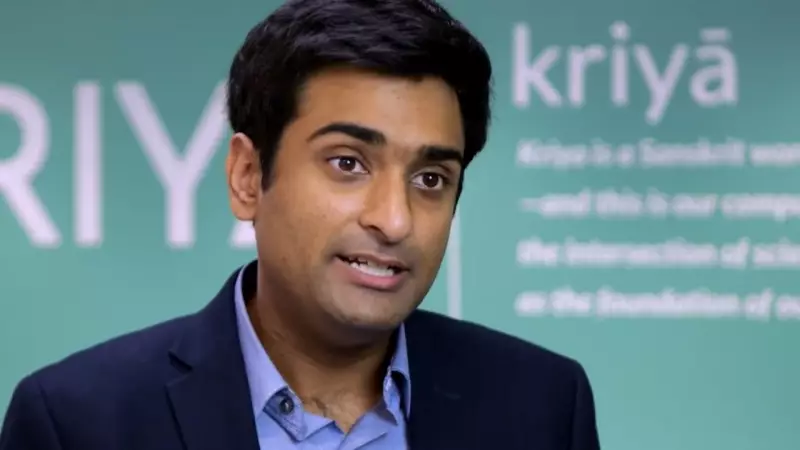
In a remarkable feat for a pre-revenue biotech startup, Kriya Therapeutics has secured a staggering sum of more than $1.2 billion in funding without a single product approved for market use. The gene therapy company, founded in 2019 by Shankar Ramaswamy, has drawn significant investor interest and scrutiny, partly due to its founder's familial connection to former Republican presidential candidate and businessman Vivek Ramaswamy.
The Funding Surge: A Closer Look at the Numbers
According to detailed reports from funding trackers and publications like Labiotech.eu and BioPharma Dive, Kriya's financial journey has been nothing short of meteoric. The company's latest and largest capital infusion came in September 2025, with a $320 million Series D round. This financing was notably oversubscribed and co-led by major investment firms Premji Invest and Patient Square Capital.
This round followed closely on the heels of another massive raise earlier in 2025, where Kriya pulled in $313 million. When combined with its earlier Series A, B, and C funding rounds, the total capital raised comfortably crosses the $1.2 billion threshold. This rapid accumulation of capital has raised eyebrows in the investment and biopharma communities, given that the company's pipeline remains in the clinical trial stage.

What Does Kriya Therapeutics Actually Do?
Kriya Therapeutics operates in the high-stakes field of gene therapy, developing treatments for serious chronic conditions. Its primary focus areas include severe eye diseases, neurological disorders, and metabolic illnesses.
The company's lead candidate, KRIYA-825, is currently in early-stage trials targeting geographic atrophy, a severe form of age-related macular degeneration. Preliminary lab data for this therapy was presented at the ARVO 2025 conference. Beyond this, Kriya's experimental pipeline includes potential treatments for thyroid eye disease, type 1 diabetes, and trigeminal neuralgia.
Kriya has set an ambitious goal of initiating clinical trials for up to five different treatments by the close of 2025. However, it is crucial to note that, as of now, none of its therapies have demonstrated successful results in human patients.
The Shadow of Axovant and Vivek Ramaswamy's Controversial Past
The extraordinary fundraising has inevitably led to comparisons with the past venture of Shankar's brother, Vivek Ramaswamy. Vivek previously founded Axovant Sciences, which became embroiled in a major controversy. As reported by Newsweek in 2023, Axovant was accused of employing "pump-and-dump" tactics after aggressively promoting an Alzheimer's drug candidate that ultimately failed in trials.
Following its IPO, Axovant's stock valuation soared to nearly $3 billion, only to collapse spectacularly when clinical trial results disappointed. The episode led to significant investor losses, while Vivek Ramaswamy was reported to have made millions. The fallout saw him labeled a "conman" and "thief" by critics across the political spectrum.
This history has colored the perception of Kriya's funding success on social media and in financial circles, with many observers voicing concern over a potential repeat pattern. In response to these swirling allegations, Vivek Ramaswamy took to the social media platform X with a pointed message: "(Friendly note to those trying to push defamatory lies: save your records & don’t delete them)."
Despite the skepticism, Kriya Therapeutics has its defenders. Supporters of the company argue that its underlying technology platform and the broader, long-term investor confidence in the promise of gene therapy as a field justify the substantial financial backing. They contend that developing cutting-edge genetic medicines is inherently capital-intensive and requires significant upfront investment long before regulatory approval is secured.
The story of Kriya Therapeutics is still unfolding. Whether it will deliver on the revolutionary medical promises of gene therapy or become another cautionary tale in biotech financing remains one of the most closely watched narratives in the global healthcare investment landscape.