

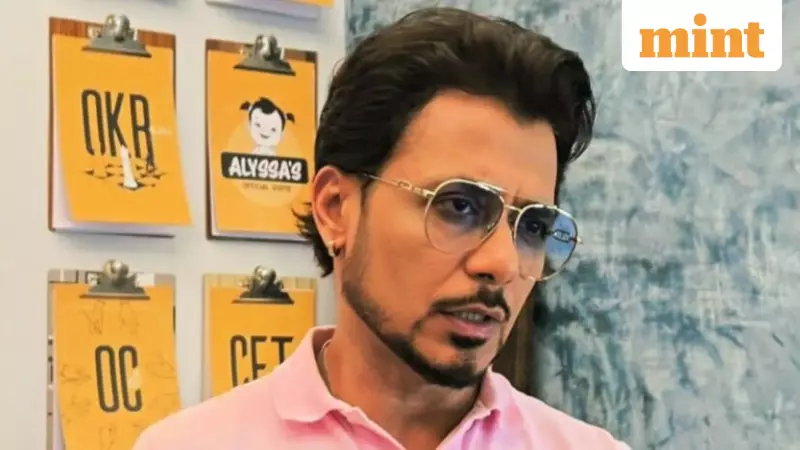
Anupam Mittal, the renowned entrepreneur and popular judge on Shark Tank India, has come forward with a strong defense of founders and chief executive officers who choose to step down from their leadership positions. In a thought-provoking LinkedIn post, Mittal described such moves as a clear sign of maturity and explicitly stated that it should not be viewed as a failure in any sense.
Challenging Outdated Beliefs in Indian Startup Culture
Mittal pointed out that the long-held notion in India that a founder must also remain the CEO indefinitely is an outdated belief that many entrepreneurs have followed for years. He emphasized that this traditional mindset needs to evolve as the startup ecosystem matures. His remarks gained particular relevance as they followed closely after Deepinder Goyal's decision to step down as Managing Director and CEO of Eternal, the parent company of food-delivery giant Zomato and quick-commerce platform Blinkit.
Why Resigning at the Right Time is Crucial for Growth
The Founder and CEO of People Group explained that modern startups are expanding at such a rapid pace that founders often cannot keep up with the managerial demands. Mittal elaborated that systems and strategies that work effectively for a team of 10 employees frequently become inadequate when the organization grows to 100 members. Similarly, approaches that succeed with 100 staff members may completely break down when the company reaches 1,000 employees.

Most founders excel at taking a company from 0 to 1 and from 1 to 10, Mittal noted. However, beyond a certain growth trajectory, organizations require a completely different skill set that professional CEOs can provide.
Global Practices Versus Indian Perceptions
Mittal highlighted that in global markets, it has become standard practice for founders to step aside and allow professional CEOs to take over leadership roles. He described this transition as being actively encouraged because it benefits the company in multiple ways: the organization gains specialized leadership, the founder retains ownership benefits, and shareholders typically see improved outcomes.
In India, we tend to dramatize these transitions as being 'fired', 'failure' or even 'fraud', Mittal asserted. Most of the time, it is none of these negative interpretations. He added that making oneself replaceable should actually be one of the primary objectives of every successful founder.
Historical Precedents of Successful Leadership Transitions
Mittal further noted that this very approach of founders stepping aside at appropriate moments has helped transform companies like Google, Apple and Microsoft into enduring industry leaders that have stood the test of time. He emphasized that, in most cases, such decisions simply reflect the founder's conscious choice to prioritize what is genuinely best for the company's long-term success rather than clinging to personal control.
Deepinder Goyal's Specific Case and Motivations
Earlier this week, Deepinder Goyal stepped down from his leadership position at Eternal to pursue what he described as a new set of ideas that have attracted his attention for quite some time. In his letter to shareholders, Goyal explained that he has recently felt drawn toward innovative concepts involving risks and experiments that can only be pursued outside the corporate structure of Eternal.
His resignation also occurs against the backdrop of intense public debate surrounding gig work and labor conditions in India. In recent weeks, Goyal had been particularly vocal on social media platforms, defending Zomato and Blinkit's gig economy model. This defense came amid significant backlash following calls from delivery worker unions for nationwide strikes on December 25 and December 31, with workers demanding better pay, enhanced social security measures, and safer working conditions.

The convergence of Mittal's philosophical perspective on founder transitions and Goyal's practical example creates a compelling narrative about the evolving nature of leadership in India's rapidly maturing startup ecosystem. As companies scale to new heights, the wisdom of knowing when to lead and when to step aside may become one of the most crucial decisions founders face in their entrepreneurial journeys.





