

Ola Electric Mobility, once a dominant force in India's electric two-wheeler segment, is navigating a severe sales downturn. The company is now strategically leveraging its vast physical retail network to push into the home energy storage market, signaling a critical pivot beyond its core electric vehicle business.
A Steep Decline in Core Markets
A detailed review of government vehicle registration data from the Vahan portal for the period of January to November 2025 reveals a troubling picture for Ola Electric. The company failed to achieve year-on-year growth in any single month since February in four of India's largest electric two-wheeler markets: Maharashtra, Uttar Pradesh, Tamil Nadu, and Karnataka.
The slump is severe and widespread. In the first 25 days of December 2025, sales declined year-on-year in 24 out of 26 states and Union territories analyzed. In some regions, sales have virtually evaporated. The company recorded zero sales in Jammu & Kashmir between September and November 2025, a period during which it had sold 500 units in 2024. In Goa, sales plummeted 96% to just 23 units in September, followed by 22 in October, before hitting zero in November.

Overall, Ola Electric's total sales between January and November 2025 stood at 190,288 units, a sharp 51% drop from the 393,894 units sold in the same period the previous year. For the full calendar year 2025, registrations totaled 197,398 units, compared to 407,701 in 2024.
The Retail Network Dilemma and Strategic Pivot
This sales collapse comes despite a massive expansion of the company's retail footprint. In December 2024, Ola Electric expanded its store network nearly four-fold, from about 800 outlets to nearly 4,000. By April 2025, the count had reached 4,436 stores nationwide, with 3,365 owned by the company itself.
However, this expanded visibility has failed to translate into higher volumes, putting immense pressure on store economics. Industry experts point out that each store likely needs around 20 sales per month to break even, while Ola's outlets are averaging only between two and three. This has created a significant financial strain on the network.
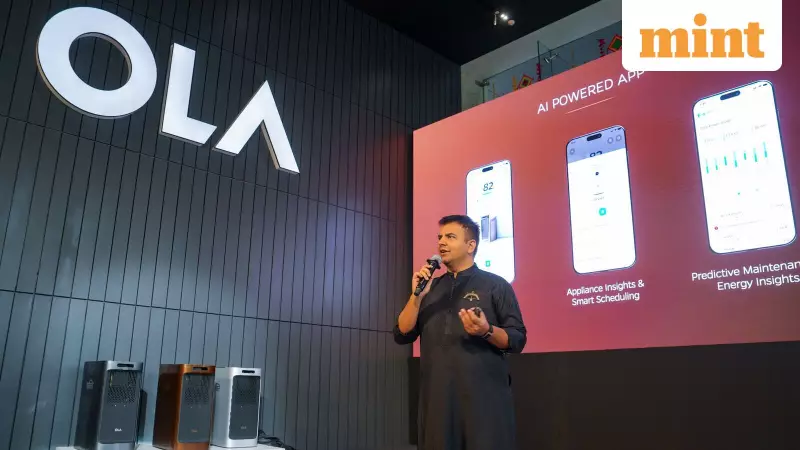
In response, the company has initiated a high-stakes diversification. In October 2025, it launched Ola Shakti, a brand for home energy storage products including lithium-ion cell home inverters priced between ₹50,000 and ₹2 lakh. Chairman and Managing Director Bhavish Aggarwal announced on a November 6 earnings call that these products would be sold through its 2,500-3,000 stores starting mid-January 2026.
The company has ambitious revenue targets for this new vertical, expecting ₹100 crore in the January-March 2026 quarter and ₹1,000 crore in the next financial year. However, analysts remain cautious about the success of automobile dealerships cross-selling home energy products, a move with little precedent.
Market Share Erosion and Investor Sentiment
As Ola Electric struggles, its rivals are capitalizing. Ather Energy has consistently outsold Ola since the July-September 2025 quarter. In a significant blow, even Hero MotoCorp sold more electric scooters than Ola in November 2025, pushing the latter to the fifth position in the market rankings.
Ather's focused growth strategy contrasts sharply with Ola's challenges. While expanding its network from 350 to over 500 stores, Ather's sales grew 58% between January and December 2025 to 198,707 units, surpassing Ola's annual tally.
The weakening fundamentals have severely impacted investor confidence. Ola Electric's shares have fallen more than 58% in 2025, starkly underperforming the Nifty Auto index, which gained 20% during the same period. This reflects deep market concerns about the company's ability to arrest the slide in its primary business while successfully executing a risky new venture.
The coming months will be a crucial test for Ola Electric's dual strategy: reviving its electric scooter fortunes while simultaneously building a new revenue pillar in the competitive home inverter space, all through a retail network grappling with unsustainable economics.






