

Startup Singam: The Tamil Television Revolution Rewriting Entrepreneurial Rules
From palm groves to prime time television, Startup Singam is fundamentally transforming how businesses gain visibility and capital in Tamil Nadu. This groundbreaking Tamil pitch show, broadcast on Star Vijay and streaming on JioHotstar, has emerged as a powerful marketplace where founders can accelerate their ventures through mass media exposure.
The Palm Jaggery Pioneer: Kannan Hari's Journey
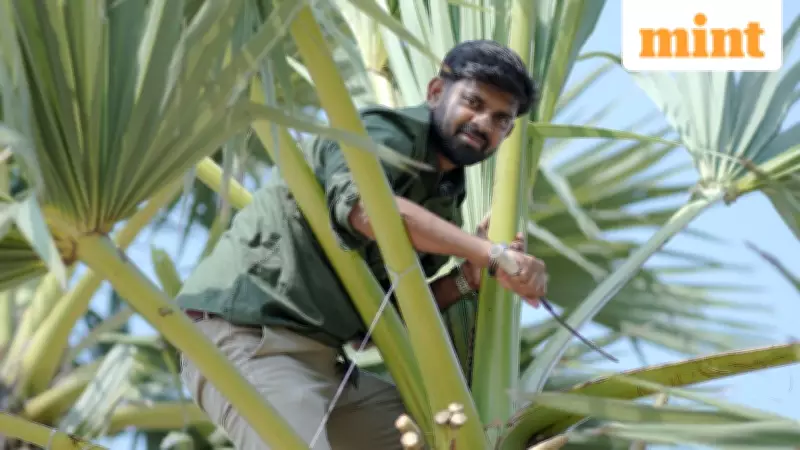
Kannan Hari, founder of Palm Era, represents the show's transformative potential. An electronics and instrumentation engineering graduate who spent 15 years in IT before quitting his ₹5 lakh monthly salary job in May 2025, Hari discovered his calling during a temple festival in his native Nambiyanvilai village. Witnessing 30 palm trees being cut down due to wild pig infestations destroying neighboring peanut crops, he recognized an opportunity.
The farmer offered him access to approximately 200 trees for free, creating the foundation for Palm Era's palm jaggery and natural sweeteners brand. The company's innovation wasn't flashy but practical: transforming clumpy, sweating palm jaggery into a fine granular powder that flows freely without additives. This solution addressed both weather-related issues and domestic inconveniences that had previously made the product difficult to use.

Beyond Investment: The Real Value of Mass Media Exposure
Kannan's experience reveals Startup Singam's true power extends far beyond investment commitments. When his episode aired on March 2, 2025—coinciding with his birthday week—the impact was immediate and overwhelming. Despite being bedridden with influenza, he received 3,000 to 4,000 calls and messages within hours. Daily sales surged from ₹3-4 lakh to approximately ₹7 lakh on broadcast day alone.
The Instagram pitch clip crossed two million views overnight, creating unprecedented brand awareness. By May 2025, when Kannan fully committed to his venture, Palm Era was generating ₹20 lakh monthly. By January 2026, this had grown to ₹50 lakh monthly, with the team expanding from six to 24 employees. The show's visibility ultimately helped him secure an impact-focused investment round with Bengaluru-based investors in late 2025.
The Marketplace Vision: Solving Tamil Nadu's Capital Gap
Balachandar R. (Bala), co-founder at Baanhem Ventures and the show's creator, frames Startup Singam as a solution to marketplace failure rather than mere television entertainment. "The problem is startups are not finding investors and investors are not finding startups," he explains, noting that capital in Tamil Nadu often behaves like "an impatient traveler" that visits elite institutions but ignores grassroots entrepreneurship.
Bala's vision involved building a comprehensive platform—using television as the front door to coaching, mentorship, pre-due diligence, and deal-making. After two years of pitching and rejections, he and co-founder Hemachandran L. invested approximately ₹1 crore before securing backing from Kumar Vembu, founder of GoFrugal Technologies and Mudhal Partners, in October 2024.
The Numbers: Commitments Versus Reality
Startup Singam's first season, which premiered on January 26, 2025, featured 39 startups across 13 episodes. The show generated ₹45-50 crore in on-air commitments (including debt instruments), with approximately ₹24 crore actually deployed to date. The gap between commitments and disbursements reflects the reality of due diligence issues, closing conditions, and final terms that don't materialize.
Behind the scenes, founders undergo intensive bootcamps and preparation. "The way they were ready on TV … was not the way they were ready the first day they approached us," Bala notes, highlighting the unseen work that transforms raw entrepreneurs into television-ready presenters.
Diverse Success Stories Across Industries
The show's impact spans multiple sectors:

- Arthi Raguram of Deyga: Built a personal care brand from homemade charcoal soap, with 97% women workforce, seeking visibility rather than capital
- Bharat and Shruti of B-Arm Medical Technologies: Developed medical products from postpartum experience, achieving ₹60 lakh monthly profitability
- Vasanth Tamilselvan of Ariro Toys: Created Montessori-based wooden toys after distrusting plastic, using the show for distribution leverage
- Senthilkumar Murugesan and Dinesh Pandian of Save Mom: Built maternal care platform after witnessing hospital delays, with their Tamil pitch finally allowing parents to understand their work
- Preethi Shashikumar of PreethiWear: Overcame business betrayal to build a shapewear brand projecting ₹23-25 crore revenue, finding investor communities through the show
The Language Revolution: Tamil as Business Legitimacy
Startup Singam's most profound innovation may be its language mission. For founders like Senthilkumar Murugesan, the show provided the first opportunity to pitch in Tamil, allowing his parents to finally understand his work after years of English presentations. This linguistic accessibility breaks down barriers for entrepreneurs from tier-2 and tier-3 cities who previously felt excluded from mainstream investment conversations.
Legacy and Future Impact
The show's success demonstrates that capital isn't always the primary bottleneck for Tamil Nadu entrepreneurs. Often, the first barrier is legitimacy—the sense that investment moves through rooms entrepreneurs haven't been invited to enter, in languages they don't speak. Startup Singam provides a crucial bridge, helping founders understand investment terminology, processes, and networks.
For Kannan Hari, the most meaningful validation came not from investment figures but from social recognition. After his episode aired, 30-40 people from his district set his clip as their WhatsApp status. His father, who once questioned his decision to leave IT for jaggery, simply put the video on his own status and asked, "Are you fine?"—a quiet acknowledgment that spoke volumes about changing perceptions of entrepreneurship in Tamil Nadu.





