

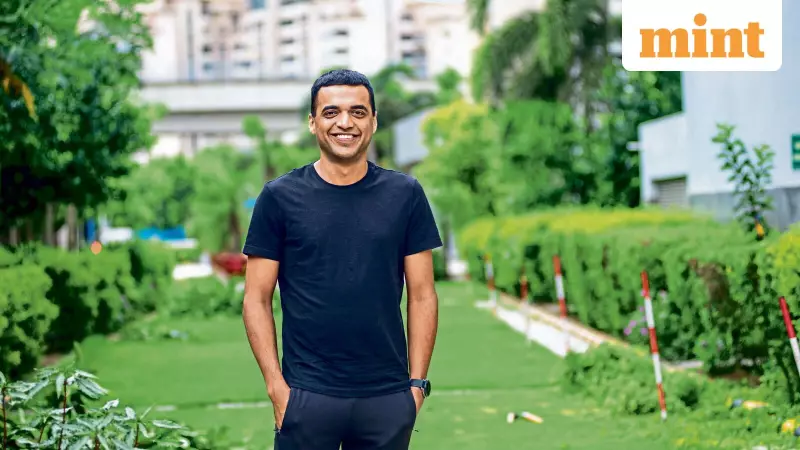
Deepinder Goyal, the Founder and CEO of Zomato, has issued a detailed public defence of the company's gig work model amidst growing scrutiny. In a five-point statement shared on the social media platform X, Goyal addressed key concerns about delivery partner earnings, working conditions, safety pressures from quick commerce, and welfare benefits.
Earnings and Flexibility: The Core of the Gig Model
Goyal presented data to counter narratives of low pay. He stated that in 2025, the average earnings per hour (EPH) for a Zomato delivery partner, excluding tips, stood at ₹102. This marked an increase from ₹92 in 2024, representing a year-on-year growth of approximately 10.9%. He emphasized that EPH has shown steady growth over a longer horizon as well.
On tips, Goyal clarified that partners receive 100% of customer tips, which are transferred instantly with zero deductions. The average tip per hour was INR 2.6 in 2025 and INR 2.4 in 2024. He noted that about 5% of Zomato orders and 2.5% of Blinkit orders receive tips.

Defining the model's flexibility, Goyal revealed that in 2025, the average partner worked for 38 days in the year and about seven hours per working day. Only 2.3% of partners worked more than 250 days annually. He stressed that partners are not assigned shifts or geographies; they decide when to log in, log out, and choose their work areas. "This shows that gig work is a reliable source of secondary income... It is used as a flexible, stop-gap earning option, not a long-term lock-in," he wrote.
Addressing Safety and Welfare Concerns
A significant part of Goyal's statement tackled the perception that quick commerce's 10-minute delivery promise forces unsafe driving. He asserted that this is not how the system operates. "Delivery partners are not shown customer-facing time promises. There is no '10-minute timer' or countdown in the delivery app," Goyal explained.
He attributed fast deliveries primarily to dark stores being located closer to customers, not from increased road speeds. However, he acknowledged that road safety remains a complex challenge requiring shared responsibility across stakeholders.
On welfare, Goyal highlighted that Zomato and Blinkit spent over ₹100 crore on insurance coverage for delivery partners in 2025. The company bears the entire premium cost. The coverage includes accident insurance (up to ₹10 lakh), medical insurance (₹1 lakh + ₹5,000 OPD), loss of pay insurance (up to ₹50,000), and maternity insurance (up to ₹40,000).
Additional Support Systems for Gig Workers
Beyond insurance, Goyal listed other support initiatives: two period rest days per month for women delivery partners, assistance in filing income tax returns (used by 95,000 partners), access to a gig-variant of the National Pension Scheme (54,000 partners enrolled), and an SOS service for emergencies.
Concluding his defence, Goyal posed a question: "Now tell me, is this unfair? Especially for an unskilled job, which is largely part-time, and has zero barriers to entry."
The statement comes in response to criticism from various quarters, including former Jet Airways CEO Sanjiv Kapoor, who recently questioned the necessity of 10-minute deliveries on X. Kapoor asked if a 30-minute or 1-hour delivery system would be a better balance for worker safety and customer satisfaction, unless for medical emergencies.






