

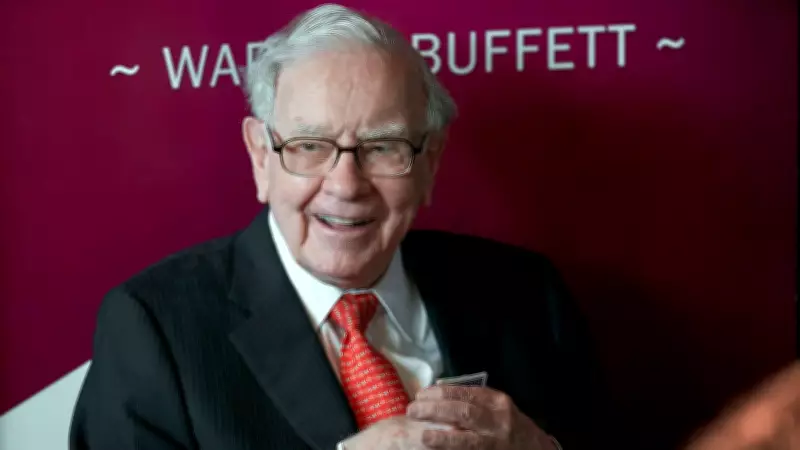
Warren Buffett's Timeless Advice: Discipline Over Intelligence in Investing
At a time when global financial markets are experiencing sharp swings due to geopolitical tensions, trade and tariff uncertainties, liquidity shifts, and algorithm-driven flows, investors can find profound wisdom in the words of legendary investor Warren Buffett. Known as the "Oracle of Omaha," Buffett, the chairman and former CEO of Berkshire Hathaway, has built one of the most remarkable investing track records in history by adhering to a simple yet disciplined philosophy.
The Power of Discipline in Market Volatility
Buffett once famously stated, "We don't have to be smarter than the rest. We have to be more disciplined than the rest." This quote holds significant relevance as investors navigate periods of high market volatility. Influenced by his mentor Benjamin Graham, Buffett's approach focuses on purchasing high-quality businesses with durable competitive advantages at reasonable prices, always insisting on a margin of safety and holding investments for the long term.
In modern stock market investing, there is often a glorification of intelligence—complex models, predictions, high-frequency signals, and exclusive insights. However, historical market data reveals that long-term success is more about behavior than brilliance. Over the past few years, the Indian stock market has witnessed record retail participation, frenzied IPO cycles, thematic rallies in sectors like defense and railways, and volatility in small-cap stocks. In such an environment, the temptation to react constantly is overwhelming, leading investors to chase momentum at market peaks and abandon quality during corrections, resulting in poor timing and inconsistent returns.

What Discipline Means in Practical Terms
Discipline in investing operates quietly but effectively. It involves:
- Sticking to asset allocation even when one segment is dramatically outperforming.
- Resisting leverage during euphoric market phases.
- Accumulating strong businesses during corrections instead of waiting for perfect clarity.
- Accepting that volatility is not risk—behavior is the real risk.
Buffett's own track record reinforces this philosophy. He has never attempted to predict short-term market moves or macro cycles with precision. Instead, he relies on a repeatable structure: buy quality businesses at reasonable prices, demand a margin of safety, and allow compounding to work its magic over time.
Why Temperament Matters More Than Intelligence
Across decades of booms, busts, bubbles, and crashes, Buffett has consistently emphasized that temperament and discipline matter more than raw intelligence. During heightened volatility, disciplined investors tend to outperform not because they forecast better, but because they panic less. Markets will always be volatile, earnings cycles will change, and global uncertainty will prevail. Yet, the biggest destroyer of wealth remains emotional decision-making—fear at market bottoms and greed at peaks.
As Buffett suggests, the edge in investing lies in behavior. You don't need to outsmart everyone; you simply need to avoid doing what most people do at the wrong time. In today's turbulent markets, this disciplined approach may be the most powerful advantage an investor can have.
About Warren Buffett and His Legacy
Warren Buffett is among the world's wealthiest individuals, thanks to his exceptional investing prowess. According to the Bloomberg Billionaire Index, his net worth was estimated at $149 billion. During his tenure as CEO of Berkshire Hathaway, which concluded on December 31, 2025, Buffett was renowned for driving a sharp surge in the company's shares and identifying numerous valuable stock bets.
In 1962, Buffett began purchasing shares for $7.60 each, transforming Berkshire Hathaway from a struggling New England textile mill into a global conglomerate. By the start of 2026, Berkshire Hathaway Class A stocks were valued at $755,400 apiece. Over time, Buffett evolved from buying "cheap stocks" to acquiring great businesses at fair prices, with notable investments in Coca-Cola, American Express, Apple, and Moody's.

He has addressed investors at his annual Berkshire Hathaway meetings for many years, sharing investing gems centered on value investing, a focus on quality businesses, and risk management.





