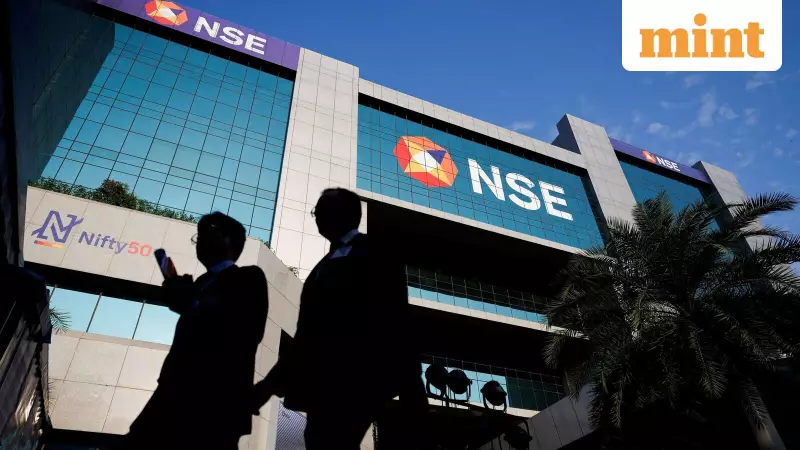
Direct Retail Participation in Cash Market Plunges to 10-Year Low
Direct retail investors have sharply reduced their activity on India's largest stock exchange. Their contribution to the cash market's gross turnover dropped to just 33.6% in 2025. This figure marks the lowest point in a full decade, according to fresh data from the National Stock Exchange.
Multiple Factors Drive the Decline
Analysts point to several converging reasons for this significant drop. The underperformance of key equity benchmarks like the Nifty 50 made many individual investors cautious. Simultaneously, a growing preference for mutual fund investments and a reallocation of funds towards initial public offerings pulled money away from direct stock trading.
"Risk aversion increased last year," explained independent market analyst Ambareesh Baliga. "Cost averaging strategies did not deliver the same results as in previous post-pandemic years. This likely pushed retail investors towards mutual funds instead of direct trading."

The Rise of Algorithmic Traders
While retail participation waned, proprietary traders—including high-frequency trading (HFT) firms—saw their share surge to a 21-year high of 29.7%. Nilesh Shah of Kotak Mahindra Asset Management highlighted this shift.
"The mutual fund culture is growing, but direct retail traders are losing ground to sophisticated HFTs," Shah noted. "These algorithmic traders possess advanced tools and greater financial resources, giving them an edge in the market."
The data reveals a stark contrast in volumes. Retail turnover reached ₹166.56 trillion for the year. However, proprietary traders contributed ₹147.43 trillion to the overall gross turnover of ₹496.11 trillion, which itself fell by 14.5% from 2024 levels.
Global Underperformance Fuels Caution
Investor caution grew as Indian markets lagged behind global peers. By the end of December, the Nifty 50 delivered a one-year return of 10.5%. This trailed far behind major indices like the MSCI World (19.5%), the MSCI Emerging Markets (30.6%), and even the S&P 500 (16.4%). Slowing earnings amid high valuations contributed to this relative underperformance.
Interestingly, while retail investors were net sellers in the cash segment to the tune of ₹57.17 billion, they poured ₹428 billion into primary market issuances (IPOs). This resulted in a net positive overall flow of ₹371 billion into the markets when combining cash and primary investments.
Diverging Views on the Future
Experts are split on whether direct retail participation will bounce back. Ambareesh Baliga expects a recovery, especially if momentum returns to small- and mid-cap stocks. He cites potential catalysts like recent tax cuts and expected interest rate reductions by the RBI, which could boost consumer demand and corporate earnings.
In contrast, Nilesh Shah anticipates the dominance of HFTs to continue pressuring direct retail share. He advises investors to moderate their return expectations from the lofty 25-30% range to more realistic high single or low double digits.
The trend of declining participation extended to the derivatives segment as well. The number of unique traders in NSE's futures and options (F&O) segment fell by 26% to 8.3 million in 2025, influenced by regulatory measures designed to curb excessive risk-taking.
Meanwhile, the mutual fund industry continues to attract investors. Equity-oriented scheme folios grew to 178.48 million by December 2025, up from 157.49 million a year earlier. Systematic Investment Plan (SIP) contributions also hit a record ₹31,002 crore in December, underscoring the shift towards managed investments.