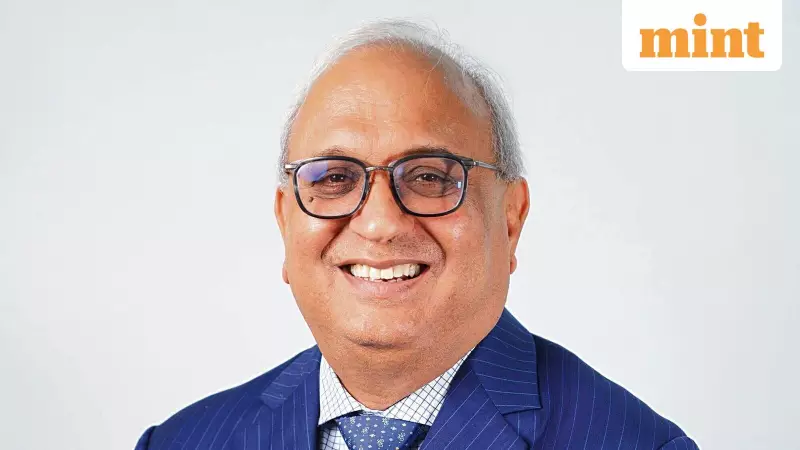
The spectacular rally in gold prices this year, which has significantly outpaced gains in the equity markets, has ignited a fresh debate among investors. The central question is which asset class is truly superior for building long-term wealth. This discussion gained momentum on social media platform X, prompting a detailed data-driven response from veteran fund manager Samir Arora, Founder of Helios Capital.
The Spark: A Social Media Debate on Gold's Performance
The debate began when Anurag Singh of Ansid Capital posted on X, suggesting that gold has outperformed Indian equities over the long run. His argument factored in currency depreciation, raising the question of whether systematic investment plans (SIPs) in gold now make more sense than equity SIPs. The post cited specific figures, noting that from 1994, the Nifty 50 in US dollar terms grew at a Compound Annual Growth Rate (CAGR) of 7.8%, while gold delivered a higher CAGR of 8.6% over the same period.
Samir Arora's Counter: The Importance of Benchmarking and Time Frames
Samir Arora countered this narrative by emphasizing how the choice of benchmark index and the selected time period can dramatically alter the comparison. He presented data starting from December 31, 1998, to provide a clearer long-term picture.

From the end of 1998 to the present, the Nifty 50's total return stands at a staggering 1,922.38%. This translates to a CAGR of 11.78% when measured in US dollar terms over nearly 27 years. In contrast, gold generated a return of 1,472.66% over the same period, which equates to an annualized return of 10.74% in dollars.
How Indian Equities Stack Up Against Global Peers
The outperformance of Indian assets becomes even more evident when compared to the US stock market. During this identical period, the S&P 500 index returned 821.05%, which is just 8.57% per annum. This means it sharply underperformed both the Nifty 50 and gold.
Arora further clarified that a fair comparison with the S&P 500 should involve India's broader NSE 500 index, not just the Nifty 50. On this basis, the case for Indian equities strengthens considerably. The NSE 500 has generated an extraordinary 2,590.1% return, or 12.96% per annum in dollar terms, since December 1998.
Addressing the Currency Depreciation Concern
A common concern for investors, especially foreign ones, is that the depreciation of the Indian rupee can erode equity returns. Arora's analysis directly addresses this point, as all the returns he cited are already calculated in US dollar terms. This means the impressive CAGRs of 11.78% for Nifty 50 and 12.96% for NSE 500 have already factored in the rupee's decline against the dollar over the long term. His data demonstrates that Indian equities have not just survived but thrived despite currency weakness.
The core message from Samir Arora's analysis is unequivocal. While gold has seen an impressive surge of around 80% this year, compared to a roughly 10% return for the Nifty 50, the long-term horizon tells a different story. For investors focused on decades-long wealth creation, Indian equities, particularly broad market indices, continue to set a high benchmark that other asset classes, including gold, struggle to beat.
Disclaimer: This article is for educational purposes only. The views expressed are those of individual analysts. Investors are advised to consult certified experts before making any investment decisions, as market conditions are subject to change.