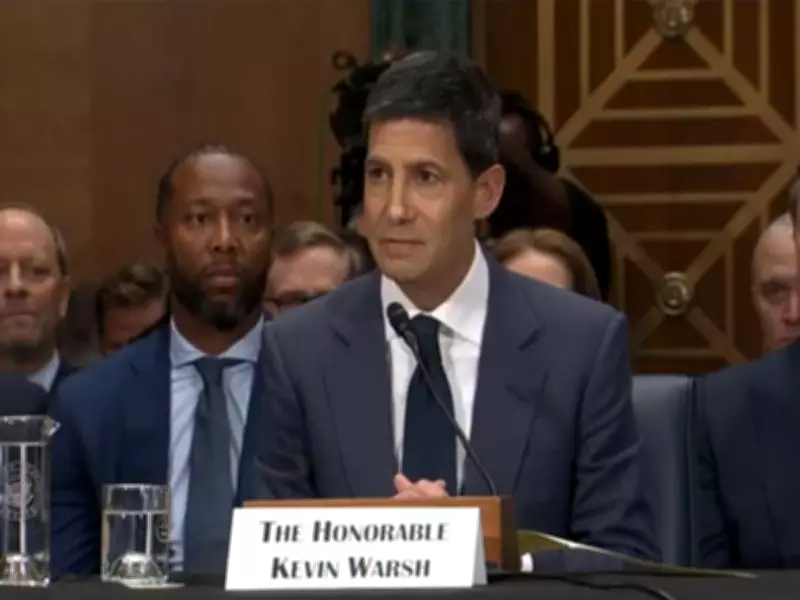
Fed Nominee Kevin Warsh Commits to Central Bank Independence
In a significant development for global financial markets, Kevin Warsh, the nominee for Chair of the United States Federal Reserve, has publicly affirmed his commitment to preserving the autonomy of the central bank. During recent statements, Warsh explicitly ruled out any potential for political influence over interest rate decisions, a move that underscores the importance of monetary policy independence in maintaining economic stability.
Assurances of Autonomy Amid Economic Scrutiny
Warsh's assurances come at a critical juncture, as the Federal Reserve navigates complex economic challenges, including inflation concerns and growth uncertainties. By emphasizing that interest rate determinations will be based solely on economic data and analysis, rather than political pressures, he aims to reinforce confidence in the institution's decision-making processes. This stance is seen as vital for ensuring that monetary policy remains effective and credible in the eyes of investors and the public alike.
Historical Context and Implications

The Federal Reserve has long operated under a principle of independence to avoid short-term political interference that could undermine long-term economic goals. Warsh's nomination and his firm stance on this issue highlight a continuation of this tradition, potentially signaling stability in monetary policy approaches. Analysts note that such autonomy is crucial for managing inflation and supporting sustainable economic growth, especially in times of global financial volatility.
Rejecting Political Influence on Rates
In his remarks, Warsh made it clear that he would resist any attempts to sway interest rate decisions for political gain. This rejection of political influence is particularly relevant given ongoing debates about the role of central banks in economic governance. By distancing monetary policy from partisan agendas, Warsh aims to uphold the integrity of the Federal Reserve and its mandate to promote maximum employment and stable prices.
Market Reactions and Future Outlook
Financial markets have responded positively to Warsh's assurances, with many viewing his commitment to autonomy as a stabilizing factor. As the nomination process progresses, stakeholders will be closely monitoring how his policies might shape future rate decisions and overall economic strategy. The emphasis on data-driven approaches suggests a focus on transparency and accountability, which could enhance the Fed's effectiveness in navigating upcoming economic challenges.