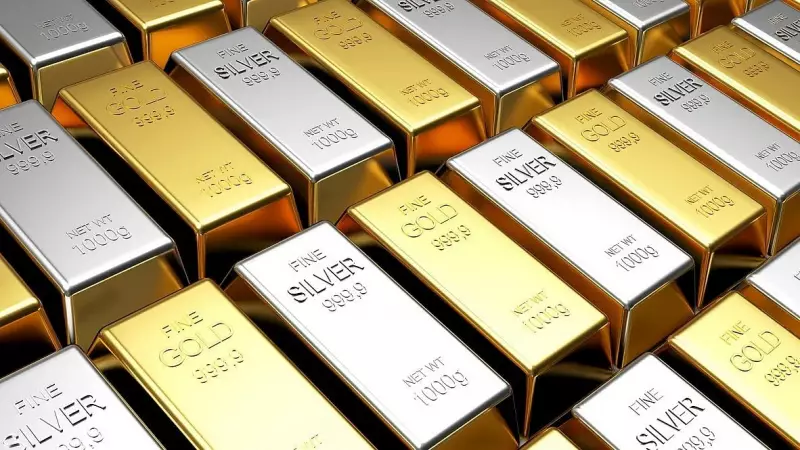
Precious metals prices in India witnessed an upward movement in early trading on Tuesday, driven by investors seeking safety amid escalating geopolitical tensions. The primary catalyst for this shift was fresh political unrest in Venezuela, which prompted market participants to move their funds into traditional safe-haven assets like gold and silver.
MCX Sees Notable Gains in Bullion Contracts
On the Multi Commodity Exchange (MCX), the most active gold futures contract showed a clear positive trend. Specifically, gold futures slated for February delivery increased by Rs 445, which translates to a gain of 0.32%. This rise pushed the price to Rs 1,38,565 for every 10 grams. The trading activity for this contract was substantial, with a business turnover recorded across 14,949 lots.
While the provided data focuses on gold, the market sentiment typically leads to correlated movements in silver. Analysts noted that silver futures also traded with a firm bias, following the broader trend in the precious metals complex triggered by the risk-off mood.

Geopolitical Tensions Fuel Market Sentiment
The key driver behind this price action was the developing situation in Venezuela. Renewed political instability and social unrest in the South American nation, a significant oil producer, created waves of uncertainty in global markets. When such geopolitical flashpoints emerge, investors globally tend to reduce exposure to riskier assets like equities and seek the relative stability of gold and silver.
This phenomenon, known as a 'safe-haven rush', was clearly evident in the Indian commodities market. The price movement on January 6, 2026, as reported at 07:11 IST, reflects how international events can have an immediate impact on domestic futures prices. The Indian market, through MCX, acts as a conduit for these global price signals, adjusting local valuations based on international risk perceptions and dollar-denominated gold prices.
Implications for Indian Investors and Traders
The rise in futures prices has several implications. For traders and investors in India, it underscores the importance of monitoring global political developments alongside traditional supply-demand metrics for commodities. The uptick indicates continued appetite for bullion as a protective shield against geopolitical and economic uncertainty.
The increase of Rs 445 per 10 grams, though seemingly modest in percentage terms, represents a significant monetary move given the high value of the underlying asset. Market observers will now watch for sustainability in this trend. The key factors to monitor will be any escalation or de-escalation in the Venezuela situation, the subsequent flow of funds, and the strength of the Indian rupee against the US dollar, which also influences local gold prices.
In conclusion, the trading session highlighted the intrinsic link between global politics and commodity markets. The unrest in Venezuela served as a potent reminder of gold's enduring role as a safe-haven asset, directly influencing price movements on the Indian bourse and shaping trading strategies for market participants.