

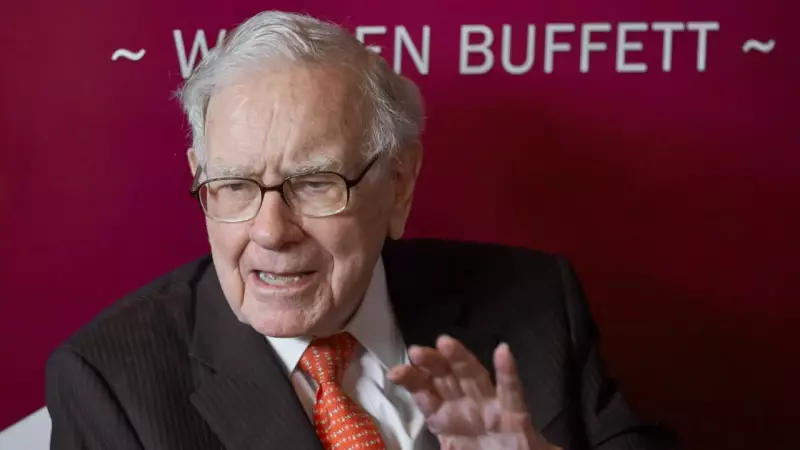
This week marks a historic transition in the world of finance as Greg Abel officially takes the reins of the massive conglomerate Berkshire Hathaway from the legendary Warren Buffett. For decades, Buffett, often called the world's greatest investor, was the face of Berkshire, steering it from a struggling textile mill to a global powerhouse. Now, the spotlight shifts to Abel, who faces the monumental task of guiding the $1 trillion behemoth into its next chapter.
The Buffett Legacy and the Abel Challenge
Warren Buffett began buying into Berkshire Hathaway in 1962 when shares were just $7.60. Through his legendary long-term bets on companies like American Express, Coca-Cola, and Apple, and strategic acquisitions of giants like Geico, BNSF Railway, and Dairy Queen, he built a colossus. Today, a single Berkshire Class A share trades for over $750,000. Buffett's personal fortune from his Berkshire stock is estimated at $150 billion, even after donating more than $60 billion to charity over the past two decades.
However, in recent years, Berkshire's sheer size has made it harder to outperform the S&P 500 index consistently. Finding new, significant acquisitions has become a challenge. Even the $9.7 billion purchase of OxyChem in the fall of 2024 is considered too small to materially move the needle for Berkshire's profits. This is the complex landscape Greg Abel inherits.

What Changes Can Investors Expect Under Greg Abel?
While a seismic shift is unlikely, analysts predict Abel will bring his own management style to the conglomerate. Cathy Seifert, an analyst at CFRA Research, notes that with nearly 400,000 employees across dozens of subsidiaries, a slightly more structured leadership approach could be beneficial. However, the core decentralised operating model—where acquired company leaders retain significant autonomy—is expected to remain sacred.
Abel has already demonstrated a more hands-on style than Buffett. He asks tough questions and holds managers accountable. Recently, after the departure of investment manager and Geico CEO Todd Combs and the retirement of CFO Marc Hamburg, Abel announced a key restructuring. He appointed NetJets CEO Adam Johnson to oversee all consumer, service, and retail businesses, creating a third major division and streamlining his own responsibilities. Abel will continue to manage the manufacturing, utility, and railroad units.
One of the biggest future pressures will be Berkshire's massive $382 billion cash pile. Buffett's philosophy has always been to reinvest profits rather than pay dividends. If Abel cannot find productive uses for this cash, investors may increasingly push for dividends or a more traditional stock buyback program. For now, Abel is insulated from such pressure as Buffett still controls nearly 30% of the voting power and will remain Chairman, offering counsel daily.
A Solid Foundation for the Future
Berkshire enters this new era from a position of immense strength. Its diverse subsidiaries, from reliable utilities to insurance giants like Geico and General Re, generate steady profits. The insurance units alone provide over $175 billion in premiums for investment. As investor Chris Ballard of Check Capital notes, most of Berkshire's businesses "can almost take care of themselves."
The succession plan was solidified in 2021 when Buffett's late partner, Charlie Munger, publicly endorsed Abel as the successor who would preserve the company's unique culture. The biggest immediate question is whether Combs' departure signals more leadership changes, especially with insurance vice-chairman Ajit Jain at 74 and many other CEOs well past retirement age.
As Ballard, whose firm holds Berkshire as its largest investment, stated, "Todd's situation is unique. It's just a reminder that Warren's pending departure is imminent and they're preparing for a new phase - one that we're still excited to see unfold." The world will now watch closely as Greg Abel writes his first chapter in the Berkshire Hathaway story.






