Once perceived as a 'dusty' city in the 1980s and 90s, Ahmedabad, Gujarat's most populous city, has embarked on a remarkable green transformation. As its area expanded almost three-fold, the city fought back by not only reviving its historical gardens but also aggressively creating new public green spaces, integrating them with community needs.
Historical Roots and Modern Revival
The city's garden legacy dates back to the colonial era. Victoria Garden, conceived in 1897 to mark Queen Victoria's Diamond Jubilee, was built with funds from local businessmen at the east end of Ellis Bridge, now Vivekananda Bridge. A majestic 7-foot marble statue of the Queen was installed in 1910. The garden's history intertwined with India's freedom struggle when, in 1929, Mahatma Gandhi unveiled a statue of Lokmanya Bal Gangadhar Tilak there. Decades later, the garden was renamed after Tilak.
This historical park also witnessed the birth of a significant socio-economic movement. On April 12, 1972, activist Ela Bhatt launched the Self Employed Women's Association (SEWA) here, planting a banyan tree on the same spot 50 years later. The redeveloped garden, spanning 34,000 square yards, even drew a visit from former US Secretary of State Hillary Clinton in 2023 to pay homage to Bhatt's memorial.

Today, the model has evolved. Moving from philanthropy to structured partnerships, the Ahmedabad Municipal Corporation (AMC) now maintains 308 parks and gardens largely through Public Private Partnership (PPP) models. Private players are roped in to develop and maintain green spaces created around lakes, under flyovers, and along metro routes.
Breathing New Life: Oxygen Parks and Lakefront Gardens
A key focus of AMC's green push is the creation of 'Oxygen Parks' or urban forests. Under the Mission Million Tree campaign, 319 such parks have been developed using the Miyawaki method for dense plantation. One such park in Bodakdev, spread over 27,200 square metres on posh Sindhu Bhavan Road, has become a popular spot for residents like 50-year-old businessman Rajiv Desai and 27-year-old IT professional Karan Patel.
In a novel initiative, the AMC developed a ticketed Biodiversity Park on the riverfront in 2020, featuring nature trails and diverse species of birds and trees, offering an escape from the typical urban park experience.
The city is also leveraging its water bodies. After a major drive to free lakes from encroachments, the AMC is redeveloping the vacated land around them into public gardens. Three major lakes—Isanpur, Kamal Talav, and Chandola Lake—were cleared in 2025, with more to follow. Recently, 42 lakes under AMC jurisdiction have been entrusted to the UNM Foundation under the PPP model for development and maintenance in phases.
The PPP Blueprint and a Greener Future
The PPP framework clearly delineates responsibilities. The AMC provides core assets, water, drainage, electricity connections, and ensures no untreated sewage enters the lakes. The private partner bears the cost of lighting, maintenance, upkeep, and manpower for all cleaning, gardening, and security tasks. In return, the company gets to display its name and logo at prominent spots but is barred from commercial activities within the gardens.
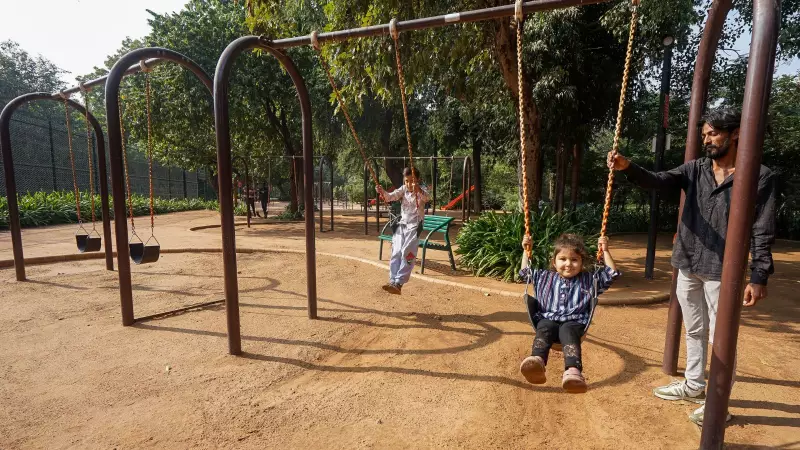
Principal Director General of Parks and Gardens, Amrish C Patel, stated that while plots for new gardens are reserved as per Town Planning Schemes, the current focus is strongly on developing more Oxygen Parks. The new gardens are designed inclusively, featuring water bodies, walking trails, open gyms, children's play areas, and seating to cater to all age groups.
From the historic Sardar Baug—redeveloped by the UN Mehta Foundation and inaugurated by Union Home Minister Amit Shah—to the modern Oxygen Parks, Ahmedabad's green makeover demonstrates a sustainable model of urban development where history, community needs, and environmental revival grow together.