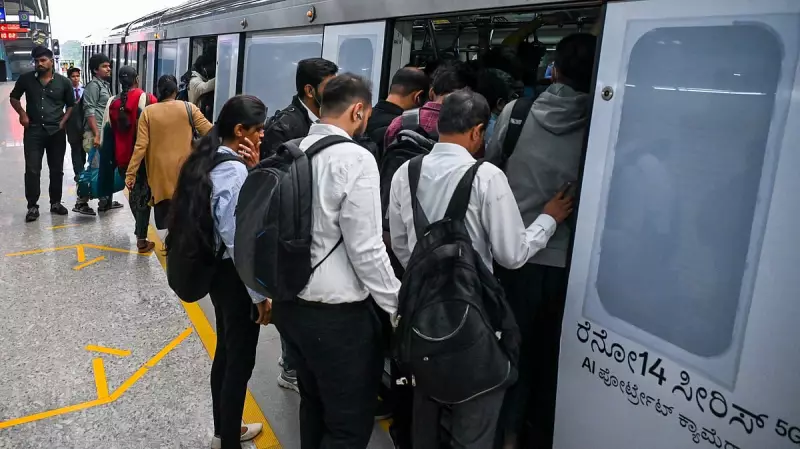
In the bustling tech capital of India, where traffic snarls are legendary, an unexpected social phenomenon is unfolding. The very act of commuting—often seen as a daily grind—is transforming into a catalyst for community building. On Bengaluru's Namma Metro and the sprawling network of BMTC buses, passengers spending hours together are forging genuine connections, turning shared transit time into a space for friendship and informal support systems.
The Commute as a Social Catalyst
The extended travel times, a direct consequence of the city's notorious traffic congestion and vast urban sprawl, have inadvertently created a unique social environment. Professionals, students, and daily wage workers, who might otherwise never cross paths, find themselves sharing the same space for one to three hours each day. This consistent, prolonged proximity is breaking down urban anonymity.
Commuters report striking up conversations that begin with shared frustrations about delays or crowd but gradually evolve into deeper exchanges about life, work, and personal challenges. These micro-communities operate without formal structure, bound simply by shared routes and schedules. People save seats for each other, share snacks, and even form impromptu groups to split cab fares for last-mile connectivity from metro stations.

Stories from the Purple Line and Beyond
On the popular Purple Line of the Namma Metro, which connects the IT hub of Whitefield to the western corridor, the pattern is especially pronounced. Software engineers, who often work long and isolating hours, find the metro ride a time to decompress and connect with fellow passengers. Similarly, on BMTC's longer bus routes like the 500 series, which ply from the city center to distant suburbs, regulars have developed a strong sense of camaraderie.
One commuter, a marketing professional traveling from Kengeri to Indiranagar, noted that her bus group has evolved into a "mobile information network." They share job leads, recommend doctors, and discuss the best places to shop. Another group, primarily women traveling on the metro between Majestic and Nagasandra, has formed a safety-in-numbers pact, ensuring no one walks alone from the station after dark.
The social interactions aren't limited to casual chat. They have tangible benefits. Commuters exchange crucial real-time information about traffic diversions, bus breakdowns, or shorter alternate routes, collectively navigating the city's complexities. This informal knowledge sharing often proves more reliable and faster than official apps or announcements.
More Than Just a Ride: Addressing Urban Isolation
Urban planners and sociologists observe that these transit-born communities are subtly addressing a modern urban ill: isolation. In a large, fast-paced city like Bengaluru, where many live away from family and childhood friends, these daily interactions provide a sense of belonging and informal social security. The commute shifts from being 'wasted time' to valued social time.
This phenomenon also highlights the human capacity to adapt and create social structures within any environment. While the city's infrastructure grapples with the challenges of growth, its citizens are organically building resilience and connection through shared experience. The BMTC buses and Namma Metro coaches become moving public squares, fostering a unique form of urban solidarity that is both practical and emotionally significant.
In conclusion, Bengaluru's traffic crisis, while a significant logistical and environmental problem, has an unintended silver lining. The long hours spent on public transport are weaving a new social fabric for the city. These informal commute communities demonstrate how shared routines and spaces can foster human connection, offering a lesson in resilience and the enduring need for community, even on the move.