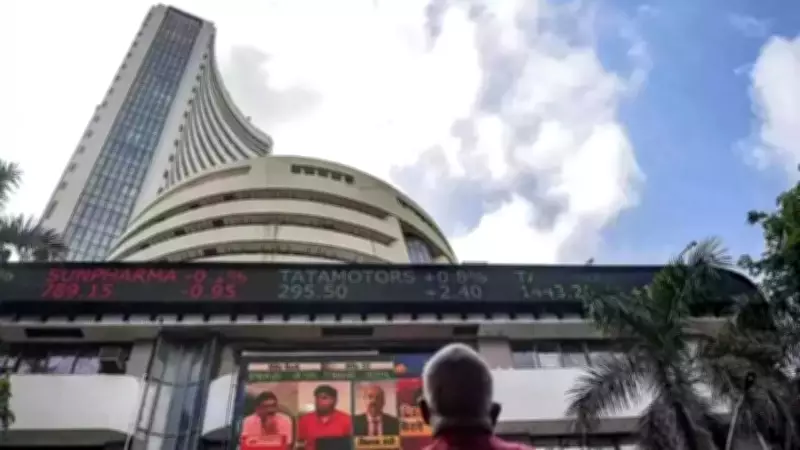
MUMBAI: On Tuesday, India slipped to the seventh position in global stock market valuation, as South Korea advanced to sixth place. Over the past two years, India has dropped three spots in the rankings, with Hong Kong, Taiwan, and South Korea overtaking it, according to historical data.
Reasons for the Slide
Market participants attribute this decline to several factors. Nearly unabated foreign fund selling since September 2024, when the Sensex hit a lifetime peak of nearly 86,000 points, has weighed heavily. Additionally, muted corporate earnings failed to justify India's high valuations compared to some emerging market peers. The country's slow progress in AI-led technological developments also played a role.
Current Market Cap Rankings
India's current market capitalization stands at $4.9 trillion, trailing behind South Korea and Taiwan, both of which are slightly above the $5 trillion mark, as per Reuters data. The United States leads with a market cap of $79.1 trillion, followed by China at $16.3 trillion, Japan at $8.9 trillion, and Hong Kong at $7.6 trillion.

AI-Led Market Cap Race
While India lags in the AI-driven market cap race, South Korea and Taiwan have gained as companies from these nations lead the global demand for AI chips. Markets have rewarded their stocks handsomely. Key players include Taiwan Semiconductor Manufacturing Company (TSMC) from Taiwan, and Samsung Electronics and SK Hynix from South Korea.
Sensex Performance
Despite the slide in India's market cap ranking, the Sensex rose 0.5% during the day. Positive geopolitical cues from West Asia improved sentiment on Dalal Street on Tuesday. With crude oil prices sliding, the index rallied from the red zone to close 383 points higher at 74,650 points.
Fund Flows
The day's gains in the Sensex and Nifty were driven by strong buying from domestic funds, while foreign funds remained net sellers. Domestic institutional investors were net buyers at Rs 9,589 crore, whereas foreign portfolio investors (FPIs) were net sellers at Rs 8,363 crore.