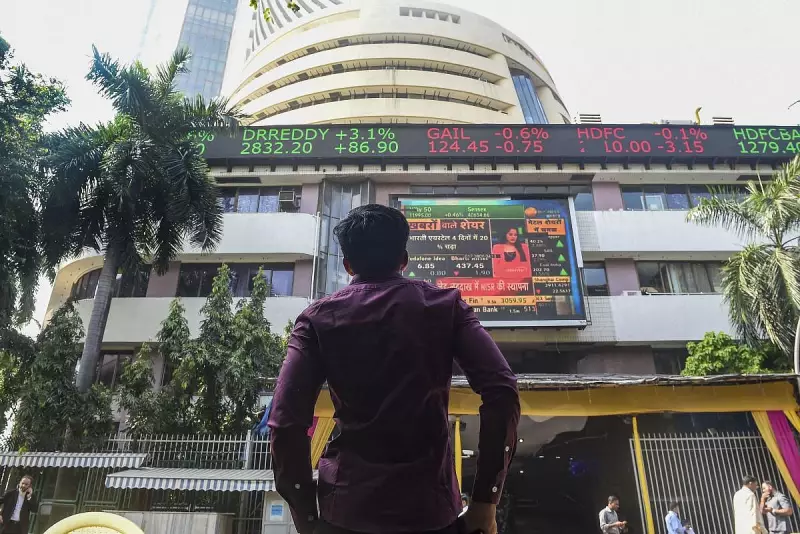
Indian equity markets are expected to continue their range-bound trading pattern in the coming sessions as investors navigate through multiple global and domestic uncertainties. Market analysts suggest that without significant fresh triggers, both the Sensex and Nifty are likely to move within a defined range.
Key Factors Influencing Market Direction
Several critical elements are currently shaping market sentiment and limiting decisive moves in either direction. The upcoming US Federal Reserve policy decision stands as the most significant near-term trigger that could provide direction to global markets, including India. Investors worldwide are closely watching for signals about future interest rate trajectories and the Fed's assessment of economic conditions.
Domestically, persistent inflation concerns continue to weigh on market participants' minds. Recent inflation data has shown some moderation, but it remains above the Reserve Bank of India's comfort zone, keeping alive fears of potential monetary tightening measures in the future. This uncertainty is preventing investors from taking aggressive positions in the market.

Technical Indicators and Market Structure
From a technical perspective, market analysts observe that the Nifty has been trading within a specific range, with resistance around 18,200-18,300 levels and support near 17,800-17,900 levels. This technical setup suggests that until either of these levels is decisively broken, the range-bound movement is likely to persist.
The market structure also indicates sector-specific rotation rather than broad-based buying or selling. Certain sectors like banking and financial services have shown relative strength, while technology stocks have faced pressure due to global growth concerns. This rotational activity is characteristic of range-bound markets where investors prefer to shift allocations between sectors rather than making significant cash deployments.
Global Cues and Foreign Investor Activity
International factors continue to play a crucial role in determining Indian market direction. Foreign Institutional Investor (FII) flows have been inconsistent, reflecting the global risk-off sentiment amid concerns about economic growth in developed markets. The strength of the US dollar and movements in global bond yields are additional factors that FIIs are monitoring closely.
Meanwhile, Domestic Institutional Investors (DIIs) have provided support to the markets during periods of FII selling, helping to cushion significant declines. This dynamic between FII and DII activity has contributed to the range-bound nature of the markets, with each group taking opposing positions based on their assessment of risk and opportunity.
Commodity prices, particularly crude oil, remain another important variable for Indian markets. Given India's significant import dependence for energy, fluctuations in oil prices directly impact inflation, current account deficit, and corporate profitability across multiple sectors.
Investment Strategy in Current Market Conditions
Market experts suggest that in the current environment, investors should focus on stock-specific opportunities rather than expecting broad market movements. Companies with strong fundamentals, reasonable valuations, and sustainable business models are likely to outperform regardless of the overall market direction.
Traders are advised to adopt range-bound strategies such as buying near support levels and selling near resistance levels, while maintaining strict stop-losses to manage risk. For long-term investors, market experts recommend continuing with systematic investment plans (SIPs) and using any significant corrections as buying opportunities for quality stocks.
The overall consensus among market participants is that the range-bound movement might continue until there's clarity on the Federal Reserve's policy direction and more concrete signs of inflation moderating globally. Until then, markets are likely to remain in a wait-and-watch mode, reacting to each new data point and development.