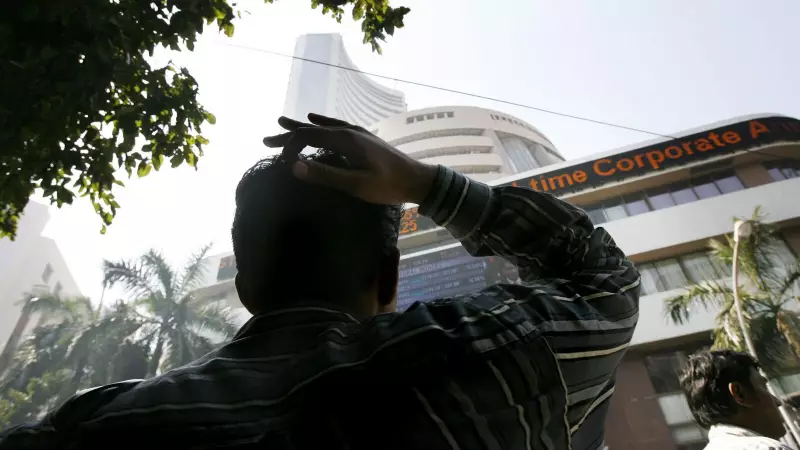
The Indian stock market has experienced a more turbulent beginning to 2026 than analysts had predicted. While investors entered January with optimism, buoyed by expectations of strong third-quarter corporate results, a surge in geopolitical tensions has injected significant volatility. The benchmark Nifty 50 index, after hitting a fresh peak of 26,340 points on January 2nd, has been rattled by a series of international developments, casting a shadow over the near-term outlook.
US Tariff Uncertainty and Russian Oil Dilemma
A primary source of market anxiety stems from shifting US trade policy and its direct implications for India. Investors had been hopeful that early 2026 would see a preliminary trade pact between India and the United States. This agreement was viewed as a crucial step toward the potential removal of a 25% penalty tariff imposed by the US on Indian goods.
This optimism was partly based on India's recent reduction in Russian oil imports. However, the landscape changed dramatically with the approval of the Russian Act by former President Donald Trump. The US is now advancing plans to impose tariffs as high as 500% on nations importing Russian oil. Although the bill awaits final approval in both houses of Congress, the prolonged ambiguity is severely pressuring Indian export-oriented sectors, especially those heavily reliant on the American market.

Recent statements from Trump regarding India's energy import strategies have further muddied the waters, leaving businesses and investors unsure if the 25% tariff will be lifted or remain intact.
Global Hotspots and Sectoral Impact
Beyond US-India trade relations, other global flashpoints are influencing market sentiment. The crisis in Venezuela, while having limited global economic impact due to the country's constrained influence, introduces near-term uncertainty for oil supplies. Analysts note that over the medium term, increased Venezuelan oil exports could help soften global crude prices, benefiting major importers like India and China.
More broadly, a notable shift in US foreign policy from sanctions to direct intervention is elevating geopolitical risk. Potential hotspots include Iran and even Greenland, where the US has renewed strategic interest, scheduling high-level talks with Danish officials. This move is being closely watched amid strong opposition from European NATO allies.
This environment of heightened risk is reshaping investment flows. Safe-haven assets like gold and other precious metals are gaining traction, while equities face persistent selling pressure. Conversely, the global defence sector is witnessing a bull run. With the US proposing a colossal $1.5 trillion defence budget and European nations ramping up military spending, stocks in the defence and aerospace sectors are performing robustly and are expected to remain resilient.
Market Outlook: Caution Amidst Strong Domestic Fundamentals
For the Indian market, the immediate path forward is one of caution. According to market expert Vinod Nair, the domestic market is likely to trade within a range with a mixed bias. The key challenge for investors and traders is to balance external geopolitical headwinds against strong domestic economic fundamentals.
Until clarity emerges on the US tariff front, a cautious stance is anticipated. The market's performance will hinge on navigating the dichotomy between robust local corporate earnings and the unpredictable waves of global political developments. The start of 2026 serves as a stark reminder of how interconnected and sensitive financial markets are to the world's geopolitical climate.