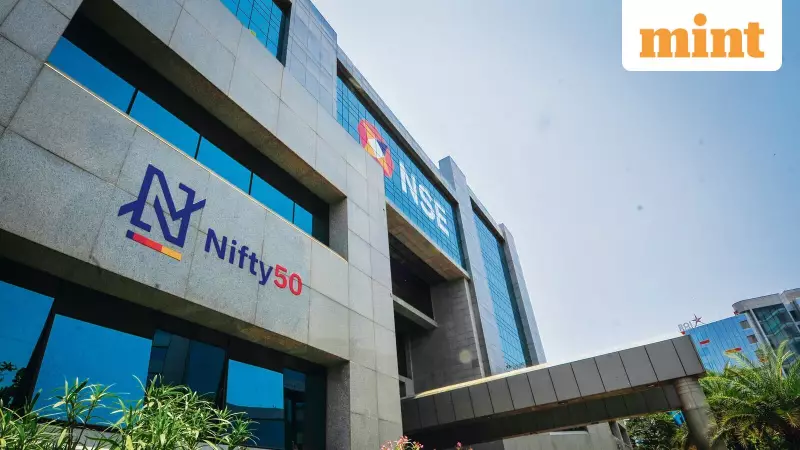
Market Volatility Sparks Caution as Nifty Eyes Record Highs
Indian equity markets experienced significant turbulence recently despite touching record closing highs. The Nifty 50 index, after reaching a peak on November 20, pulled back sharply the following day, dropping nearly 0.7% to an intraday low of 26,055.95 on November 21.
VK Vijayakumar, Chief Investment Strategist at Geojit Investments, highlighted that market volatility has increased substantially across global markets. He pointed to the sharp decline in the Nasdaq index, which serves as a key indicator for AI-related trades, as a warning sign that more turbulence might be ahead.
The investment strategist specifically cautioned retail investors against speculative trading, particularly in newly-listed stocks, describing such behavior as excessive and risky. Instead, he recommended buying high-quality, fairly valued stocks during market declines and maintaining patience for long-term gains.

Foreign Investors Return After Three-Month Hiatus
A significant positive development for Indian markets has been the return of foreign portfolio investors (FPIs) after three consecutive months of outflows. October marked a turning point as FPIs turned net buyers, supported by stronger earnings expectations, reduced consumption taxes, and progress in India-US trade negotiations.
Since the beginning of last month, foreign investors have injected approximately USD 1.3 billion into Indian equities, signaling renewed confidence in the market's prospects.
On the technical analysis front, Anand James, Chief Market Strategist at Geojit Investments, noted that the breakout above the recent trading range strengthens the outlook for the Nifty to reach 26,550. However, he cautioned that the reversal from the upper Bollinger band indicates potential limitations to further upswings. James identified critical support levels at 26,237 and 26,160, with a breach potentially leading to a decline toward 26,028-25,984.
Global Brokerages Paint Bullish Picture for 2026
As the Nifty trades near record highs, major global financial institutions have begun outlining their projections for 2026, revealing a mixture of optimism, expectations of earnings recovery, and supportive macroeconomic trends.
HSBC projects Indian equities could deliver around 10% annual returns through 2026, setting a year-end 2026 Sensex target of 94,000. The brokerage highlighted that valuations have become more reasonable following an extended consolidation phase and that earnings momentum is showing signs of revival. HSBC expects bank margins to improve as interest rates ease and lending activity strengthens, while consumer-facing sectors like automobiles should benefit from lower interest costs and goods and services tax reductions. The firm upgraded Indian equities to overweight in September, positioning itself as one of the first major global institutions to turn positive on Asia's third-largest economy.
Morgan Stanley maintains a base-case target of 95,000 for the Sensex by December 2026, with a bull-case scenario projecting the index could reach 1,07,000. The brokerage believes India is positioned for a broad market revival after a year of underperformance. Morgan Stanley expects India to regain its momentum in 2026 as markets transition from stock-specific movements to a macro-driven cycle supported by falling interest rates, stronger credit trends, and ongoing policy support. Notably, the firm observed that foreign investor positioning is currently among the lightest in history, creating substantial potential for catch-up flows, while domestic inflows remain strong and continue to anchor market resilience.
Goldman Sachs has upgraded Indian equities to overweight with a year-end 2026 Nifty target of 29,000, reversing its October 2024 downgrade. The brokerage stated that India has likely completed a year-long earnings downgrade cycle and is now entering a period of renewed momentum. Goldman Sachs expects upgrades across financials, consumer companies, automobiles, defence manufacturers, oil marketing companies, and telecom firms. However, the firm remains cautious on export-heavy sectors including IT, pharmaceuticals, industrials, and chemicals due to ongoing earnings pressures and softer global demand.

Despite the generally optimistic outlook, UBS retains its underweight stance on Indian equities, arguing that valuations still appear expensive relative to fundamentals. The brokerage cautioned that while retail flows remain supportive, foreign selling and increasing corporate fundraising require careful monitoring. UBS assumes the India-US trade deal will be finalized by late 2025, with reciprocal tariffs settling near 15%—aligned with other Asian peers.
Franklin Templeton forecasts modest single-digit earnings growth in FY26 but anticipates a sharper rebound of 16-17% in FY27, led primarily by financials. The asset management company described overall fundamentals as healthy and valuations across sectors as fair, though it noted that deep bargains remain limited.
Sectors and Stocks to Watch Through 2026
Morgan Stanley expects domestic demand-linked sectors—consumer discretionary, industrials, and financials—to lead the next phase of the market cycle. The firm's 2026 focus list includes Maruti Suzuki, Trent, Titan, Varun Beverages, Reliance Industries, Bajaj Finance, ICICI Bank, Larsen & Toubro, UltraTech Cement, and Coforge, while reducing exposure to energy, materials, healthcare, and utilities.
Goldman Sachs noted that September-quarter earnings exceeded expectations and forecasted that financials, consumer staples, durables, automobiles, defence, oil marketing companies, internet, and telecom firms would drive the ongoing recovery.
Disclaimer: The views and recommendations above are those of individual analysts or broking companies, and not of Mint. Investors should consult certified experts before making investment decisions.