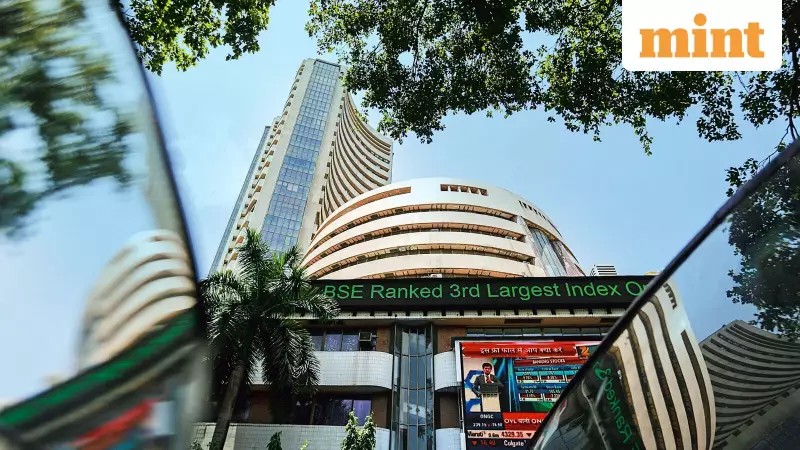
The Indian equity market has been a battleground for opposing forces over the past fortnight, with sustained bullish and bearish sentiments creating a volatile trading environment. While positive domestic fundamentals provided a floor, global uncertainties and profit-booking at higher levels repeatedly triggered sell-offs.
Forces Driving the Bulls and Bears
On the positive side, investor sentiment was bolstered by stronger-than-expected Q2 corporate earnings, a noticeable easing in inflationary pressures, and growing optimism around ongoing India-US trade negotiations. A significant shift was the moderation in foreign institutional investor (FII) selling, supported by expectations of earnings upgrades in the second half of FY26 and India's relatively narrowed valuation gap compared to global peers.
However, this optimism faced headwinds each time the market approached its all-time high. Volatility spiked on negative global cues, concerns over potential delays in trade talks, and shifting expectations around central bank policies. The market keenly parsed data like the better-than-expected U.S. non-farm payroll reports and commentaries from Federal Reserve officials, which scaled back hopes for a December Fed rate cut.

This environment triggered selling in traditional safe-haven assets like gold and pushed the Indian Rupee (INR) to a new low, partly due to reduced intervention support from the Reserve Bank of India (RBI). Meanwhile, oil prices softened amid renewed U.S. efforts for a Russia-Ukraine peace proposal.
Key Risks and Investor Shifts
In the near term, risks appear skewed towards profit booking, especially if currency weakness persists. Investors are now closely monitoring key data points for directional cues, including the upcoming Index of Industrial Production (IIP) figures and the recently released Q2FY26 GDP data, which came in at a robust 8.2% year-on-year, surpassing the 7.3% forecast.
The market narrative is also being shaped by changing investor behavior. While retail investors have dominated flows this year, the overall market performance has fallen short of expectations, prompting a move towards de-risking strategies. Significant liquidity constraints from a heavy IPO calendar—with total issues running at Rs. 1,600 billion in CY2025—and persistent selling by promoters and FIIs have weighed on sentiment. This has driven allocations towards safer instruments like gold, fixed deposits, and cash, particularly during the ongoing festive and wedding season.
Gold and Equities: Divergent Paths with Underlying Strength
Gold continues to act as a critical hedge amid geopolitical uncertainty and an uneven global recovery. While near-term price movements may be volatile due to mixed signals from the Fed, structural demand drivers remain strong. These include robust central bank buying, record ETF inflows, and resilient consumption in markets like India and China.
In India specifically, seasonal demand during the October-March wedding period, which accounts for nearly half of annual jewellery sales, provides solid support. Organized jewellers are further benefiting from premiumization trends and festive demand, ensuring margin stability. This makes jewellery stocks an attractive medium-term proposition, despite short-term fluctuations tied to international gold prices.
On the equity front, Q2 results have largely met expectations, with midcaps notably outperforming by doubling the broad market's growth rate. Earnings upgrades are anticipated from Q3 onwards, fueled by tailwinds such as tax reforms, a favourable monsoon, moderated inflation, and an accommodative monetary policy stance. This optimism extends into 2026, as both global and domestic risks are expected to moderate, aided by potential progress on trade deals and greater geopolitical stability.
Is a Santa Claus Rally on the Horizon?
Seasonal factors are also coming into play. The historical Santa Claus rally, typically associated with December, could reinforce positive sentiment. This seasonal boost is often fueled by festive optimism, institutional window dressing, and increased consumer spending linked to annual bonuses.

It appears that the Santa rally may have arrived early this year, driven by expectations of peace initiatives, easing trade tensions, and potential rate cuts by both the RBI and the Fed. While bouts of volatility and profit booking are likely to persist in the short term, the medium-term outlook for Indian equities remains constructive. Supported by prospects of earnings upgrades and broader macro stability, retail participants are expected to maintain a buy-on-dips approach. Overall, 2026 is shaping up to be a year of potential recovery and growth for Indian markets, balancing short-term challenges with a positive long-term trajectory.
(Views expressed by Vinod Nair, Head of Research at Geojit Investments Ltd.)