

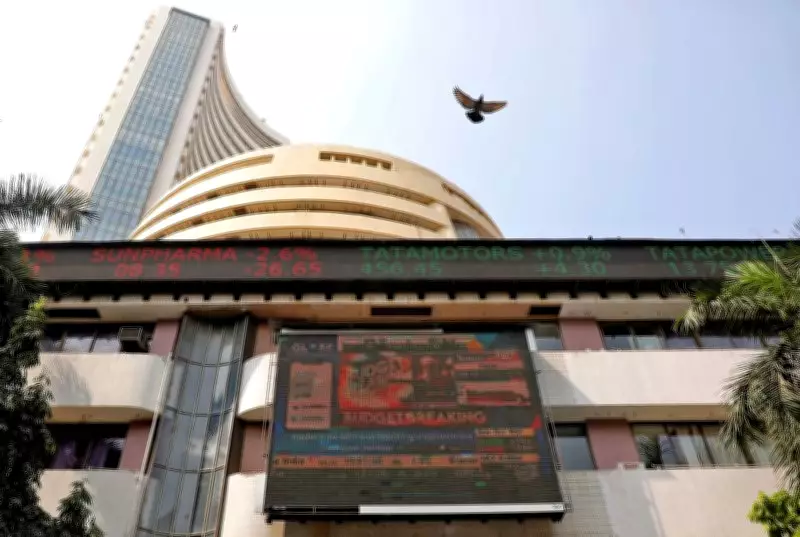
Indian Stock Markets Open Lower Amid Mixed Global Cues, Turn Volatile Later
On Tuesday, Indian stock markets commenced trading on a negative note, reflecting the influence of mixed global cues from international markets. The benchmark indices, Sensex and Nifty, opened lower as investors grappled with uncertainties stemming from global economic trends and domestic factors.
Opening Session Sees Decline
The BSE Sensex opened at a lower level, dropping by approximately 0.5% in early trading hours. Similarly, the NSE Nifty also started the day with a decline, indicating cautious sentiment among market participants. This initial downturn was primarily attributed to mixed signals from global markets, where some regions showed gains while others faced losses, creating a complex backdrop for Indian equities.
Volatility Emerges Later in the Day
As the trading session progressed, the markets turned volatile, with indices fluctuating between gains and losses. This volatility was driven by a combination of factors, including reactions to recent economic data releases, corporate earnings reports, and geopolitical developments. Investors closely monitored key sectors such as banking, IT, and pharmaceuticals, which exhibited varied performance throughout the day.

Market analysts noted that the volatility was exacerbated by concerns over inflation trends and potential interest rate changes by central banks globally. Additionally, domestic issues like monsoon progress and industrial output data contributed to the uncertain market environment.
Global Cues Influence Trading
The mixed global cues played a significant role in shaping market movements. While some Asian markets showed resilience, European and US market trends provided conflicting signals, leading to a lack of clear direction for Indian stocks. This global uncertainty prompted investors to adopt a wait-and-watch approach, resulting in lower trading volumes and increased price swings.
Key observations from the trading session include:
- Sensex and Nifty experienced intraday volatility, with frequent shifts between positive and negative territories.
- Sectoral indices displayed mixed trends, with some sectors like technology gaining while others like auto and energy faced pressure.
- Mid-cap and small-cap stocks also mirrored the volatility, though with varying degrees of impact compared to large-cap stocks.
Outlook and Investor Sentiment
Looking ahead, market experts suggest that the volatility may persist in the near term as investors await more clarity on global economic policies and domestic economic indicators. The upcoming corporate earnings season and macroeconomic data releases are expected to be key drivers of market direction in the coming days.
Investor sentiment remains cautious, with many opting for a defensive stance by focusing on fundamentally strong stocks and sectors with growth potential. The overall market trend will likely depend on how global events unfold and how domestic factors, such as government policies and economic reforms, evolve in response.
In summary, the Indian stock markets opened lower due to mixed global cues and later turned volatile, reflecting the ongoing uncertainties in both international and domestic arenas. Market participants are advised to stay informed and exercise prudence in their investment decisions during this period of heightened volatility.






