

From Aspirational Car to Astounding Compounder: The Maruti Suzuki Equity Saga
In the early 2000s, the Maruti 800 was more than just a car; it was a landmark achievement for India's burgeoning middle class. Priced at approximately ₹2.5 lakh, this compact hatchback revolutionized personal transportation and stood as a powerful emblem of aspiration and upward mobility for millions of families across the nation.
A Two-Decade Transformation into a Market Titan
Fast forward two decades, and the Maruti brand has authored one of the most extraordinary wealth-creation narratives in the history of Indian stock markets. Maruti Suzuki India Limited made its grand debut on the bourses in 2003, listing at an issue price of ₹125 per share. From that humble beginning, the stock has embarked on a monumental journey, generating staggering returns of approximately 12,230%, catapulting to a price of ₹15,412.75 as of the market close on February 10.
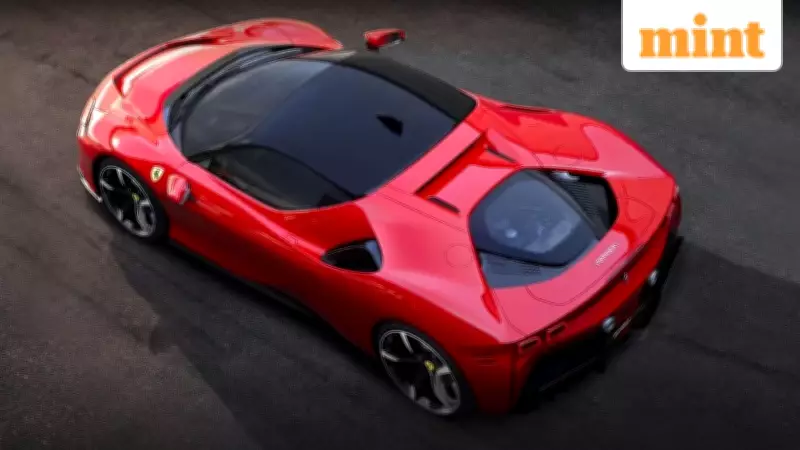
To truly grasp the scale of this financial phenomenon, consider this: a strategic investment of ₹2.5 lakh in Maruti Suzuki shares in 2003—the same amount as the iconic car's price tag—would have ballooned to a colossal sum exceeding ₹3 crore in today's valuation, excluding corporate actions like dividends and bonuses. For perspective, a brand-new Ferrari Portofino, a symbol of ultimate luxury, carries a price tag of around ₹3.31 crore.

What originated as a beloved household automobile brand has, quietly and consistently, metamorphosed into a long-term compounding powerhouse for disciplined and patient investors, rewriting the rules of personal finance in India.
Analyzing Recent Share Performance and Quarterly Results
Maruti Suzuki: Recent Share Performance
The automobile stock has demonstrated robust growth, appreciating by 21% over the past year and advancing 22% in the last six months. However, it has experienced a correction of roughly 7% in the most recent one-month period. The scrip achieved its all-time high of ₹17,371.60 on January 5, 2026, while touching its 52-week low of ₹11,072 in April 2025. Impressively, the stock has doubled investor wealth over the last five years, registering a gain of 101%.
Maruti Q3 Financial Results
During the December quarter, India's largest passenger vehicle manufacturer reported a strong revenue performance, driven by healthy sales volumes and improved realizations. Revenue from operations surged 28.7% year-on-year to ₹49,892 crore, compared to ₹38,752 crore in the same quarter last year. Net profit witnessed a growth of 3.7% YoY, rising to ₹3,794 crore from ₹3,659 crore a year earlier.
Operating performance showed improvement in absolute terms, with EBITDA increasing 10% YoY to ₹5,572 crore from ₹5,064 crore. However, the EBITDA margin contracted to 11.2% from 13%, primarily impacted by elevated input costs and higher operating expenses.
Furthermore, sales momentum remained firm during the quarter. Total volumes grew by 17.9% YoY to 667,769 units. Domestic sales soared 20.9% to 564,669 units, constituting 84.6% of overall volumes, while exports increased by 3.9% to 103,100 units.
Brokerage Perspectives: Should You Invest in Maruti Suzuki?
Leading brokerages have maintained a positive outlook on Maruti Suzuki, citing a revival in entry-level demand, steady capacity expansion, and an improving product mix, even as near-term margins face pressure.
Choice Institutional Equities noted that the auto major continues to benefit from the GST-led recovery in the passenger vehicle market, especially in the small car segment. The brokerage emphasized a structural pickup in demand, with the share of first-time buyers rising by approximately 7% to nearly 47%.

"Maruti Suzuki remains well positioned to capture demand recovery, supported by sustained capital expenditure and upcoming capacity additions," stated Choice Institutional Equities. The brokerage also highlighted capacity expansion at Kharkhoda and Gujarat facilities, which are collectively expected to add nearly 5 lakh units annually. While it marginally reduced FY26E–FY27E EPS estimates by 1–1.3% due to higher depreciation, it upgraded the stock to an ADD rating with a target price of ₹16,200.
Meanwhile, Motilal Oswal observed that improved affordability following the GST reduction has revived demand for small cars, while upcoming model launches and export growth could drive medium-term expansion.
"New model launches and export growth could aid market share gains and support a re-rating over the next 30–40 months," Motilal Oswal said. The firm maintained a Buy rating with a target price of ₹18,197, despite slightly trimming its earnings estimates.
Technical Analysis Viewpoint
Aakash Shah, Technical Research Analyst at Choice Equity Broking, believes MARUTI is exhibiting signs of short-term trend stabilization after a sharp corrective phase from recent highs. The stock has witnessed a strong rebound from the lower support zone near ₹14,000, indicating renewed demand emerging at lower levels. The recent formation of bullish candles suggests a shift from aggressive selling pressure to a more balanced-to-bullish short-term structure.
"Price has reclaimed the 20-day Exponential Moving Average (EMA) and is now trading near the 50-day EMA zone. The 20-day EMA has started to turn upward, reflecting improving short-term momentum. However, the stock is still trading below the 100-day EMA, which is positioned near the ₹15,650 area and may act as immediate overhead resistance," Shah explained.
He added that a sustained move above this level would further strengthen the case for a bullish reversal. Importantly, the ₹14,700 zone coincides with the 200-day EMA, making it a strong confluence of demand and long-term support. Volume expansion during the rebound indicates short-covering and fresh buying interest. The Relative Strength Index (RSI) has recovered from oversold territory and is now near neutral, suggesting improving momentum.
"A decisive close above ₹15,650 could open the door for further upside toward the ₹16,400 target zone, confirming a stronger bullish reversal. Holding above the ₹14,700 (200-day moving average) support remains critical to maintain the positive bias," he concluded.
Disclaimer: The views and recommendations presented above are those of individual analysts or broking companies, and not of Bharat Horizon. We advise investors to consult with certified financial experts before making any investment decisions.





