

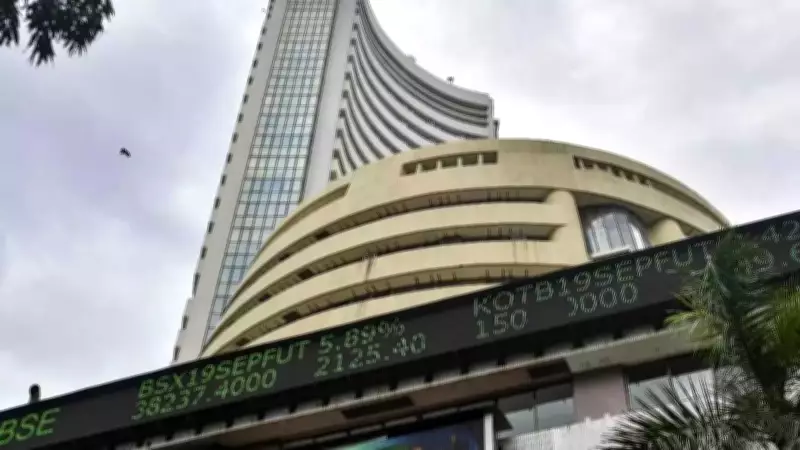
Middle East Conflict Enters Fourth Week, Global Markets on Edge
The Middle East conflict has now entered its fourth consecutive week, with escalating tensions between Israel and Iran sending profound shockwaves through global financial markets. As the situation continues to evolve, investor sentiment worldwide remains highly fragile and acutely sensitive to geopolitical developments.
Holiday-Shortened Week Ahead: Key Market Drivers
For the upcoming trading week, which will be shortened due to the Shri Ram Navami holiday on Thursday, market direction is expected to be guided by a complex mix of factors. The primary external driver remains the ongoing crisis in West Asia and its direct impact on international crude oil prices. Alongside this, movements in major global equity indices, the activity of foreign portfolio investors (FPIs), and fluctuations in the Indian rupee against the US dollar will play critical roles in shaping trends.
Ajit Mishra, a senior market analyst, emphasized the data-sensitive nature of the week ahead. "This week is expected to remain data-sensitive amid ongoing global uncertainties. Developments in the West Asia conflict and movements in crude oil prices will continue to act as key external drivers and are likely to dictate the near-term market trend," he stated.

Domestic Data and Foreign Investor Exodus
On the domestic front, attention will shift to the upcoming release of the HSBC Flash Purchasing Managers' Index (PMI) data for India's manufacturing, services, and composite sectors. This data will provide an early and crucial indication of business activity trends within the country, offering insights into economic health amidst global turmoil.
Meanwhile, foreign portfolio investors have intensified their withdrawal from Indian equities, pulling out a staggering Rs 88,180 crore (approximately $9.6 billion) so far this month. This significant capital flight is attributed to the triple threat of rising Middle East tensions, a weakening Indian rupee, and mounting concerns over how elevated crude oil prices might stifle economic growth and erode corporate profitability.
Persistent Volatility and the Crude Oil Factor
Market participants widely anticipate that volatility will persist, with global geopolitical triggers playing a decisive role in near-term price movements. Analyst Ponmudi R. provided a detailed outlook, noting, "Looking ahead, markets are likely to remain highly volatile and event-driven, with near-term direction largely contingent on developments in the Middle East, particularly the evolving situation around the strategic Strait of Hormuz."
He further warned that any prolonged disruption to oil shipments through this critical chokepoint could keep crude prices elevated above the psychologically significant USD 100 per barrel mark. Such a scenario would intensify inflationary pressures and strain India's current account deficit, while simultaneously sustaining a broad 'risk-off' sentiment among global investors.
Potential Market Scenarios and Previous Week's Performance
Ponmudi R. also outlined potential market reactions: a de-escalation of tensions or a decline in oil prices could trigger short-covering or relief rallies. Conversely, any renewed military or diplomatic escalation is likely to exert continued downward pressure on stock indices.
Reflecting the cautious and nervous trading environment, benchmark indices ended the preceding week with marginal losses. The BSE Sensex declined by 30.96 points, or 0.04%, while the NSE Nifty fell by 36.6 points, or 0.15%.
In summary, as the Middle East conflict enters its fourth week, the Indian stock market braces for a period of heightened sensitivity. Traders and investors will closely monitor foreign institutional investor (FII) flows, currency movements, and broader global cues—including the strength of the US dollar—as key indicators. The interplay between geopolitical headlines and economic data will ultimately dictate market trajectory in this uncertain climate.






