

Oil, Banking, and Auto Stocks Take Center Stage as West Asia Conflict Enters Fourth Week
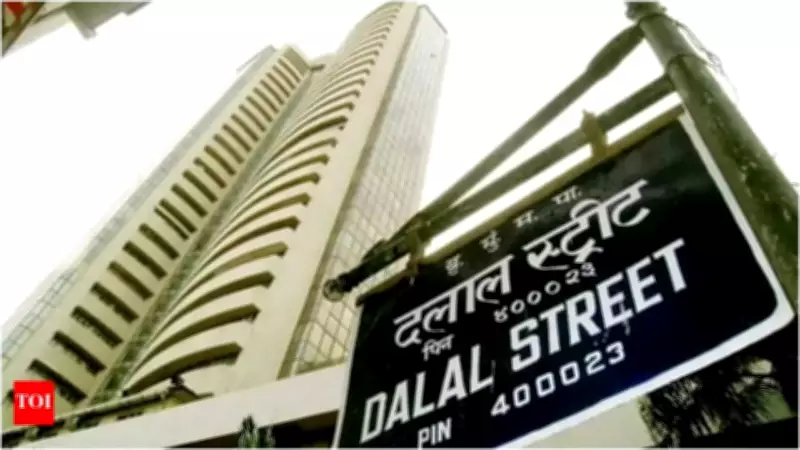
As global markets navigate the fourth week of the ongoing war in West Asia, domestic investors on Dalal Street are expected to focus sharply on oil & gas, banking, and auto stocks in the new, albeit truncated, trading week. This heightened attention comes as these sectors have borne the brunt of market volatility since the conflict erupted.
Sectoral Performance Shows Stark Contrasts
Over the first three weeks of the war, crude oil prices surged approximately 50% from pre-war levels, triggering significant declines in key indices. According to BSE data, between February 27—the day before the US-Israel-Iran conflict began—and March 20, the PSU banking index plummeted nearly 13%, the all banking index fell almost 12%, the oil & gas index dropped 12.2%, and the auto index declined 12.1%.
In stark contrast, the BSE clean environment index gained 2.6%, while the utilities index rose a marginal 0.4%, and the power index closed just 0.6% lower. This divergence highlights how the war has disproportionately impacted energy-sensitive and financial sectors, while cleaner energy and utility stocks have shown relative resilience.

Market Drivers: War Developments and Economic Data
Market analysts believe that trading trends by foreign portfolio investors (FPIs) and the trajectory of the rupee, particularly against the US dollar, will be crucial in determining the direction of the Sensex and Nifty indices. Both factors are heavily influenced by the evolving situation in West Asia.
On Friday, the Sensex closed at 74,533 points, marking an 8.3% decline since the war started, while the Nifty fell 7% to 23,115 points. Media reports indicate the conflict has recently shifted in favor of Iran, complicating global energy dynamics. Despite a US 48-hour ultimatum for Iran to open the Strait of Hormuz—a critical chokepoint for global energy supply—Iran has refused, potentially keeping crude oil and natural gas prices elevated.
Late Friday, Brent crude prices rallied toward $110 per barrel after dipping near $100 earlier in the session. This volatility contributed to declines in US indices, with the Dow Jones down 1%, the Nasdaq Composite falling 2%, and the S&P 500 dropping 1.5%. Earlier, as oil prices dipped, the Sensex managed a 326-point or 0.4% gain.
Expert Insights and Future Outlook
Ajit Mishra, Senior Vice President of Research at Religare Broking, noted that the upcoming week is expected to remain data-sensitive amid persistent global uncertainties. "Developments in the West Asia conflict and movements in crude oil prices will continue to act as key external drivers and are likely to dictate the near-term market trend," Mishra stated in a research note.
"On the domestic front, investors will closely monitor HSBC Flash PMI data for manufacturing, services, and Composite segments, which will provide an early indication of business activity trends. Additionally, Industrial Production data will be tracked for insights into the strength of economic momentum."
FPI Selling Raises Concerns
Market participants have expressed surprise at the rapid pace of FPI selling, with net outflows exceeding Rs 93,600 crore in March alone. V K Vijayakumar, Chief Investment Strategist at Geojit Investments, remarked, "The complete negative stance of the FPIs towards India is evident from the fact that they are selling recklessly without regard for valuations. A reversal of FPI selling will happen only when the war ends and normalcy returns to the market."
As the war in West Asia continues to unfold, investors remain on edge, with oil, banking, and auto stocks poised to react sharply to any geopolitical shifts or economic data releases in the days ahead.






