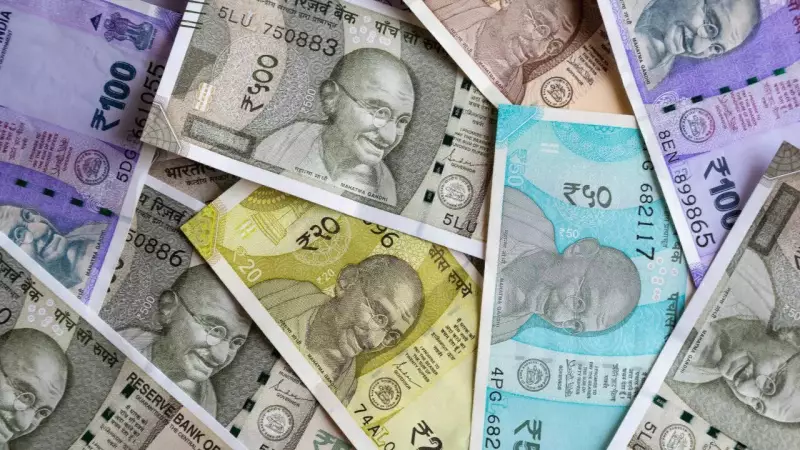
The Indian rupee extended its losing streak on Tuesday, tumbling to a fresh all-time low against the US dollar. The domestic currency closed at 89.95 per dollar, marking a sharp fall of 42 paise from its previous close. This relentless depreciation brings the rupee perilously close to the psychologically significant 90-per-dollar mark.
What's Driving the Rupee's Historic Slide?
So far in 2024, the rupee has weakened by over 4%, with a notable 0.8% drop in November alone. Market analysts point to a confluence of domestic and global pressures. The immediate triggers include speculators covering their short positions and consistent dollar buying by importers. However, deeper structural issues are at play.
A key factor highlighted by experts is the continued delay in the first tranche of the India-US Bilateral Trade Agreement (BTA). This uncertainty, coupled with a record trade deficit in October fueled by higher imports, has significantly weighed on the currency. The rupee's fall is particularly striking as it occurred even as the US dollar weakened globally in November, indicating strong localized pressures.

Dharmakirti Joshi, Chief Economist at CRISIL Limited, offered a note of cautious optimism. He told ANI that a potential reversal could be ahead, contingent on a trade deal with the US. "My belief is that if you get a trade deal, I think the depreciated rupee will again start appreciating... our expectation is that rupee will strengthen from these levels in the months ahead," Joshi stated. He also reminded that currency fluctuation is inherent, citing periods like the 2013 taper tantrum.
Bank Reports Paint a Mixed Picture
A Bank of Baroda report authored by economist Aditi Gupta underscored the rupee's underperformance. It noted that strong importer demand, low foreign inflows, trade deal uncertainty, and an elevated trade deficit overwhelmed the domestic currency. Notably, even a stronger-than-expected GDP print failed to lift sentiment, with the rupee continuing to trade at new lows. The report forecasts the USD/INR pair to trade in the range of 89-90 this month.
In contrast, Union Bank of India (UBI) struck a more positive chord. Its analysis suggests that the bulk of the rupee's weakness for the year may already be priced in. "Given that the rupee has already weakened by roughly 4% this year, we do not expect significant further depreciation in the near term," the UBI report notes.
Why the 90 Level is a Critical Threshold
Anindya Banerjee, Head of Commodity and Currency at Kotak Securities, explained the immense psychological importance of the 90 mark. He warned that a cluster of buy-stop orders likely sits above this level, which could accelerate the rupee's fall if breached. "This is precisely why the RBI must remain active below 90; if the pair starts sustaining above this zone, the market could quickly shift into a higher trending phase toward 91.00 or even higher," Banerjee cautioned. He emphasized the central bank's vital role in preventing speculators from betting on a one-way move, which could trigger severe volatility.
Looking ahead, volatility is expected to remain high. Prithvi Finmart told ANI that the rupee will likely stay volatile this week, influenced by fluctuations in the dollar index, domestic equity markets, and the upcoming US Federal Reserve monetary policy meeting. They predict the currency pair could trade in a wide band of 88.5500 to 90.6000.