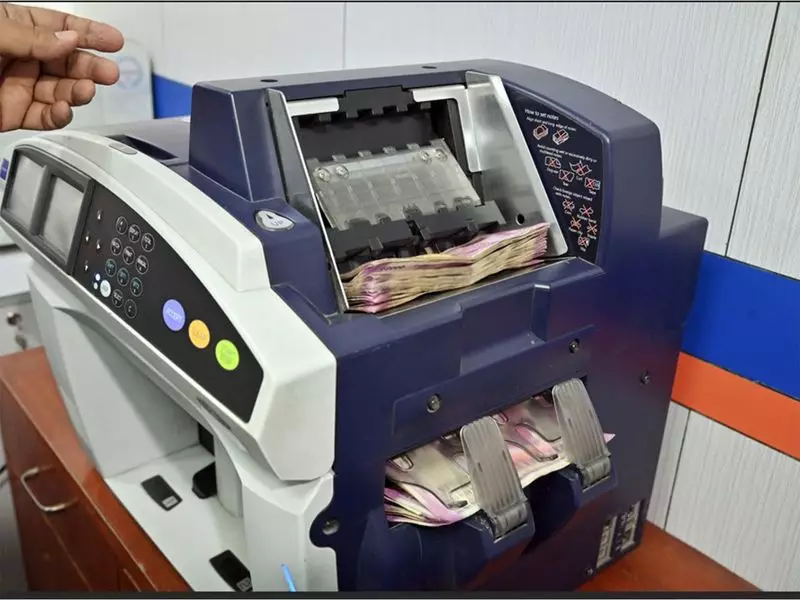
The Indian rupee, after a period of intense volatility and a sharp depreciation that saw it breach the significant psychological level of 90 against the US dollar, has finally shown signs of stabilisation. Market analysts and a recent report now suggest that the worst phase for the currency may be drawing to a close, offering a sigh of relief to importers and policymakers alike.
From Turbulence to Tentative Calm
The rupee's journey in recent weeks has been fraught with pressure. It weakened past the 90-per-dollar mark, a level that triggers concern among market participants. This depreciation was primarily driven by a resurgent US dollar, which gained strength on the back of expectations that the Federal Reserve would maintain higher interest rates for an extended period. This global trend put pressure on most emerging market currencies, with the rupee being no exception.
However, the situation began to shift as the Reserve Bank of India (RBI) stepped in with strategic interventions. The central bank is believed to have sold dollars from its substantial foreign exchange reserves to curb excessive volatility and prevent a disorderly fall in the rupee's value. This proactive stance from the RBI provided a crucial floor for the domestic currency and helped restore a degree of confidence in the market.

Key Factors Behind the Stabilisation
Several converging factors have contributed to the rupee finding its footing. Firstly, the RBI's demonstrated willingness to use its reserves has acted as a powerful deterrent against speculative attacks on the currency. Secondly, there has been a moderation in global crude oil prices from their recent peaks. Since India is a major oil importer, lower prices reduce the dollar outflow needed for energy purchases, easing pressure on the current account deficit and, by extension, the rupee.
Furthermore, robust inflows into the Indian equity and debt markets have provided underlying support. Foreign portfolio investors (FPIs) have shown renewed interest, bringing in foreign capital that needs to be converted into rupees, thereby increasing demand for the local currency. Combined, these elements have created a more favourable environment for the rupee to stabilise after its steep decline.
What Does the Future Hold?
While the immediate storm appears to be subsiding, analysts caution that the rupee's trajectory will remain sensitive to global developments. The monetary policy path of the US Federal Reserve continues to be the dominant external factor. Any signals of further rate hikes or a prolonged hawkish stance could reignite dollar strength and test the rupee's resilience once more.
Domestically, India's macroeconomic fundamentals will play a defining role. A narrowing trade deficit, controlled inflation, and sustained economic growth are critical for long-term currency stability. The RBI's management of its forex reserves and its communication on exchange rate policy will also be closely watched by traders and investors.
In conclusion, the breach of the 90 mark served as a wake-up call, but the subsequent stabilisation indicates that the Indian rupee possesses underlying buffers. The consensus among experts, as highlighted in recent reports, is that the most intense period of depreciation has likely passed. The currency is now expected to trade within a relatively stable range, with the RBI acting as a vigilant guardian against extreme volatility. For businesses and the economy, this newfound stability is a welcome development after a period of uncertainty.