

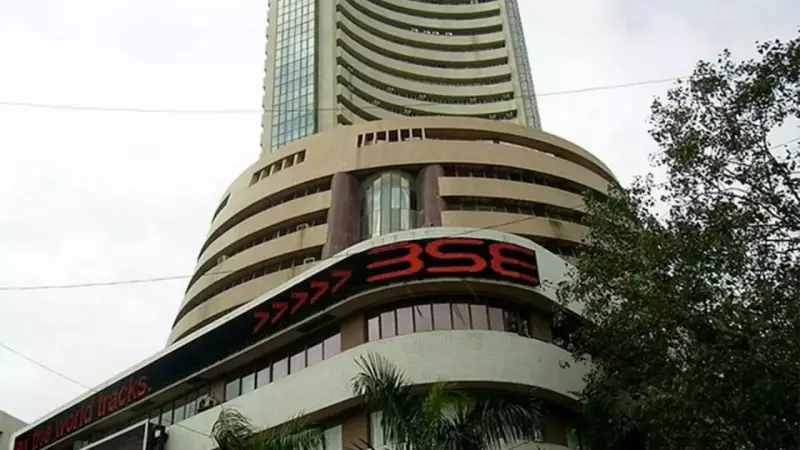
MUMBAI: Indian equity markets witnessed a sharp correction on Friday as a combination of domestic currency weakness and persistent foreign fund outflows triggered a broad-based selloff. The benchmark indices closed with significant losses, reflecting heightened investor anxiety amid global geopolitical tensions.
Market Indices Plunge Amid Heavy Selling Pressure
The BSE Sensex plummeted by 770 points, representing a decline of 0.9%, to settle at 81,538 points. Meanwhile, the broader NSE Nifty experienced an even steeper fall, sliding 241 points or 1% to close at 25,049 points, barely holding above the psychologically important 25,000 mark.
Key Factors Driving the Market Downturn
According to market analysts, multiple negative factors converged to create a perfect storm for Indian equities. Ajit Mishra, Senior Vice President of Research at Religare Broking, noted that markets exhibited high volatility before declining nearly 1%, effectively resuming the prevailing corrective trend that has been observed in recent sessions.

"Market sentiment was weighed down by renewed concerns over global trade and geopolitical developments, along with continued foreign institutional selling," Mishra explained. "Currency weakness further added to the negative bias, as the rupee slipped to fresh lows against the dollar during the trading session."
Foreign Institutional Investors Lead the Exodus
Data from BSE revealed that foreign institutional investors (FIIs) were at the forefront of the selling spree, recording a net outflow of Rs 4,113 crore on Friday alone. This trend has been consistent throughout the month, with NSDL data showing that foreign funds have net sold Indian stocks worth nearly Rs 33,600 crore so far in July.
The sustained selling by foreign investors has been attributed to several factors:
- Geopolitical uncertainties affecting global risk appetite
- Concerns about global trade disruptions
- Attractive investment opportunities in other emerging markets
- Dollar strength and rupee depreciation dynamics
Significant Wealth Erosion for Investors
The day's market carnage resulted in substantial wealth erosion for investors. Official data showed that the total market capitalisation on BSE declined by Rs 6.9 lakh crore, bringing the exchange's total market cap down to Rs 451.6 lakh crore. This represents one of the most significant single-day wealth destructions witnessed in recent months.
Broader Market Impact and Future Outlook
The market decline was broad-based, affecting stocks across sectors. Banking, financial services, and information technology stocks were among the hardest hit, reflecting the sensitivity of these sectors to foreign fund flows and currency movements.
Market participants are now closely monitoring several key developments that could influence market direction in the coming sessions:
- The trajectory of the Indian rupee against major global currencies
- Foreign institutional investor activity and fund flow patterns
- Global geopolitical developments and their impact on risk sentiment
- Domestic economic indicators and corporate earnings announcements
While the immediate outlook appears cautious, analysts suggest that the current correction might present buying opportunities for long-term investors once the market stabilizes. However, they caution that volatility is likely to persist until there's clarity on global macroeconomic factors and foreign investor sentiment toward emerging markets.






