SEBI Chairman Calls for Investor Calm Amidst Market Turbulence
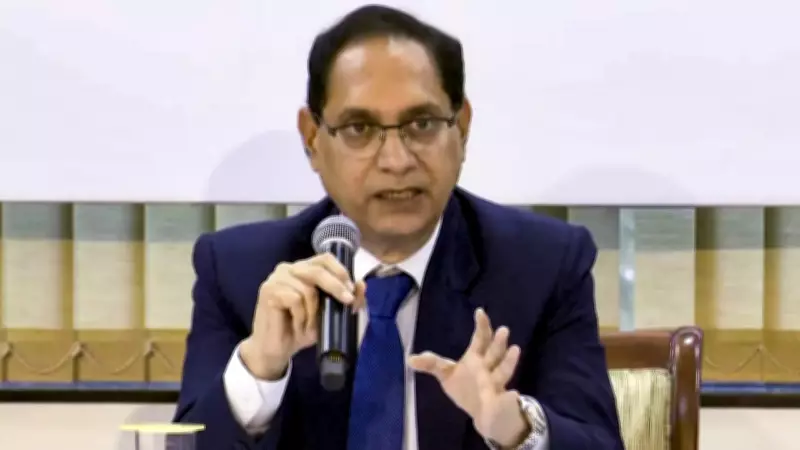
In a significant address, Securities and Exchange Board of India (SEBI) Chairman Tuhin Kanta Pandey on Monday urged investors to maintain composure and avoid panic amidst the sharp volatility currently gripping financial markets. This turbulence has been largely triggered by the escalating conflict in West Asia, which has disrupted global economic stability.
Emphasizing India's Economic Resilience
Speaking at an event in Mumbai commemorating 30 years of the NIFTY 50 index at the National Stock Exchange (NSE), Pandey reassured stakeholders that India's underlying economic fundamentals remain robust and resilient despite these global uncertainties. "It's important not to panic at this moment, but to remain calm amidst this problem. Over the long run, it (Nifty) has continued to reflect the strength and resilience of India's growth story," Pandey stated emphatically.
He elaborated that domestic markets are experiencing what he described as "dramatic super-volatility," a direct consequence of the war in West Asia. This conflict has severely disrupted critical international shipping routes and caused significant shocks to global oil and gas supply chains, impacting economies worldwide. "Like the rest of the world, India too is deeply impacted by such developments," Pandey acknowledged, highlighting the interconnected nature of global markets.

Historical Strength Against Global Shocks
Despite the current market turbulence, the SEBI chairman emphasized that India's strong economic foundations have historically enabled the country to withstand multiple global shocks. This resilience has consistently provided a stabilizing force for domestic financial markets, even during periods of international crisis. Pandey pointed to past instances where India's economic policies and market mechanisms have absorbed external pressures, maintaining relative stability.
Reflecting on Nifty's Evolution and Financial Reforms
Pandey also contextualized the evolution of the benchmark Nifty index within the broader transformation of India's financial markets during the mid-1990s. This period marked a pivotal phase as economic liberalization gathered momentum across the nation. "The mid-1990s were a defining phase for India's financial markets. In the early era of economic liberalization, financial sector reforms were gaining momentum and institutions were being built to support a more transparent and efficient market system," he explained.
He noted that one of the most crucial developments during this transformative era was the establishment of the National Stock Exchange (NSE). The NSE introduced several groundbreaking innovations to India's capital markets, including:
- Technology-driven trading platforms
- Nationwide market access for investors
- Transparent auction mechanisms
- Modern risk management systems
These advancements fundamentally reshaped the landscape of Indian finance, laying the groundwork for the sophisticated market infrastructure that exists today. Pandey's remarks underscore the importance of viewing current market challenges through the lens of India's historical capacity for adaptation and growth, reinforcing his message of confidence and calm to the investment community.