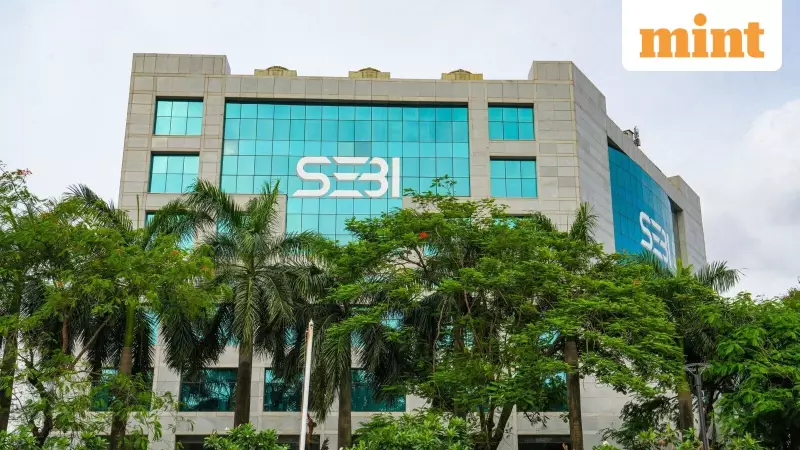
The Securities and Exchange Board of India (Sebi) is on the verge of a significant regulatory shift that could streamline how wealthy individuals access high-risk investment avenues. A key committee is reportedly close to deciding whether to grant Alternative Investment Funds (AIFs) the authority to fully certify 'accredited investors,' a move long sought by the industry to simplify a currently arduous process.
The Current Hurdle and the Proposed Fix
Under the existing framework, the certification of an accredited investor — an individual or entity deemed to have sufficient financial knowledge and net worth to comprehend high-risk products — is a tightly controlled process. Only two designated agencies are authorized to grant this status: CDSL Ventures Ltd and NSDL Data Management Ltd. This bottleneck has made the procedure cumbersome for potential investors.
The AIF industry has lobbied for a change, proposing a model already operational in Gujarat's GIFT City. There, a fund management entity (FME) can verify an investor's accreditation using recent financial statements before the investor completes KYC through digital channels. The Alternative Investment Policy Advisory Committee (AIPAC) has concluded its discussions on the matter, and the industry is now awaiting Sebi's final decision.

What Accreditation Means for Investors
Accredited investors must meet stringent financial criteria. For individuals, this means an annual income of at least ₹2 crore, or a net worth of ₹7.5 crore with a minimum of ₹3.75 crore in financial assets. Corporate bodies and non-family trusts need a net worth of ₹50 crore.
The primary advantage of this status is a lowered investment threshold in AIFs. While typical AIF investments require a minimum commitment of ₹1 crore, accredited investors can commit smaller sums across various schemes, allowing for better risk diversification. They also gain access to private placements and venture capital funds.
Modest Uptake and the Push for Change
Despite the potential benefits, the uptake of formal accreditation has been surprisingly low. As of September 2025, while over 72,000 entities and people had invested in AIFs, fewer than 1,000 had obtained accredited investor status. The count was a mere 649 in June 2025.
Industry experts cite the complicated process and a lack of attractive benefits as key reasons. "People are not willing to get accredited because the process is complicated and they don't get much in return. The benefit-to-effort ratio is not very attractive," said Ananya Roy, founder of Credibull Capital. She added that simplifying the process through AIFs would solve only part of the problem, and a wider array of products is needed to incentivize investors.
Sebi has acknowledged the modest numbers, partly attributing them to recent rule relaxations and the presence of "deemed" accredited investors whose status isn't captured in official data. The proposed change aims to directly address the complexity. "The idea is to get them self-certified through an AIF. Sebi and the industry are keen on these changes... there is a good chance the changes will be adopted," said an anonymous industry executive.
The backdrop to this discussion is a booming AIF industry. As of September 2025, registered AIFs had collectively raised over ₹6.36 trillion in gross capital, with investments totaling ₹6.12 trillion. A smoother accreditation process could funnel more qualified capital into this growing sector, fostering greater sophistication in India's alternative investment landscape.