

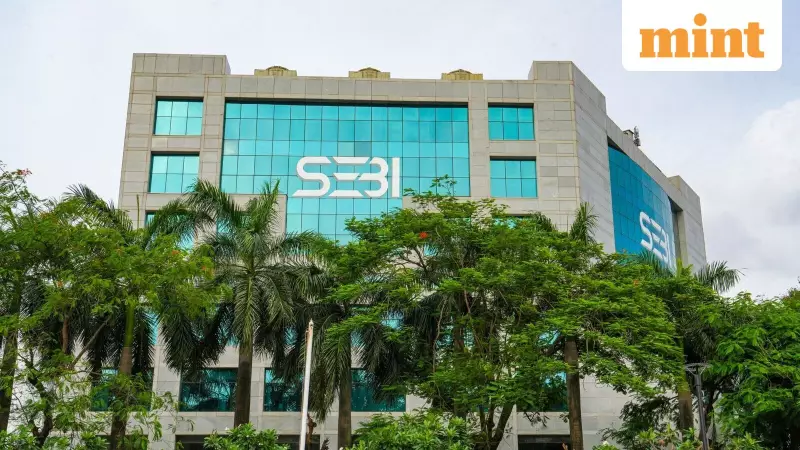
The frenetic pace of small and medium enterprise (SME) initial public offerings (IPOs) in India has moderated significantly this year, following a series of regulatory interventions by the Securities and Exchange Board of India (Sebi). The number of listings on SME platforms grew by just 12.5% so far in 2025, a stark contrast to the 31% surge witnessed in 2024, according to a report from Pantomath Capital Advisors.
The Regulatory Brake on SME IPO Frenzy
Experts point to Sebi's stringent measures, implemented from late 2024 into 2025, as the primary driver of this slowdown. Jay Jhaveri, partner at Bhuta Shah and Co. LLP, explained that the market regulator tightened eligibility criteria, governance norms, and rules on the use of IPO proceeds. These changes were designed to curb potential misuse and speculative fervour but had the side effect of making the listing process more challenging for some smaller companies.
Key restrictions included capping the offer for sale (OFS) by existing investors at 20% of the total issue size in 2024. Additionally, selling shareholders were barred from offloading more than half of their holdings in the IPO. Sebi also mandated stricter profitability filters, requiring SME issuers to have an operating profit of ₹1 crore for two of the three preceding financial years. The National Stock Exchange (NSE) added a further criterion of positive free cash flow to equity for at least two years.

Macroeconomic Headwinds Add to the Slowdown
Beyond regulatory policy, broader economic conditions also played a role in dampening issuance activity. Manick Wadhwa, director at SKI Capital, cited the emergence of macroeconomic headwinds following the US elections and the new administration taking charge in January. He also noted that geopolitical tensions between India and Pakistan contributed to a lull in IPO activity during April and May.
The data underscores the combined impact of these factors. While total fundraising on SME platforms still rose by 31% year-on-year to ₹11,539 crore in 2025, this growth paled in comparison to the explosive 86% increase recorded in 2024.
A Shift Towards Larger, Higher-Quality Issuers
An interesting trend emerging from this calibrated environment is the improving quality and increasing size of SME IPOs. The average SME IPO size has grown by 18% since 2024, even as the average mainboard IPO size shrank by 3%.
According to Pranav Haldea, managing director at Primedatabase.com, the gap between the largest SME offers and the smallest mainboard IPOs is narrowing. In 2025, the biggest SME IPO raised ₹166 crore, while the smallest mainboard issue was for ₹116 crore.
Industry observers believe the stricter norms are filtering the pipeline. "Eligibility filters and exchange norms are increasingly steering the SME pipeline toward more business-ready issuers, which typically seek larger raises," said Jay Jhaveri. Kresha Gupta, director at Steptrade Capital, noted that companies coming to list now are far more prepared with proven operations and clear expansion plans, which naturally leads to larger capital requirements for capacity growth and technology upgrades.
Mahavir Lunawat, chairman of Pantomath Capital, highlighted a fundamental difference in fund utilisation: while mainboard IPOs see significant funds deployed for balance sheet strengthening and debt reduction, fundraising in the SME segment is led by fresh issues aimed primarily at capital expenditure and scaling up operations.
The era of unchecked frenzy in SME IPOs appears to be giving way to a more mature phase, driven by regulatory oversight and a focus on sustainable business fundamentals, reshaping India's public market landscape for smaller enterprises.






