In a significant announcement, the Securities and Exchange Board of India (Sebi) has indicated that the long-awaited initial public offering (IPO) of the National Stock Exchange (NSE) is set to overcome a major regulatory obstacle. This development could finally pave the way for the listing of the country's premier bourse after years of delays.
NSE IPO: The Final Regulatory Hurdle to Fall
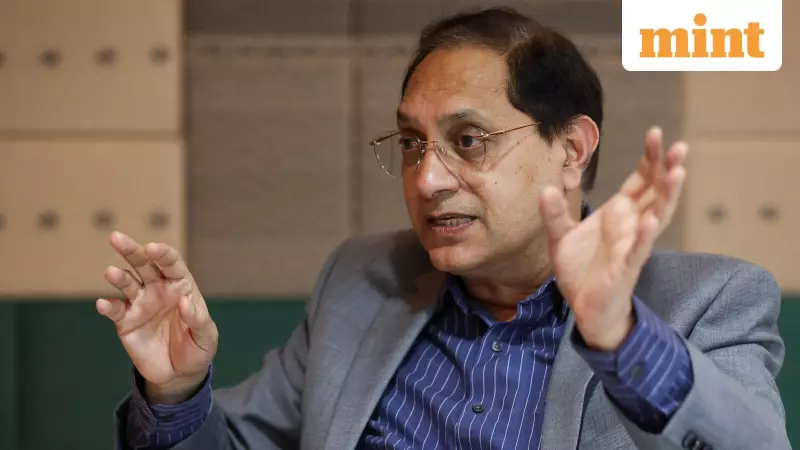
Sebi Chairman Tuhin Kanta Pandey stated at a press conference in Chennai on Saturday that the market regulator will soon issue a crucial no-objection certificate (NOC) for the NSE's public offering. He suggested the clearance could come before the end of this month. Once this certificate is granted, the onus will shift to the NSE to proceed with the listing process.
The IPO journey for the exchange had been stalled primarily due to the infamous dark fibre case. This controversy involved allegations that certain high-frequency traders were given unfair access to the NSE's co-location servers between 2010 and 2014 via faster private communication lines, allowing them to execute trades more quickly than others. In April 2019, Sebi had ordered the NSE to disgorge ₹62.58 crore of alleged unlawful gains and had barred some senior officials from holding market-related positions.

Sebi also levied a ₹7 crore penalty on the exchange in 2022, which was later overturned by the Securities Appellate Tribunal (SAT). The regulator challenged this SAT order in the Supreme Court in September 2023 and again in February 2024. Unlike regular companies, market infrastructure institutions like stock exchanges must obtain this special NOC from Sebi before filing their draft prospectus, underscoring their systemic importance to India's financial stability.
Market Reforms: T+0 Challenges and New MF Framework
Chairman Pandey also provided updates on other key regulatory initiatives. He expressed concerns about the limited traction for Sebi's proposed T+0 settlement cycle, where trades would be settled on the same day. India had already made history by becoming the first nation to implement a T+1 settlement cycle for all listed stocks in January 2023. Building on this, Sebi introduced an optional T+0 cycle in March 2024 for 25 stocks, with plans to expand it to the top 500 stocks by January 31, 2025.
However, Pandey noted significant implementation challenges. "This is creating significant challenges, and few are willing to undertake it. The benefits appear limited, and given the level of disruption it causes, it does not seem worthwhile," he remarked at the press meet.
On the mutual fund front, Pandey announced that Sebi is ready to notify a framework for performance-linked expense ratios. This proposal, first introduced in a consultation paper in October, aims to enhance transparency in the fees charged by asset management companies. A formal notification is expected within "a day or two," after which Sebi will collaborate with the industry to establish performance benchmarks. Pandey acknowledged that performance measurement remains the most complex part of this reform.
Deepening Markets: Bond Derivatives and Simplified KYC
Speaking at the 5th ANMI International Capital Market Convention 2026, the Sebi chief outlined plans to introduce bond derivatives as a tool to deepen the corporate bond market. "We have taken concrete steps to make the corporate bond market more accessible for issuers and investors. We are examining bond derivatives as another initiative," Pandey said. He also highlighted efforts to foster the growth of municipal bonds through regulatory changes and outreach programs.
To ease investor onboarding, Sebi is working on simplifying the Know Your Customer (KYC) process. The focus is on reducing repetitive documentation and streamlining the re-KYC procedure so that KYC Registration Agencies (KRAs) maintain only updated records. Public consultation on these proposals is slated to begin shortly.

Furthermore, Sebi is leveraging artificial intelligence to bolster market surveillance and protect investors. The regulator's 'Sebi Sudarshan' system is actively used to identify fraudsters on social media who impersonate registered investment advisors. The board is also developing AI tools to analyze cyber audit reports and pinpoint security gaps before they can be exploited. Pandey emphasized that while AI can support human judgment, it cannot replace ultimate human accountability in regulatory oversight.