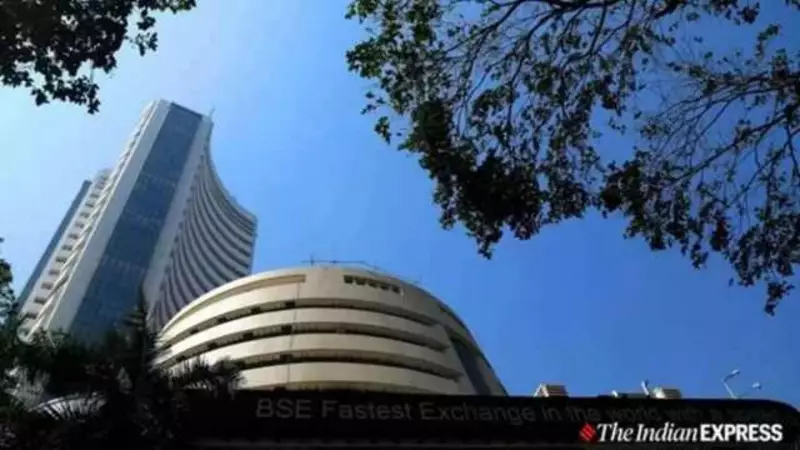
The Indian Stock Market Paradox: Record Highs Mask Global Underperformance
In a striking development that highlights the complex dynamics of global finance, India's benchmark Sensex achieved an unprecedented intra-day peak of 86,055.86 points on November 27, 2025, yet the country has emerged as one of the world's weakest-performing major equity markets over the past year. This paradox reveals a deeper story about shifting international investment patterns and India's relative attractiveness to foreign capital.
Global Comparison Reveals Stark Contrast
While the Sensex's journey from its April 2025 low of 71,425 points to the November peak appears impressive, the year-on-year performance tells a different story. The index has managed only an 8.42 percent growth despite strong macroeconomic indicators, stable inflation, and robust domestic flows through mutual funds. This modest performance stands in sharp contrast to spectacular gains witnessed in other major global markets.
Data compiled from international exchanges shows how dramatically India has trailed its global peers. South Korea's markets soared by 60 percent, powered by export momentum and technology-led recovery, while Mexico delivered an astonishing 62.29 percent return, buoyed by favorable external conditions and capital flows. Other Asian markets also significantly outperformed India, with Hong Kong jumping 33.13 percent, Japan rising 31.53 percent, and Spain advancing 40.63 percent.

European markets weren't far behind in this global bull run. London advanced 17.29 percent, Italy rose 29.75 percent, and Brazil climbed 26.58 percent. Even China, which has been grappling with structural challenges and growth anxieties, managed to deliver 16.90 percent returns, comfortably beating India's performance.
Foreign Investors Chase Better Returns Elsewhere
The significant performance gap has triggered massive capital outflows from Indian equities. According to NSDL data, Foreign Portfolio Investors (FPIs) have withdrawn a staggering Rs 1.48 lakh crore from Indian markets since January 2025. This substantial exodus occurred despite India's strong economic fundamentals, including the Reserve Bank of India's projection of 6.5 percent GDP growth for 2025-26 and a robust 8.2 percent GDP expansion in the September quarter.
Investment experts note that FPIs, known for their swift risk-on and risk-off strategies, found little incentive to remain overweight on India when other regions offered sharper, faster, and more compelling returns. "They consistently withdrew money from India and deployed it in markets like South Korea, Mexico, Japan and Hong Kong where the year-long returns were dramatically higher. Even China, which typically lags, outpaced India," revealed the CEO of a global investment firm.
The US markets presented a mixed picture during this period. The Dow Jones Industrial Average delivered a tepid 6.25 percent return, while the broader S&P 500 index posted a relatively stronger 13.54 percent gain. Only a few markets struggled more than India, with Australia gaining just 2.11 percent and Russia rising 3.82 percent amid ongoing geopolitical challenges.
Domestic Investors Provide Market Stability
While foreign money departed in search of greener pastures, domestic institutional investors and retail savers provided the crucial backbone that kept Indian indices steady and eventually pushed them to new highs. The resilience demonstrated by local investors highlights the growing maturity and depth of India's domestic capital markets, even in the face of significant foreign outflows.
The factors that contributed to the Sensex's November peak included easing crude oil prices, conducive global market conditions, and hints of rate cuts from the US Federal Reserve. However, these positive developments weren't enough to prevent India's relative underperformance on the global stage.

Analysts say the divergence underscores a broader trend of FPIs rotating aggressively into markets offering better value, undervalued opportunities, and tactical gains, while relying on India only for selective allocations during periods of global stability. As the global environment continues to shift, driven by interest rate expectations, geopolitical developments, and trade realignments, the key question remains whether India can regain its relative performance edge and attract foreign capital back to its shores.
For now, the numbers make one thing abundantly clear: while India's economy remains among the world's fastest growing, the best stock market returns over the past year were found elsewhere, creating both a challenge and opportunity for policymakers and market participants alike.