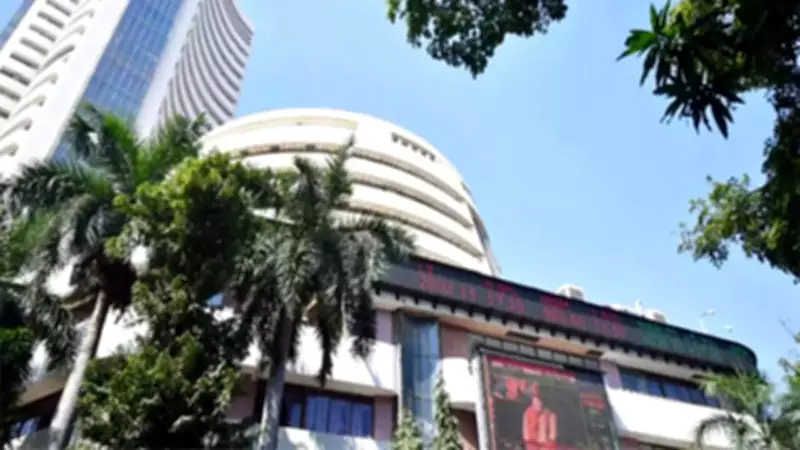
Indian Stock Markets Plunge to Six-Month Lows Amid Escalating West Asia Conflict
MUMBAI: As anticipated, Indian equity markets experienced a sharp selloff for the second consecutive session on Wednesday, driven by the intensifying conflict in West Asia that began over the weekend. The benchmark indices plummeted to their lowest levels in over six months, reflecting heightened investor anxiety and global economic uncertainty.
Market Performance and Key Indices
The BSE Sensex closed with a staggering loss of 1,123 points, representing a decline of 1.4%, to settle at 79,116 points. Similarly, the NSE Nifty dropped 385 points, or 1.6%, ending the trading session at 24,481 points. This marks the first time since early April 2025 that the Sensex has reached such levels, while the Nifty last traded around these figures in early August 2025.
Combined with Monday's loss of 1,048 points, the Sensex has now shed nearly 2,200 points, translating to a cumulative decline of 2.7% over the two sessions. The market downturn has been exacerbated by multiple factors, including the Indian rupee weakening to a new lifetime low, crude oil prices soaring to over a year-high, and aggressive selling by foreign institutional investors.

Expert Analysis and Market Sentiment
According to Ajit Mishra, Senior Vice President of Research at Religare Broking, investor sentiment remained fragile throughout the trading day. "Weak global signals, elevated crude oil prices, and the lingering uncertainty surrounding geopolitical developments in West Asia have collectively dampened market confidence," Mishra stated. He further emphasized that continued foreign institutional selling and currency volatility have exacerbated the negative sentiment.
Despite efforts by domestic institutional investors to stabilize the market by purchasing stocks worth Rs 12,068 crore, their intervention was only marginally effective. Foreign funds remained net sellers, offloading equities worth Rs 8,753 crore, as per data from the Bombay Stock Exchange. Over the last two sessions, foreign institutional investors have withdrawn a net amount of slightly over Rs 12,000 crore, equivalent to approximately $1.3 billion.
Comparative Asian Market Performance
While Indian markets faced significant pressure, the selloff was relatively less severe compared to some Asian peers. Japan's Nikkei index closed 3.6% lower, Hong Kong's Hang Seng declined by 2%, and China's Shanghai index ended the day 1% down. This indicates that although India was impacted, it fared better than several regional markets amidst the global turmoil.
Wealth Erosion and Sectoral Impact
The day's market crash resulted in a substantial erosion of investor wealth, with the total loss amounting to Rs 9.8 lakh crore. The BSE's current market capitalization now stands at Rs 447.2 lakh crore. Since the outbreak of the conflict involving the US, Israel, and Iran, the cumulative loss of wealth over the past two sessions has exceeded Rs 16 lakh crore, according to BSE data.
In Wednesday's trading session, 27 out of the 30 Sensex stocks closed in negative territory. Major contributors to the index's decline included Reliance Industries, HDFC Bank, and Larsen & Toubro. The broader market also witnessed widespread selling, with 3,295 stocks closing lower compared to only 1,025 that ended in positive territory.
Underlying Factors and Future Outlook
The ongoing geopolitical tensions in West Asia, coupled with rising crude oil prices and currency fluctuations, continue to pose significant challenges for the Indian stock market. The aggressive selling by foreign funds highlights the risk-averse stance of global investors in the face of escalating conflicts. As the situation evolves, market participants will closely monitor developments in the region, along with domestic economic indicators, to gauge the trajectory of equity markets in the coming sessions.