

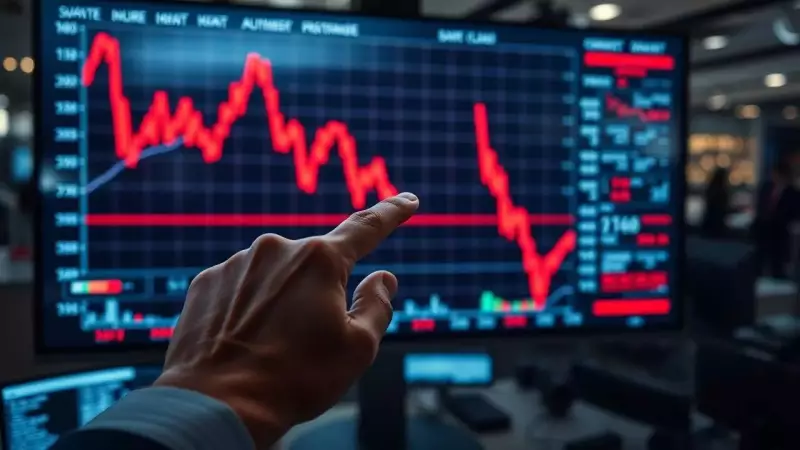
Indian equity markets started the week on a negative note on Monday. Both major indices traded in the red throughout the morning session. The benchmark Sensex fell sharply by 523.11 points to settle at 83,047.24. The Nifty index also declined significantly, slipping 166.75 points to reach 25,527.60.
Global Factors Drive Market Decline
Domestic markets reacted strongly to weak global cues and ongoing trade-related concerns. Banking and market expert Ajay Bagga explained the current market environment. He said poor global risk sentiment and a lack of strong positive triggers are driving the downturn.
"Indian markets are pointing to a weak start with the Tariff Tantrums impacting global risk appetite," Bagga stated. He observed that continued selling by Foreign Portfolio Investors (FPIs) has added pressure on domestic equities. Mixed corporate earnings results have also contributed to the negative sentiment.

Top Performers and Underperformers
Despite the overall market weakness, some companies managed to post gains. InterGlobe Aviation led the Nifty gainers with a 3.92% increase. Tech Mahindra followed closely with a 3.74% rise. Kotak Bank, Bajaj Finance, and Hindustan Unilever also showed positive movement.
On the losing side, Wipro suffered the biggest decline among Nifty stocks. The IT company fell 7.66%. Reliance Industries dropped 3.45%, while Eternal declined 3.18%. Tata Motors Passenger Vehicles and ICICI Bank also registered significant losses.
The Sensex showed similar patterns. InterGlobe Aviation again topped the gainers list with a 3.90% increase. Tech Mahindra maintained its strong performance with a 3.74% gain. Reliance Industries led the Sensex losers with a 3.40% decline.
International Developments Weigh Heavily
Global developments significantly impacted investor sentiment. President Donald Trump's threat to impose punitive tariffs on eight European countries sparked concerns. Market participants worry about a broader transatlantic trade conflict emerging.
"Tariff Tantrums are centrestage," Bagga emphasized. "Threatened 10% tariffs from February 1, rising to 25% from June 1, are creating uncertainty." He noted that precious metals and safe havens are gaining while stocks are declining.
Weak Chinese fourth-quarter GDP growth contributed to the cautious tone across Asian markets. Japan's Nikkei fell 1% while MSCI's Asia-Pacific index slipped 0.1%. European futures showed similar weakness. The EUROSTOXX 50 and Germany's DAX both declined 1.1%.
US Markets and Commodity Movements
In the United States, S&P 500 futures fell 0.7%. Nasdaq futures slipped 1% as investors responded to Trump's tariff threat. The dollar weakened against safe-haven currencies like the yen and Swiss franc.
Gold and silver surged to record highs amid the market uncertainty. Oil prices eased slightly as concerns over slowing global growth persisted. Investors continue to monitor these developments closely for further market direction.
The current market situation reflects broader economic concerns. Trade tensions between major economies are creating volatility. Foreign investor behavior and corporate performance remain key factors to watch in coming sessions.






