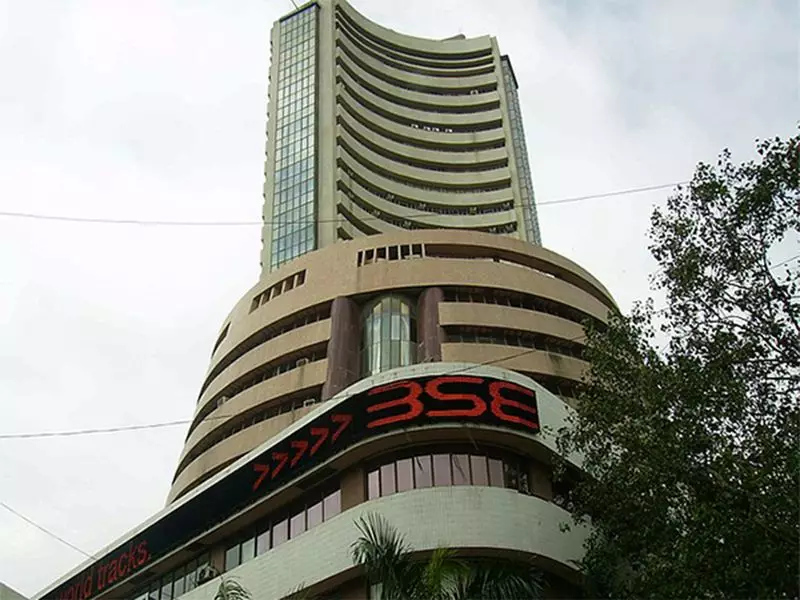
The Indian stock market witnessed a sharp sell-off on Tuesday, with benchmark indices closing deep in the red. The decline was primarily driven by heavy selling from foreign portfolio investors and growing concerns over global trade dynamics.
Market Indices Take a Significant Hit
The 30-share BSE Sensex tumbled by 455.85 points, or 0.62%, to settle at 73,466.39. During the trading session, it plummeted as much as 671 points, touching a low of 73,250.94. Similarly, the broader Nifty 50 index dropped by 152.10 points, or 0.68%, to end the day at 22,302.50.
This marked a second consecutive day of losses for the indices, reflecting a cautious and risk-averse sentiment among investors. The market breadth was overwhelmingly negative, with a large number of stocks declining compared to those that advanced.

Foreign Investors Lead the Sell-Off
A major factor behind the downturn was the aggressive selling by foreign institutional investors (FIIs). According to provisional data available with the National Stock Exchange (NSE), FIIs were net sellers in the capital markets on Tuesday. They offloaded shares worth a substantial ₹6,669.10 crore.
This shift in stance from foreign funds, which had been consistent buyers in recent months, triggered a wave of profit-booking and prompted domestic investors to also turn cautious. The outflow of foreign capital put significant pressure on the rupee as well, which weakened against the US dollar.
Key Stocks That Dragged the Indices Lower
The sell-off was broad-based, affecting major sectors. Among the Sensex constituents, heavyweight stocks like Mahindra & Mahindra, Tata Steel, and JSW Steel were among the top laggards. The decline in metal stocks was particularly notable, reflecting worries about global demand and trade policies.
Other major companies that saw significant losses included Power Grid, NTPC, and Larsen & Toubro. In contrast, a few stocks like Kotak Mahindra Bank, Bharti Airtel, and Nestle managed to close with gains, providing some cushion against the broader fall.
Underlying Causes and Global Context
Analysts pointed to several interconnected reasons for the market's weak performance. Persistent concerns over elevated valuations made the market vulnerable to corrections. Additionally, geopolitical tensions and fears of a prolonged period of high-interest rates in developed economies continued to weigh on global investor sentiment.
Specific to India, market participants are also closely monitoring the progress of the monsoon season, as it has a direct impact on rural demand and inflation. Any deviation from normal rainfall patterns could influence the Reserve Bank of India's monetary policy decisions.
The trading data from the NSE highlighted the extent of the day's volatility. While the Nifty Bank index fell, the fear gauge, India VIX, spiked, indicating heightened expectations of market turbulence in the near term.
Expert Outlook and What Lies Ahead
Market experts suggest that the phase of consolidation or correction could continue in the short term as investors reassess risks and rewards. The direction of foreign fund flows will be a critical factor to watch in the coming sessions. If FII selling persists, it could extend the market's weakness.
Domestic institutional investors (DIIs), however, provided some support by being net buyers to the tune of ₹5,928.72 crore, as per the provisional data. This highlights the ongoing tussle between foreign and domestic money in shaping market trends.
Investors are advised to focus on stock-specific opportunities with strong fundamentals and reasonable valuations, rather than making broad market bets during this period of uncertainty. The upcoming corporate earnings season and key macroeconomic data releases will also provide fresh cues for the market's trajectory.