

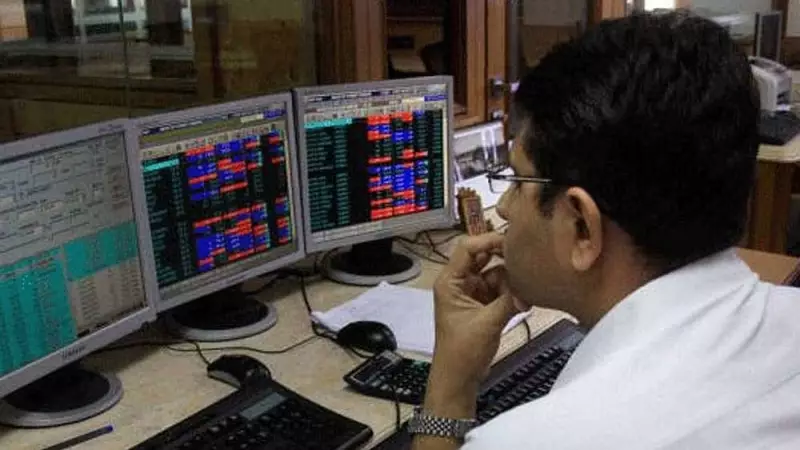
Indian stock markets concluded the final trading session of 2023 on a subdued note, with benchmark indices closing marginally lower. The trading activity remained thin due to the year-end holiday season, while persistent selling by foreign institutional investors continued to exert pressure on the market sentiment.
Benchmarks End in the Red
The 30-share BSE Sensex declined by 170.12 points, or 0.23 percent, to settle at 72,240.26. During the trading day, the index fluctuated between a high of 72,481.85 and a low of 72,101.85. Similarly, the broader NSE Nifty closed down by 47.30 points, or 0.22 percent, at 21,731.40.
This marked the second consecutive session of losses for the indices. The market breadth was negative, with more declining stocks than advancing ones on the BSE. The overall market capitalisation of BSE-listed firms also dipped slightly.

Key Factors Influencing the Market
Analysts pointed to several factors contributing to the lackluster performance. Persistent foreign institutional investor (FII) outflows were a primary headwind. Data showed that FIIs were net sellers in the cash segment on Thursday, continuing a recent trend of selling pressure from overseas funds.
Furthermore, thin trading volumes exacerbated the price moves. Many global investors and traders were away for the extended New Year holiday weekend, leading to reduced liquidity and participation. This often results in heightened volatility and exaggerated price swings in either direction.
From a sectoral perspective, the performance was mixed. The Nifty Metal index emerged as the top gainer, rising by 0.68 percent. In contrast, the Nifty Media and Nifty Pharma indices were among the top laggards, shedding 0.61 percent and 0.57 percent, respectively.
Stock-Specific Movements
On the Sensex, the major losers included Nestle India, Sun Pharma, Tech Mahindra, Bajaj Finance, and HCL Tech. On the flip side, Tata Steel, JSW Steel, Axis Bank, and ICICI Bank managed to close in the green, providing some support to the index.
In the broader market, midcap and smallcap indices showed resilience. The BSE Midcap index gained 0.16 percent, while the BSE Smallcap index rose by 0.15 percent, indicating selective buying interest in smaller companies despite the benchmark weakness.
Globally, Asian markets like Seoul, Tokyo, and Shanghai ended with gains, while Hong Kong settled lower. European markets were trading on a mixed note during the early European session. The movement in Brent crude oil prices, which were trading near the $77 per barrel mark, was also monitored by investors.
Market Outlook and Conclusion
The marginal decline caps off a volatile yet remarkably strong year for Indian equities, with both Sensex and Nifty posting significant annual gains. However, the recent sessions highlight the ongoing caution among investors. Market participants are likely to remain focused on the trajectory of foreign fund flows, global economic cues, and domestic macroeconomic data in the coming weeks as trading activity normalizes after the holidays.
While the short-term trend appears cautious, the underlying domestic economic resilience and corporate earnings growth continue to provide a fundamental cushion for the markets in the medium to long term. Traders are advised to watch for any fresh triggers that could provide direction in the first week of the new year.






