

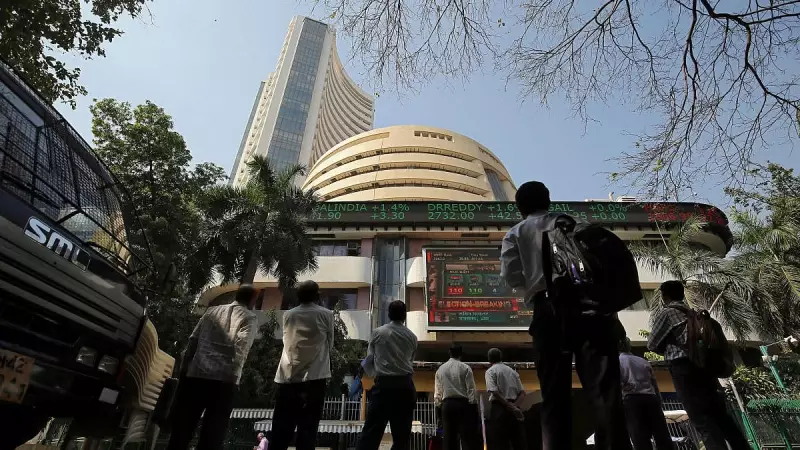
Indian Stock Markets Retreat from Early Highs Amid Persistent FII Selling
The Indian equity markets experienced a volatile trading session on Wednesday, with benchmark indices initially opening in positive territory but subsequently surrendering most of their early gains. The primary driver behind this pullback was sustained selling pressure from foreign institutional investors (FIIs), who have been net sellers in the Indian market for several consecutive sessions. This trend has introduced a note of caution among domestic investors and contributed to heightened market volatility.
Benchmark Indices Reflect the Selling Pressure
The BSE Sensex, after opening with modest gains, struggled to maintain its upward momentum and eventually pared a significant portion of its opening advance. Similarly, the NSE Nifty 50 followed a comparable trajectory, failing to hold on to its initial positive bias. Market analysts attribute this weakness directly to the aggressive selling by FIIs, who have been offloading Indian equities amid global macroeconomic uncertainties and shifting risk appetites.
Factors Contributing to FII Outflows
Several key factors are influencing the current wave of foreign investor selling:

- Global Interest Rate Environment: Hawkish signals from major central banks, particularly the US Federal Reserve, have prompted a reassessment of emerging market investments.
- Valuation Concerns: Some foreign investors perceive Indian equities as relatively expensive compared to other emerging markets.
- Currency Fluctuations: Volatility in the Indian rupee against the US dollar has added another layer of complexity for foreign investors.
- Geopolitical Tensions: Ongoing international conflicts and trade uncertainties continue to impact global fund flows.
Sectoral Performance and Market Breadth
The market breadth remained mixed, with certain sectors showing resilience while others bore the brunt of the selling pressure. Banking and financial stocks, which carry significant weight in the benchmark indices, faced particular scrutiny from foreign investors. However, select sectors such as information technology and pharmaceuticals demonstrated relative stability, cushioning the overall market decline to some extent.
Domestic institutional investors (DIIs) attempted to counterbalance the FII selling by providing support through selective buying. This dynamic between foreign and domestic institutional activity created a tug-of-war in the markets, resulting in the observed volatility and the eventual paring of opening gains.
Expert Analysis and Market Outlook
Financial experts suggest that while the FII selling pressure is a concern, it is not entirely unexpected given the current global financial landscape. "Foreign investors are reassessing their portfolio allocations across emerging markets," noted one market strategist. "India remains a long-term growth story, but short-term headwinds are prompting some profit-taking and portfolio rebalancing."
The immediate market outlook appears cautious, with traders and investors closely monitoring several indicators:
- Future FII trading patterns and net investment flows
- Domestic economic data releases and corporate earnings
- Global commodity price movements, especially crude oil
- Monetary policy decisions from the Reserve Bank of India
Market participants are advised to maintain a selective approach to stock picking, focusing on companies with strong fundamentals and reasonable valuations. The current phase of FII selling, while creating near-term pressure, may also present buying opportunities for long-term investors who believe in India's structural growth narrative.






