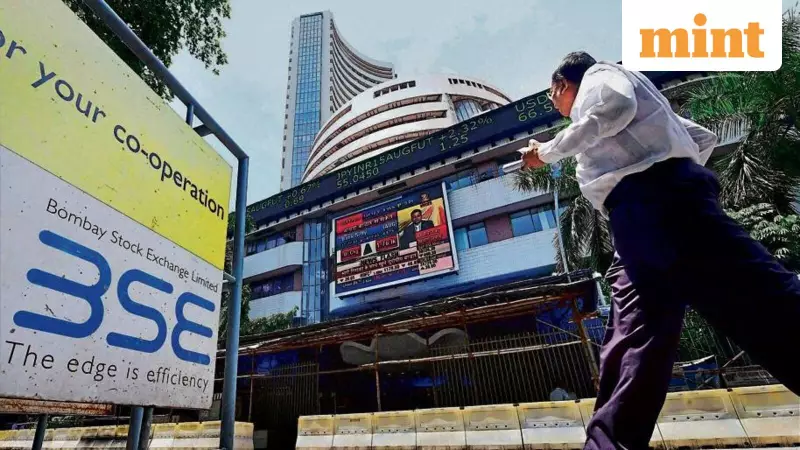
Indian equity markets have scripted a remarkable comeback story, with the benchmark BSE Sensex scaling a fresh all-time peak. After a grueling fourteen-month wait, the index finally surpassed its previous record, briefly piercing the 86,000 mark for the first time in history on Thursday, November 28, 2025, before closing the day with trimmed gains.
This long-awaited breakthrough concludes a period of intense volatility that tested investor patience. While the intraday record was a psychological milestone, the market's underlying strength is better reflected in the steady upward rolling-average trends of both the Sensex and the Nifty since the beginning of the 2025-26 financial year.
The Domestic Engine Driving the Rally
A significant shift has powered this market upswing: the rising dominance of domestic capital. While analysts speculate about the return of foreign institutional investors (FIIs), the market's resilience has been largely underpinned by steady inflows from domestic investors, particularly through retail mutual fund investments.

This growing 'atmanirbharta' or self-reliance in market funding is a positive development. However, its true value depends on whether this domestic optimism is rooted in genuine improvements in corporate fundamentals and business prospects.
Policy Tailwinds and Economic Optimism
The market's upward trajectory has been supported by a series of proactive government policies. The Union Budget for 2025-26 provided income tax relief, putting more money in the hands of consumers. This was followed by a mid-year GST reset explicitly designed to spur consumer spending.
Beyond consumption stimulus, a renewed reform thrust has buoyed investor sentiment. The notification of long-pending labour codes and initiatives to address policy distortions that inflate factory input costs have created a positive vibe. Furthermore, the Reserve Bank of India's decision to reduce interest rates as inflation eased has made credit cheaper for businesses and consumers, while also enhancing the attractiveness of equities compared to traditional bank savings.
These combined factors have improved the odds for India's GDP growth to not only exceed last year's 6.5% but potentially cross the 7% mark this year.
The Crucial Test: Awaiting Corporate Results
Despite the euphoria, the market faces a critical reality check. The rally has not been broad-based, revealing underlying fragilities. Data shows that prices of over half the stocks in the BSE 500 index remain weak, with more than 100 stocks losing over a fifth of their value in the past year.
This patchy performance underscores a central concern: corporate earnings have not yet broadly caught up with soaring market valuations. While bullish investors have been active, their calculus lacks widespread support from hard data on business profits. Value investors continue to fret about a significant number of overpriced shares.
For the current market optimism to translate into a sustained, orderly rise, a broad-based expansion in corporate profits must materialize in the coming quarters. The fundamentals of value generation must ultimately justify the faith that investors have placed in Indian equities.