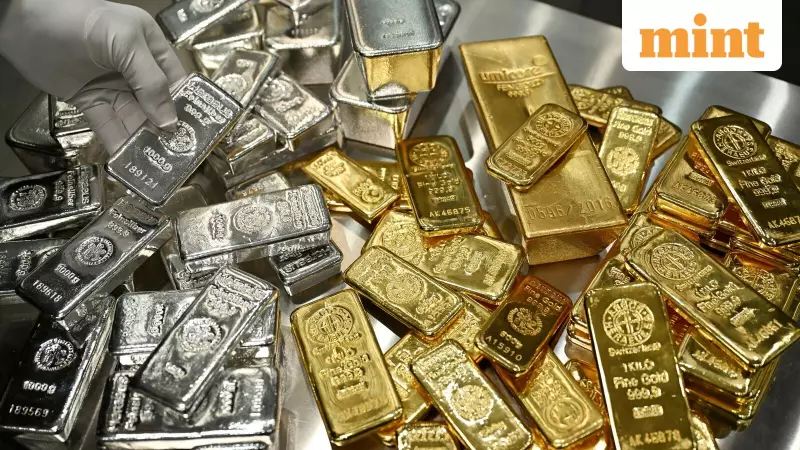
Indian retail investors experienced a rollercoaster ride in silver-exchange traded funds (ETFs) on Monday, December 29, 2025, witnessing the most extreme intraday price swings of the year. The dramatic volatility was a direct reaction to a major export ban announced by China and a significant increase in trading margins imposed by the global derivatives leader, CME Group.
Record Highs and Sharp Plunge: A Minute-by-Minute Account
Shortly after markets opened at 9:15 AM, the Nippon Silver ETF, which is India's largest with assets under management (AUM) of ₹26,361.5 crore as of December 24, skyrocketed by 11%. It hit an all-time peak of ₹243.29 per gram, soaring from its previous close of ₹219.85 on Friday.
However, the euphoria was short-lived. By around 12:30 PM, the same fund plunged dramatically by 19%, crashing to a low of ₹196.30 per gram. It later recovered slightly, trading 50 basis points lower at ₹218.68 by 1:30 PM, according to data from the National Stock Exchange of India (NSE).

The wild swings were not isolated to just one fund. The Kotak Silver ETF experienced a 24% gyration, oscillating between a high of ₹244.7 and a low of ₹185.57 per gram before settling nearly flat at ₹219.46. The Tata Silver ETF saw an even more intense swing of 29%, moving between ₹25.10 and ₹17.77 per one-tenth of a gram, eventually trading 50 basis points lower at ₹22.25.
The Dual Triggers: China's Ban and CME's Margin Call
Fund managers attributed the initial surge to Indian markets playing catch-up with international prices. Satish Dondapati, a fund manager at Kotak Mutual Fund, explained that while Indian ETFs close at 3:30 PM, global markets like the CME Group's Comex trade until midnight India time. On December 26, silver on Comex had risen 17% to $84 an ounce before closing at $79.27.
The noon-time crash, however, was triggered by the market digesting the impact of a margin hike by CME Group. On Friday evening, CME raised the margin required to trade a silver contract to $25,000, effective Monday, from $20,000 at the start of December. This move directly reduces trading leverage.
"This reduces the leverage to trade, resulting in volatility rising," said Naveen Mathur, director for currencies and commodities at Anand Rathi Group. He warned that this volatility could persist in coming trading sessions. Dondapati confirmed this was the highest intraday volatility seen in silver ETF prices in 2025 and expects it to continue as leveraged traders adjust their positions.
Underlying Supply Crunch Fuels Long-Term Uncertainty
The backdrop to this volatility is a profound structural shortage in the global silver market. The metal, crucial for electric vehicles, solar panels, and semiconductors, has seen a massive 154% price surge on CME to $75.82 an ounce. This rally is fueled by a supply deficit that has persisted for years.
Elon Musk highlighted the crisis on December 27, replying to a tweet about Chinese export restrictions set for January 1 by stating on X, "This is not good. Silver is needed in many industrial processes." China is the world's second-largest silver producer.
Dondapati provided stark numbers: against annual global demand of 1.2 billion ounces, supply has fallen short by a cumulative 1 billion ounces over the past five years. China's export controls are expected to reduce global supply by 13% to 870 million ounces, potentially leading to even greater volatility in 2026.
Tracking this international movement, India's largest silver ETF, the Nippon Silver ETF, has risen 157% to its Monday level of ₹218.68 per gram. Of the total intraday traded value of ₹5,435.46 crore on December 29, delivery-based transactions in Nippon Silver ETF units constituted a significant 31.82%, worth ₹1,729 crore.
Given the outsized price levels driven by the shortage, analysts like Mathur are advising new investors to approach the silver market with considerable caution.