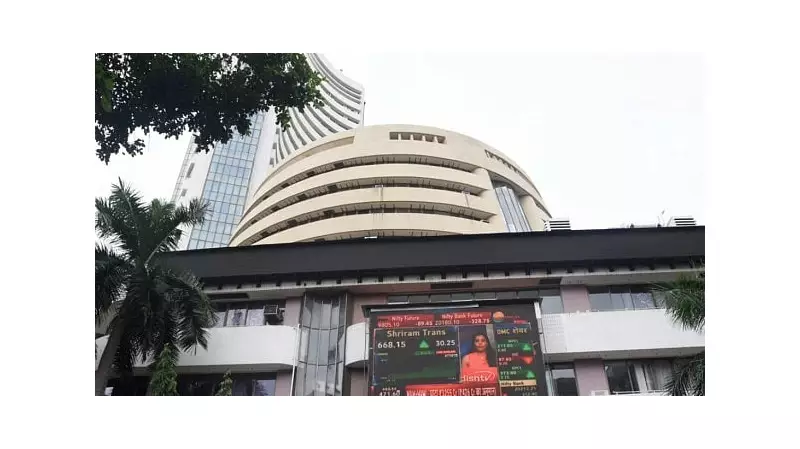
Indian equity markets opened in negative territory on Thursday, with benchmark indices declining by half a percent as information technology stocks faced significant selling pressure. The market sentiment remained cautious as investors awaited the outcome of Bihar assembly elections and monitored global market trends.
Market Opening Performance
The BSE Sensex opened 221 points lower at 40,690 levels, showing immediate weakness in early trading sessions. Similarly, the broader Nifty 50 index dropped 68 points to begin at 11,923, reflecting widespread concern among investors. Both major indices recorded approximately 0.5% declines during the initial trading hours, setting a cautious tone for the day's market activity.
Market analysts pointed to multiple factors contributing to the bearish opening. The ongoing uncertainty surrounding US stimulus packages and rising COVID-19 cases globally created headwinds for risk assets. Domestic investors also appeared hesitant to take large positions ahead of key political and economic developments.

Sectoral Performance and Major Movers
The information technology sector emerged as the biggest drag on market performance. Major IT companies including Infosys, TCS, and HCL Technologies traded lower, contributing significantly to the index decline. The IT sub-index on the NSE fell nearly 1%, underperforming the broader market.
However, not all sectors mirrored this negative trend. Pharmaceutical stocks showed resilience, with several companies in the sector posting modest gains. The auto sector presented a mixed picture, while banking stocks remained under pressure amid ongoing concerns about asset quality.
Among individual stocks, Eicher Motors surged over 3% following better-than-expected quarterly results, providing some support to the automotive segment. Meanwhile, Bharti Airtel declined by 1.5% as investors reacted to recent developments in the telecommunications sector.
Political and Economic Factors Influencing Markets
All eyes remained fixed on Bihar assembly election results, scheduled for November 10. The political outcome in this crucial state has significant implications for policy continuity and economic reforms. Market participants are carefully monitoring the election developments, as the results could influence investor confidence in the central government's reform agenda.
Adding to the market's cautious stance, global markets showed mixed signals. While most Asian markets traded lower, following Wall Street's weak closing, European futures indicated a potentially stable opening. The uncertainty surrounding the US presidential election outcome continued to create volatility in international markets, affecting Indian equities through foreign institutional investor flows.
Domestic economic indicators also played a role in market sentiment. Investors awaited the release of industrial production data for September and inflation figures for October, both scheduled for release later in the week. These economic readings will provide crucial insights into India's recovery trajectory amid the pandemic.
Market Outlook and Trading Strategy
Technical analysts suggested that the Nifty has immediate support at 11,850 levels, while resistance is seen near 12,050. A breach of either level could determine the short-term market direction. Derivatives data indicated put writing at 11,900 strike price, suggesting some support at current levels.
Market experts advised investors to maintain a stock-specific approach given the current volatility. Sectors showing relative strength, such as pharmaceuticals and select auto companies, might offer better risk-reward ratios. The IT sector's weakness, however, warranted caution as it has been a market leader in recent months.
The India VIX, often called the fear gauge, rose by 2.5% in early trade, indicating increased expectations of near-term volatility. Traders remained active in options markets, particularly in weekly contracts expiring November 12.

Foreign portfolio investors continued to monitor currency movements, with the Indian rupee trading marginally weaker against the US dollar. Crude oil prices remained stable, providing some comfort to oil-importing companies and the broader economy.