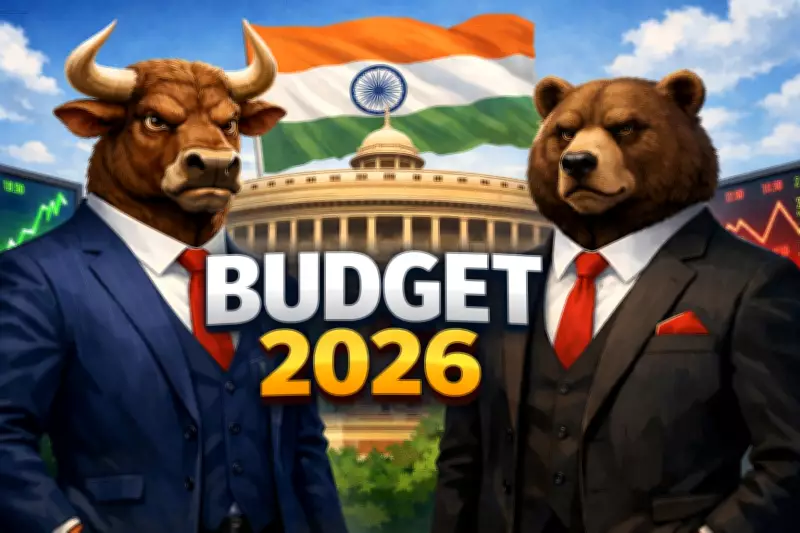
Union Budget 2026-27: Stock Markets to Operate Normally on Sunday Presentation Day
With the Union Budget 2026-27 just a day away, investors across India have been eagerly seeking clarity on whether stock markets will remain operational or observe a closure. The Budget is scheduled to be presented on February 1, 2026, which coincidentally falls on a Sunday, sparking widespread questions about market activity since stock exchanges typically remain shut on weekends.
Confirmation from Exchanges: Trading to Proceed as Usual
In a significant announcement, both the Bombay Stock Exchange (BSE) and the National Stock Exchange (NSE) have issued circulars confirming that regular trading will indeed take place on Budget day. This decision ensures that investors can actively participate in the market during this crucial economic event. The exchanges have stated that market timings will remain unchanged from a normal trading day, providing consistency and predictability for all market participants.
According to the official notices, the pre-open session will commence at 9:00 AM and conclude at 9:08 AM. Following this, equity market trading will run from 9:15 AM to 3:30 PM, adhering to the standard schedule. The BSE has further clarified that while major segments, including equity, futures and options, and commodity derivatives, will function normally, certain specialised sessions will not be held on this day.

The BSE explicitly mentioned, "Trading Members may note that trading in T+0 Settlement Session and Auction Session for settlement default will not be conducted on Sunday, February 01, 2026." This means that core trading activities will proceed, but specific auxiliary functions will be suspended to streamline operations on this unusual trading day.
A Rare Occurrence: Sunday Trading on Dalal Street
Trading on a Sunday is an exceptionally rare event for Dalal Street, as both the NSE and BSE are traditionally closed on weekends and designated public holidays. February 1, 2026, will therefore stand out as one of the few working Sundays in recent memory. This occasion also marks the first time since the year 2000 that the Union Budget is being presented on a Sunday, adding to its historical significance.
The NSE has similarly announced normal operations for capital markets and derivatives segments, ensuring a seamless trading experience. This coordinated approach by both exchanges highlights their commitment to facilitating market access during key national events, despite the atypical scheduling.
Segments in Operation and Suspensions
Core trading segments will remain open throughout the standard market hours on Budget day, allowing for full participation in equity and derivative markets. However, as noted, the BSE has confirmed that the T+0 settlement session and the auction session for settlement defaults will remain suspended. This temporary adjustment is designed to maintain operational efficiency while accommodating the unique circumstances of a Sunday trading session.
Holiday Schedule for Dalal Street in 2026
It is important to note that the decision to open markets on February 1 does not alter the stock exchanges' official holiday calendar for 2026. Apart from weekends, markets will observe a total of 16 public holidays throughout the year. In the first half of 2026, markets will be closed on several key dates, including Holi on March 3, Ram Navami on March 26, Mahavir Jayanti on March 31, and Good Friday on April 3.
Additional holidays in the first half include Ambedkar Jayanti on April 14, Maharashtra Day on May 1, and Bakri Id on May 28. Trading will also remain suspended in the latter half of the year on significant occasions such as Muharram on June 26, Ganesh Chaturthi on September 14, Gandhi Jayanti on October 2, Dussehra on October 20, Diwali Balipratipada on November 10, and Guru Nanak Jayanti on November 24. Christmas on December 25 will serve as the final market holiday of 2026, wrapping up the annual schedule.

This comprehensive holiday list ensures that investors are well-informed about market closures, allowing for better planning and strategy formulation throughout the year. The exceptional opening on February 1 underscores the adaptability of India's financial markets in aligning with national priorities, while maintaining their regular operational framework for the remainder of the year.