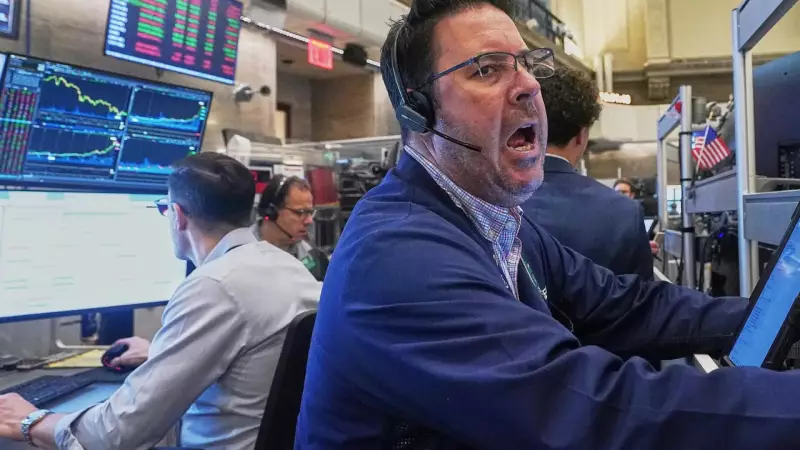
US equity markets opened the week on a negative note as investors grew increasingly anxious over a sharp and public deterioration in relations between the White House and the traditionally independent Federal Reserve.
Market Reaction to Political Tensions
The S&P 500 index slipped 0.3 per cent from its record high, reflecting the unease on Wall Street. The Dow Jones Industrial Average witnessed a steeper fall, dropping 432 points, or 0.9 per cent, as of 9:35 am Eastern time. The tech-heavy Nasdaq composite was nearly flat. In a classic flight to safety, assets like gold moved higher, while the US dollar weakened against haven currencies like the euro and the Swiss franc.
The Core of the Conflict: Independence Under Threat?
The market's jitters followed a weekend development where the US Department of Justice subpoenaed the Federal Reserve and threatened a criminal indictment. This action was linked to Fed Chair Jerome Powell's testimony concerning renovations at the central bank's headquarters. In a highly unusual video statement released on Sunday, Powell defended the Fed's autonomy. He asserted that the investigation was being used as a "pretext" and was a direct "consequence of the Federal Reserve setting interest rates based on our best assessment of what will serve the public, rather than following the preferences of the President."

President Donald Trump, in a brief interview with NBC News, claimed he was unaware of the probe into Powell. When asked if the investigation was a pressure tactic on interest rates, he replied, "No. I wouldn't even think of doing it that way." However, the public feud over monetary policy is long-standing. Trump has repeatedly criticised Powell for not cutting interest rates more aggressively to stimulate borrowing and economic growth, even labelling him "Too Late."
Broader Implications and Sectoral Impact
The tension strikes at the heart of a key market principle: the Fed's operational independence from political influence. This independence is designed to allow it to make tough, economically necessary decisions, like raising rates to control inflation, without political interference.
Separately, financial stocks were among the biggest losers on Monday after President Trump proposed a one-year cap of 10 per cent on credit card interest rates, a move seen as threatening profitability for card issuers. Capital One Financial fell 6 per cent, while American Express dropped 4 per cent.
In the bond market, the yield on the 10-year US Treasury note edged up slightly to 4.19 per cent. The situation stands in contrast to overseas markets, where European equities rose broadly and Asian markets advanced sharply. Hong Kong's Hang Seng gained 1.4 per cent and Shanghai climbed 1.1 per cent on hopes of additional economic support measures from Chinese leaders.
The timing adds another layer of uncertainty, as Powell's term as chair ends in May, and the Trump administration has indicated a potential successor could be named soon. The administration has also sought to remove Fed Governor Lisa Cook, signalling a broader effort to reshape the central bank.