

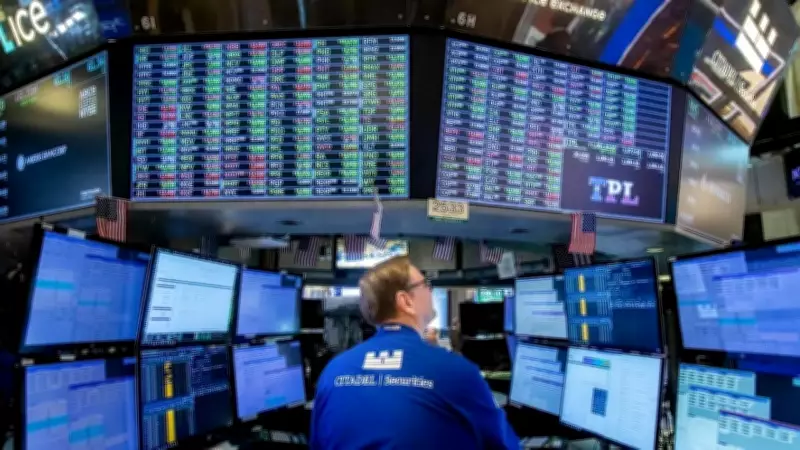
US stock markets exhibited a largely steady performance on Friday, as a softer-than-expected inflation update helped soothe investor anxieties, even though persistent concerns about artificial intelligence-driven disruption continued to dampen overall sentiment. The S&P 500 remained nearly unchanged during early trading sessions, following a day that witnessed one of its most significant declines since Thanksgiving. Concurrently, the Dow Jones Industrial Average experienced a decline of 109 points, equivalent to 0.2%, as reported by AP at 9:35 a.m. Eastern time, while the Nasdaq Composite saw a slight dip of 0.3%.
Inflation Data Provides Relief
Treasury yields in the bond market declined following the release of data indicating that inflation cooled more substantially than economists had anticipated last month. Consumer prices demonstrated a year-on-year increase of 2.4%, which is lower than the 2.7% recorded in December, though it still remains above the Federal Reserve's target of 2%. An underlying inflation measure, widely regarded as a more reliable predictor of future price trends, slowed to its lowest level in nearly five years.
Brian Jacobsen, chief economic strategist at Annex Wealth Management, commented on the situation, stating, "It's still too high, but only for now, not forever." This cooling trend in inflation could potentially grant the Federal Reserve greater flexibility to implement interest rate cuts if deemed necessary. Although the Fed has currently paused rate reductions, financial markets broadly anticipate a resumption of easing measures later in the year. Lower borrowing costs are generally seen as supportive of economic growth and equity markets, yet they also carry the inherent risk of reigniting inflationary pressures.

Economic Backdrop and Market Movements
The broader economic environment appears more robust compared to late 2025, bolstered by easing inflation and stronger-than-expected job market data from the previous month. The yield on the 10-year US Treasury fell to 4.06% from 4.09% on Thursday, reflecting increased investor confidence in the stability of the economic outlook.
On Wall Street, stocks of companies previously identified as vulnerable to AI disruption showed signs of stabilization. AppLovin, for instance, rose by 0.3% after suffering a loss of nearly one-fifth of its value on Thursday, despite reporting profits that exceeded expectations. This recovery occurred as investors maintained a cautious stance regarding competitive threats driven by artificial intelligence.
Freight and trucking stocks, which had plummeted sharply on Thursday following claims from an AI platform about substantial productivity gains, also experienced a mild recovery. C.H. Robinson Worldwide increased by 1.8% after a significant drop of 14.5% the day before. Recent market movements have increasingly targeted sectors perceived to be at risk from AI disruption, with analysts characterizing the reaction as a "shoot first, ask questions later" approach.
Notable Performances and Global Impact
Chip equipment manufacturer Applied Materials provided support to the market, surging by 14.1% after reporting quarterly profits that surpassed expectations. CEO Gary Dickerson attributed this strong performance to rising investments associated with AI computing, highlighting the dual-edged nature of AI's influence on markets.
On the downside, DraftKings fell by 14.9% despite exceeding profit estimates, as the company issued revenue guidance for the year that fell short of market expectations. This underscores the ongoing volatility and selective investor response in the current economic climate.
Globally, equity markets displayed weaker trends. Hong Kong's Hang Seng declined by 1.7%, while Japan's Nikkei 225 fell by 1.2%, indicating broader concerns and interconnected market dynamics. The interplay between inflation data, Federal Reserve policies, and AI-driven disruptions continues to shape investor sentiment and market outcomes across various sectors and regions.






