

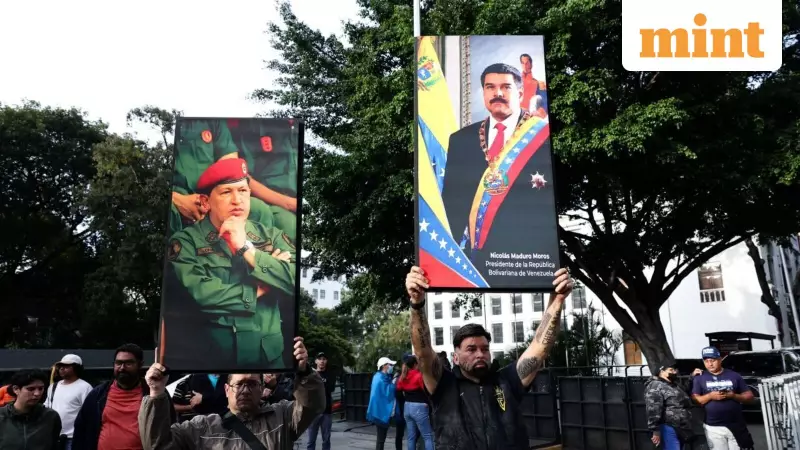
Investors who maintained their faith in Venezuela's troubled financial instruments through years of economic collapse and sanctions are now on the brink of a significant financial reward. The recent political shift following the ouster of President Nicolás Maduro has triggered a dramatic surge in the value of the country's long-defaulted bonds, promising a potential windfall for those who held their nerve.
A Long-Awaited Rally for Distressed Assets
For nearly a decade, major investment houses including Fidelity and T. Rowe Price have been saddled with tens of billions of dollars in Venezuelan government and state-owned company bonds, notably from oil giant Petróleos de Venezuela (PDVSA). These assets were largely considered underwater after the Trump administration's sanctions isolated the country. While many U.S. investors, who once held about $50 billion of this debt, sold at a loss, a cohort of steadfast funds held on, betting on an eventual recovery.
That patience is now paying off handsomely. Since selected sanctions were eased in 2023, trading in Venezuelan debt has picked up, with an estimated $500 million changing hands daily. Distressed-debt specialists have been acquiring bonds for a mere fraction of their face value. Prices have skyrocketed, with some issues more than quintupling in value. As of Monday, January 5, 2026, Venezuela's 11.75% bond due in 2026 jumped to about 42 cents on the dollar from roughly 32.50 cents just the previous Friday, according to data from Solve.

From Write-Downs to Windfalls: The Investor Landscape
The rally is creating winners across two groups: traditional "real money" investors who wrote down their old holdings years ago, and opportunistic hedge funds that entered the fray more recently. Hans Humes, CEO of Greylock Capital Management, noted a surge in optimism, stating investors "already see incredible opportunity in this country."
Firms like Gramercy Funds Management exemplify this dual strategy. After selling most of its Venezuelan portfolio in 2019, Gramercy returned to buy bonds at rock-bottom prices in 2023 as sanctions began to lift. Other holders, such as Pharo Management, which won a court judgment against Venezuela in 2019, had nearly given up hope. However, the value of its remaining roughly $2 billion face-value position jumped about 25% on Monday alone.
A Rocky Road Ahead: Debt Restructuring and Geopolitics
Despite the euphoria, significant hurdles remain before investors can fully cash in. Venezuela has not borrowed from Wall Street in about ten years and must now navigate a complex restructuring of an estimated $100 billion in total debt, an amount obscured by limited official statistics since 2018. The creditor pool is diverse, including the Chinese government, whose involvement has historically complicated other emerging-market restructurings.
The recent political changes, however, have opened a door previously shut by sanctions. Acting President Delcy Rodríguez's social media invitation to the U.S. government to "work together" has been seen as a positive signal. JPMorgan analysts suggested this could lead to restored diplomatic relations and, eventually, debt restructuring talks.
Investors are also eyeing Venezuela's vast oil potential. Some foresee a scenario where defaulted bonds are repaid through increased oil production, a prospect bolstered by the Trump administration's plans to involve U.S. oil companies. Robert Koenigsberger of Gramercy drew a parallel to Iraq, where production soared post-intervention, suggesting long-term GDP estimates for Venezuela may be too pessimistic.
Yet, caution prevails. The future governance of Venezuela is uncertain, with questions about whether Rodríguez will remain a transitional figure. Eric Fine of VanEck, which holds Venezuelan bonds, warned of the risks of social instability in a country with "a lot of weapons, a lot of cash... and a lot of people who don't have anything else to do." The attempted sale of Citgo, the U.S.-based oil refiner historically owned by Venezuela, remains a contentious issue, labeled "blatant theft" by Rodríguez.

Ultimately, while the bond price surge offers a chance for profits, the path to a full Venezuelan economic recovery and debt resolution is fraught with political and logistical challenges, keeping investors on high alert even as they count their paper gains.





