

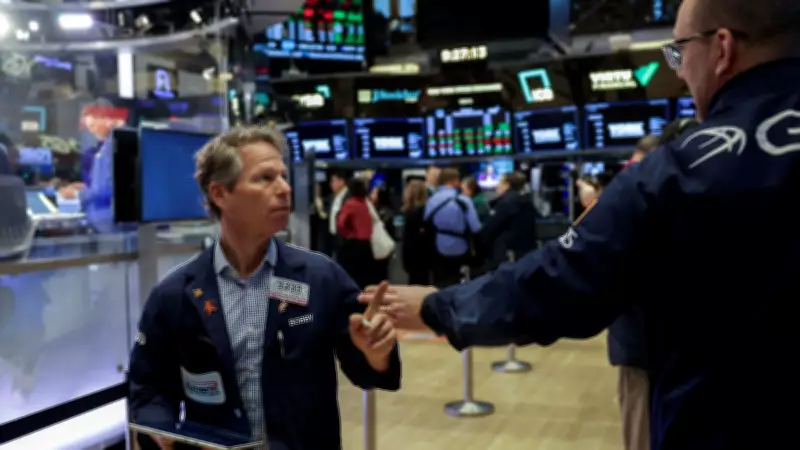
Wall Street Experiences Downturn Following Trump's Federal Reserve Nomination
US equity markets opened lower on Friday, reacting to President Donald Trump's announcement nominating former Federal Reserve Governor Kevin Warsh to chair the central bank. The move sparked immediate market reactions as investors assessed the potential implications for monetary policy and economic direction.
Market Performance Details
At 09:30 a.m. Eastern Time, all three major US stock indices recorded declines:
- Dow Jones Industrial Average fell 146.89 points, representing a 0.32% decrease, settling at 48,912.80
- S&P 500 Index dropped 23.24 points, marking a 0.33% decline, closing at 6,945.77
- Nasdaq Composite experienced the largest percentage loss, decreasing by 107.88 points or 0.43%, ending at 23,577.24
Context and Market Implications
The nomination of Kevin Warsh comes at a crucial time for the Federal Reserve, which plays a pivotal role in shaping US monetary policy and economic stability. Warsh previously served as a Federal Reserve Governor from 2006 to 2011, bringing both experience and a particular perspective on monetary policy that market participants are now evaluating.

Market analysts suggest several factors contributing to the immediate negative reaction:
- Policy uncertainty surrounding Warsh's potential approach to interest rates and quantitative easing
- Investor caution regarding potential shifts in the Fed's current monetary stance
- Historical context of Warsh's previous tenure during the 2008 financial crisis
- Broader economic considerations including inflation concerns and growth projections
The market movement reflects how sensitive Wall Street remains to Federal Reserve leadership changes, particularly given the central bank's influential role in global financial markets. As the nomination process unfolds, investors will be closely monitoring congressional hearings and confirmation proceedings for further indications of policy direction.
This development occurs against a backdrop of ongoing economic recovery efforts and evolving monetary policy discussions, making the Federal Reserve chair position particularly significant for both domestic and international markets.






