

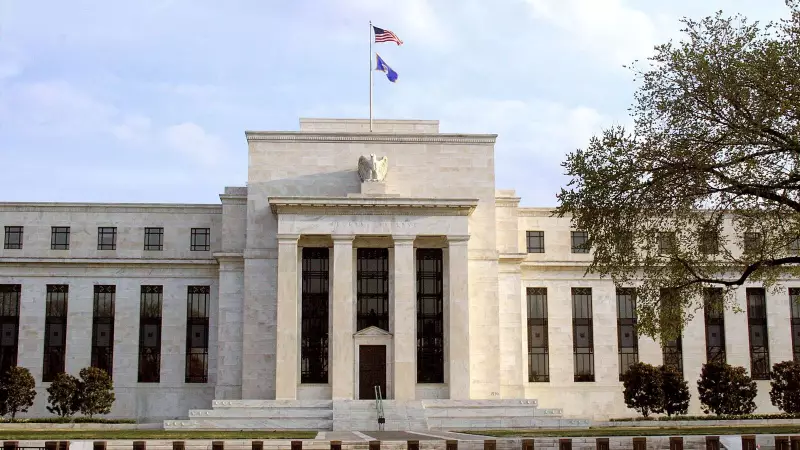
Wall Street Shows Mixed Signals Ahead of Crucial Federal Reserve Decision
US stock index futures displayed a mixed trading pattern during Wednesday's pre-market session as investors adopted a cautious stance ahead of the Federal Reserve's highly anticipated policy decision. The financial markets are bracing for what could be a pivotal moment for monetary policy direction amid growing political pressures and economic uncertainties.
Pre-Market Trading Shows Divergence Among Key Benchmarks
In early Wednesday trading, the three major US stock index futures presented a varied picture. Dow Jones Industrial Average futures experienced a marginal decline of 0.02%, while S&P 500 futures showed modest gains of 0.17%. The most significant movement came from Nasdaq-100 futures, which advanced by a substantial 0.79%, largely driven by strength in technology stocks that continue to attract investor interest.
This divergence among market benchmarks reflects the complex sentiment prevailing among investors as they navigate multiple economic factors and political developments that could influence market trajectories in the coming sessions.

Federal Reserve Expected to Maintain Current Interest Rates
Financial markets widely anticipate that the Federal Reserve will maintain interest rates at their current levels during Wednesday's policy meeting. This expectation comes after the central bank implemented rate reductions in each of its previous three policy gatherings, bringing the benchmark lending rate to a range between 3.50% and 3.75%.
According to CME FedWatch data, most market participants expect the Fed to continue keeping rates unchanged until at least its June meeting. However, investors remain particularly attentive to any signals or guidance regarding the timing of potential future rate cuts, as these indications could significantly impact market movements and investment strategies.
Political Pressures Create Unprecedented Challenges for Fed Independence
The Federal Reserve's policy meeting occurs against a backdrop of escalating political tensions with the Trump administration. President Donald Trump has repeatedly criticized the central bank for what he perceives as insufficiently aggressive rate reductions, creating concerns about potential threats to the Fed's traditional independence from political influence.
These tensions have manifested in several concrete actions, including the administration's investigation into Chairman Jerome Powell and attempts to remove Fed Governor Lisa Cook over mortgage fraud allegations. In a rare public statement this month, Powell explicitly condemned what he described as threats to central bank independence, highlighting the unprecedented nature of current political pressures.
Internal Divisions Emerge Within Federal Reserve Leadership
Adding to the complexity of the situation, internal divisions have surfaced within the Federal Reserve's leadership. Governor Stephen Miran, appointed by President Trump last year, stated on Tuesday that he sees the need for a significant drop in interest rates in 2026. Miran has advocated for more substantial rate reductions than those supported by his colleagues on the rate-setting committee.
Since assuming his position in September, Miran has dissented in all three of the Fed's policy meetings, consistently pushing for half-percentage-point cuts rather than the quarter-percentage-point reductions implemented by the majority. This internal disagreement reflects broader debates about the appropriate pace and magnitude of monetary policy adjustments in the current economic environment.
Economic Fundamentals Support Cautious Approach Despite Political Pressure
Analysts suggest that solid GDP growth, relatively low unemployment levels, and persistent inflationary pressures are likely to encourage Federal Reserve officials to maintain a wait-and-see approach to monetary policy. While recent rate cuts were supported by evidence of a cooling labor market, current economic indicators suggest caution may be warranted before implementing further reductions.

This measured approach, however, continues to create friction with the Trump administration, which has consistently advocated for more aggressive monetary easing to stimulate economic growth. The tension between economic fundamentals and political demands creates a challenging environment for policymakers navigating complex decisions with significant implications for both domestic and global financial markets.
As investors await the Federal Reserve's official announcement, market participants remain vigilant for any signals about future policy direction, political developments, and economic indicators that could influence investment decisions in the coming weeks and months.





