

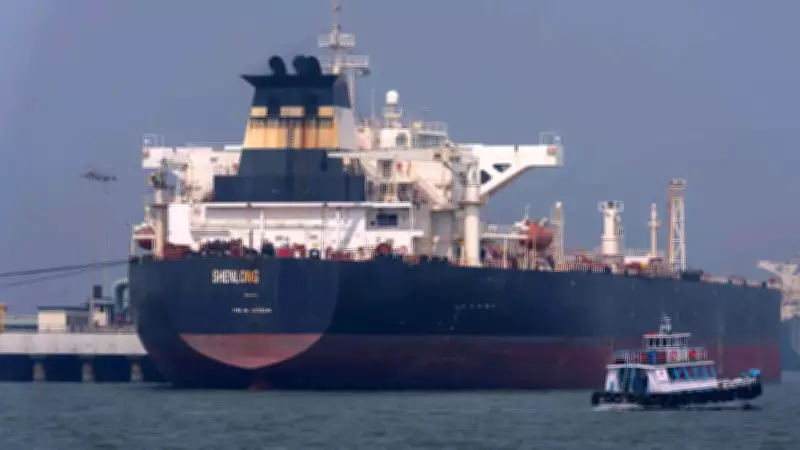
Seventh Indian LPG Tanker Successfully Navigates Strait of Hormuz
In a significant development for India's energy security, the India-flagged LPG tanker Green Sanvi crossed the strategic Strait of Hormuz on Friday. This marks the seventh such vessel to complete this critical transit since hostilities erupted in West Asia, underscoring ongoing efforts to maintain vital supply lines.
Stranded Fleet and Potential Movements
Despite this progress, a substantial number of Indian ships remain in limbo. Seventeen Indian vessels are currently stranded west of the Strait of Hormuz. Among these are two LPG carriers—Green Asha and Jag Vikram—which are fully loaded and may soon receive clearance to proceed towards Indian ports, according to sources familiar with the situation.
As previously reported, these three LPG carriers have been drifting northeast of Abu Musa Island in the Persian Gulf. They are operating under the guidance of the Indian Navy and are awaiting formal orders to initiate their transit through the volatile strait, highlighting the coordinated maritime response to regional instability.

Iranian Oil Shipment Diverts to China Amid Payment Issues
In a parallel development that illustrates the complex dynamics of global energy trade, a foreign vessel reportedly carrying Iranian crude oil to India has abruptly changed its destination mid-voyage. The tanker is now en route to China instead. Sumit Ritolia, a lead analyst at the global analytics firm Kpler, noted that such mid-voyage diversions are not uncommon with Iranian crude shipments. They often reflect heightened sensitivity to financial terms and counterparty risks in the current geopolitical climate.
"The shift appears to be payment-related, with sellers tightening their terms," Ritolia explained. "There is a move away from the earlier 30-60 day credit window towards requiring upfront or near-term settlement. If these payment issues can be resolved, the cargo might still eventually find its way to an Indian refinery."
This incident underscores how commercial and financial considerations are becoming as crucial as logistical factors in determining the flow of Iranian crude to destinations beyond China, Ritolia added.
Details of the Diverted Tanker
Data from MarineTraffic indicates that the vessel in question is the Ping Shun, an Eswatini-flagged crude tanker. Initially, its automatic identification transponder signaled a destination of the Vadinar facility at Deendayal Port in Kandla, Gujarat. The tanker is believed to be carrying approximately six lakh barrels of crude oil.
However, the vessel is now signaling Dongying in China as its new destination. It is important to note that the destination indicated by a ship's transponder is not always final and can change again during transit. Had the Ping Shun reached Vadinar, it would have represented the first shipment of Iranian crude to India in six years, marking a potentially significant shift in trade patterns.
Broader Implications for Maritime Trade
These events collectively highlight the intricate challenges facing international maritime trade in the Strait of Hormuz region. The safe passage of Indian LPG tankers is a positive sign, yet the stranded fleet and the diverted oil tanker reveal underlying vulnerabilities. Payment disputes and stringent financial terms are increasingly influencing shipping routes, adding a layer of economic complexity to the already tense security situation.
As the situation evolves, stakeholders will closely monitor further movements of Indian vessels and any resolutions to the payment issues affecting Iranian crude shipments. The interplay between logistics, finance, and geopolitics continues to shape the flow of essential energy resources through one of the world's most critical maritime chokepoints.






