

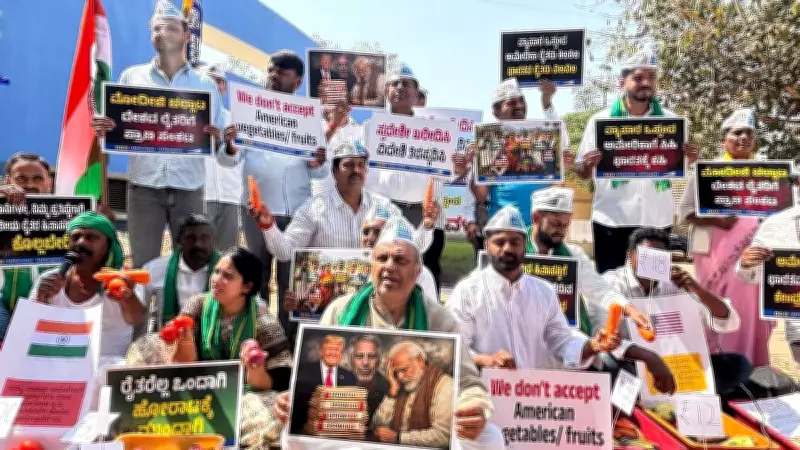
AAP Condemns Indo-US Trade Agreement as Catastrophic for Agriculture
The Aam Aadmi Party has launched a fierce protest against the proposed India-United States trade deal, labeling it a "death warrant" for the nation's farming community. The demonstration, held at Freedom Park in Bengaluru, saw AAP state president 'Mukhyamantri' Chandru spearheading the opposition to what he described as a perilous economic agreement.
Farmers at Risk from Corporate Dominance
Chandru articulated grave concerns that the trade pact would fundamentally undermine the livelihoods of Indian farmers, placing them at the mercy of powerful American corporate interests. He emphasized that the deal could lead to unfair competition and market manipulation, potentially devastating local agricultural sectors that are already struggling with various challenges.
The protest highlighted several critical issues that the AAP believes the trade agreement will exacerbate:

- Increased import of subsidized American agricultural products, which could flood Indian markets and depress prices for domestic produce.
- Potential erosion of India's food sovereignty as foreign corporations gain greater control over supply chains and seed technologies.
- Weakening of government support mechanisms for farmers, making them more vulnerable to global market fluctuations.
Broader Implications for India's Economy
Beyond agriculture, the AAP warns that the trade deal could have far-reaching consequences for India's economic independence. Chandru argued that such agreements often prioritize corporate profits over the welfare of local communities, leading to job losses and increased inequality. The party calls for a more transparent and inclusive negotiation process that safeguards the interests of all stakeholders, particularly small-scale farmers.
The protest in Bengaluru is part of a larger campaign by the AAP to mobilize public opinion against the trade deal. The party plans to organize similar demonstrations across other states to amplify their message and pressure the government to reconsider the agreement.
As the debate intensifies, the future of the Indo-US trade deal remains uncertain, with opposition voices growing louder against what they perceive as a threat to India's agricultural heritage and economic stability.






