World Bank President Advocates for Opportunity-Driven Approach in India's Trade Strategy
During his recent visit to Odisha, World Bank Group President Ajay Banga emphasized the need for India to shift its focus from tariffs to opportunities in global trade. Speaking in Bhubaneswar, Banga highlighted the significance of the newly negotiated India-EU Free Trade Agreement (FTA), stating that reducing both tariff and non-tariff barriers would mutually benefit people from both regions.
Five Key Sectors Identified for Massive Job Creation
Banga specifically pointed to five sectors where substantial employment opportunities can be generated in India:
- Infrastructure development projects across the country
- Agriculture modernization and value chain enhancement
- Primary healthcare delivery systems expansion
- Tourism industry growth and promotion
- Value-added manufacturing across various industries
He stressed that these sectors hold tremendous potential for absorbing India's growing workforce and contributing to economic development.

India-EU Trade Deal: A Strategic Opportunity
Regarding the recently concluded India-EU FTA negotiations, Banga noted that emerging markets like India have seen their share in global trade double from 20% to 40% over the past two decades. "Emerging markets like India are now a key component in global trade," he remarked, while cautioning that the deal should be implemented in carefully planned phases to protect domestic markets on both sides.
Banga explained that unlike many other economies where exports constitute a major percentage, India's strengths lie primarily in domestic consumption and capital formation. "In the India-EU deal, the conversation is not about tariffs; it's about opportunity," he emphasized, suggesting this perspective should guide India's trade policy thinking.
Skilling Youth for Viksit Bharat 2047
The World Bank president also addressed India's growth projections of 6.8-7.2% as estimated in the Economic Survey, noting that the country has demonstrated exceptional growth potential. However, he argued that the real challenge lies in skilling the population effectively.
"You have 12 million young people becoming ready for a job every year. If you skill them the right way, then you can get them the opportunity to work in a state, in a city, in a village, in another town and in countries overseas," Banga stated, connecting this to India's goal of becoming a developed nation by 2047.
Visit to Skill Development Center
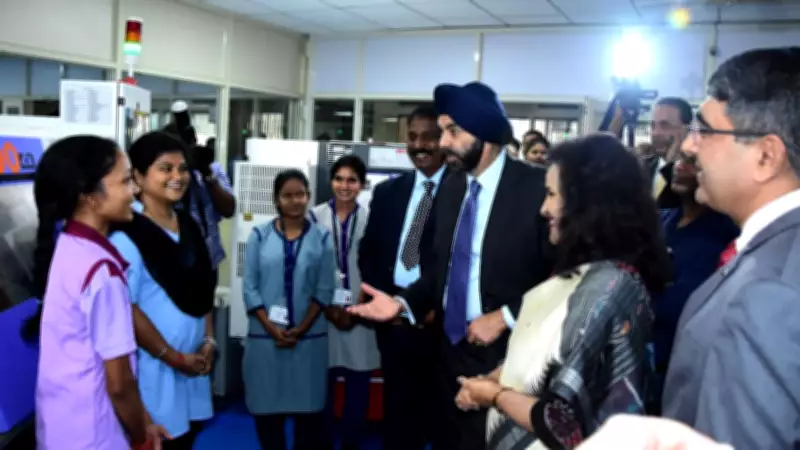
As part of his Odisha visit, Banga toured the Central Tool Room and Training Centre (CTTC) in Bhubaneswar, a unit of the Union Ministry of Micro, Small and Medium Enterprises that collaborates directly with industry to equip youth with job-ready technical skills. This visit underscored his emphasis on practical skill development aligned with industry needs.
To create sustainable job opportunities, Banga highlighted the necessity of developing both physical and human capital, implementing business-friendly policies, and ensuring adequate financing for the private sector. The World Bank Group's strategic partnership with India is set to be formally announced in New Delhi, signaling continued collaboration on these development priorities.