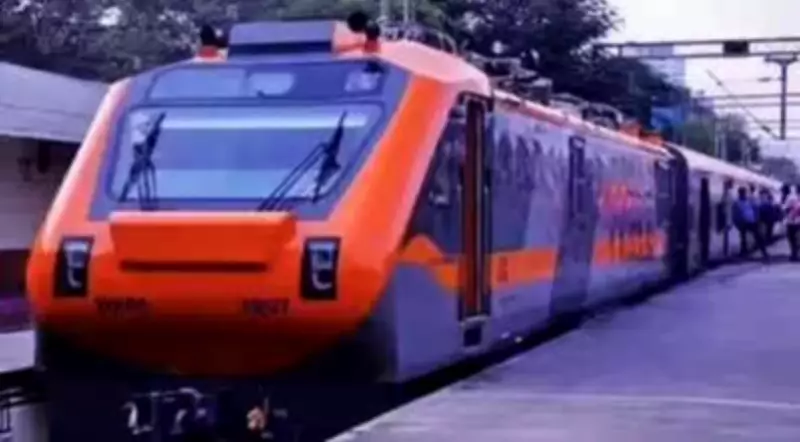
Amrit Bharat Train Encounters Passenger Apathy Following Grand Chennai Launch
Despite a high-profile inauguration by Prime Minister Narendra Modi, the Tambaram-Thiruvananthapuram Amrit Bharat express is grappling with significantly low occupancy rates. This weekly non-air-conditioned sleeper service, which operates from Chennai, has been reporting hundreds of empty seats on its journeys, as commuters increasingly opt for alternative trains that complete the route nearly two hours faster.
Modern Features Fail to Offset Time Disadvantages
The Amrit Bharat trains are equipped with contemporary amenities designed to enhance passenger comfort. Each rake consists of twenty-two non-AC coaches, which include:
- Eight sleeper class coaches
- Eleven general second class coaches
- One pantry car
Technological advancements enable these trains to accelerate and decelerate rapidly, thanks to dual-engine configurations that minimize jerking motions. Additional passenger-centric features comprise:

- Wider seating arrangements for improved comfort
- USB charging ports at designated locations
- Internet of Things (IoT) enabled water-level indicators in coaches
- Advanced public address systems for clear announcements
Operational Challenges and Passenger Feedback
Umeshkumar, a Chennai resident who recently traveled on the Amrit Bharat train to Thiruvananthapuram, shared his experience. He noted that while the train departed promptly from Tambaram at 5 PM, it encountered multiple halts en route. "The train stopped at Chengalpet to allow the Kollam Express to pass," he explained. "Further delays occurred at Trichy for the Kanniyakumari Express, and again between Nagercoil and Thiruvananthapuram to accommodate the Guruvayur Express on single-track sections."
Transport activist Dayanand Krishnan, based in Chennai, suggested operational modifications to boost ridership. He proposed that Southern Railway could adjust the train's schedule to better serve office commuters. "Delaying the departure from Tambaram might attract more working professionals," Krishnan stated. "Increasing patronage could justify additional stops instead of unnecessary mid-route halts."
Railway Officials Explain Infrastructure Constraints
In response to these concerns, railway authorities clarified that the train's speed and frequency are dictated by existing infrastructure limitations. An official explained that the Egmore-Kanniyakumari corridor experiences heavy traffic, with express trains passing every ten to fifteen minutes during evening hours. This congestion influenced the decision to operate the Amrit Bharat as a weekly service rather than increasing its frequency.
"Track availability primarily determines the train's speed," the official emphasized. "As other express trains gradually increase their speeds in phased implementations, track access will improve. Consequently, the Amrit Bharat train's velocity can be enhanced accordingly."
The situation highlights the ongoing challenge of balancing modern train introductions with existing railway network capacities, particularly in busy southern routes like those originating from Chennai.