

The Apple Hunter's Quest: Rescuing America's Vanishing Fruit Heritage
"An apple a day keeps the doctor away" is a familiar adage, but few consider the astonishing diversity behind that simple fruit. For centuries, hundreds of distinct apple varieties thrived across different landscapes and communities. Most have since vanished from cultivation, victims of agricultural standardization. When one retired engineer discovered this loss, he launched an extraordinary mission to reverse it.
From Curiosity to Lifelong Mission
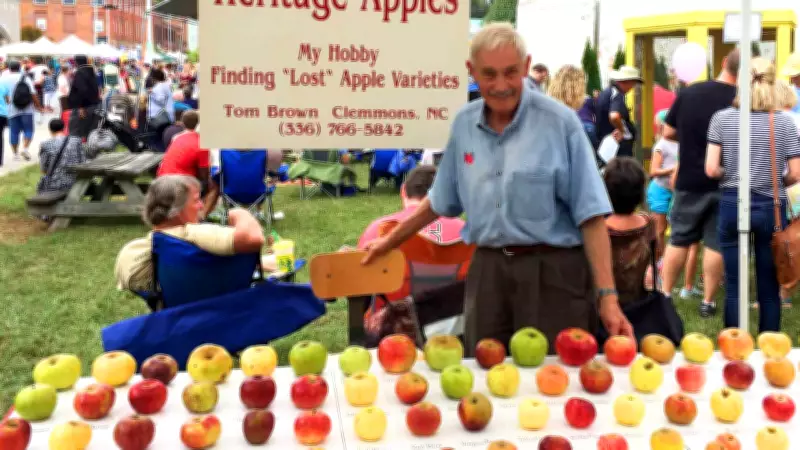
Tom Brown, a retired chemical engineer from North Carolina now known as the "Apple Hunter," began his journey in the late 1990s after retirement. A visit to a Winston-Salem farmers' market introduced him to heirloom apples with unusual names and distinct flavors he had never encountered. Conversations with growers revealed that many traditional varieties were disappearing rapidly. What began as curiosity transformed into a purposeful mission spanning more than two decades.
Brown started meticulously documenting apple names, locations, and the stories connected to them. He recognized that without deliberate intervention, both genetic diversity and cultural heritage would continue fading. At the start of the 20th century, the Appalachian region alone supported thousands of apple varieties, each adapted to local conditions and tastes. Commercial farming narrowed this diversity to a handful of standardized types selected for durability and uniform appearance, leading to the abandonment of countless varieties.

The Search for Lost Apples
Brown committed himself fully to the search, traveling extensively across rural communities in the eastern United States. He relied on old agricultural records, local knowledge, and chance encounters to track down surviving trees. Many were discovered in unexpected places: isolated farms, overgrown fields, and private backyards. His work demanded immense patience and persistence, often involving long journeys and conversations with people who held fragments of forgotten agricultural wisdom.
Finding a tree was only the beginning. Brown developed specialized skills to preserve each discovery, using grafting techniques to clone and grow new trees from old specimens. Through this meticulous process, he ensured rare varieties could survive beyond single aging trees. Over 25 years, he successfully revived more than 1,200 apple varieties, many of which had not been cultivated or tasted for generations.
Creating a Living Collection
To safeguard these discoveries, Brown established a dedicated orchard where hundreds of varieties are maintained. This living collection allows different apples to be grown, studied, and shared. It also protects valuable genetic traits that could prove crucial for future farming, particularly in the face of climate change and agricultural challenges. The orchard serves as both a preservation site and a research resource.
Brown extended his efforts beyond his own orchard by encouraging wider participation. By making young trees available to the public and supporting preservation initiatives, he helped create a network of growers interested in maintaining heirloom varieties. This decentralized approach has allowed his work to spread, ensuring these apples survive in multiple locations rather than a single vulnerable site.
Reviving Flavors and Food Culture
The revival of these apples has significantly influenced how people think about fruit and flavor. Growers, chefs, and cider makers have shown increasing interest in heirloom varieties for their distinctive qualities. This renewed attention has contributed to a broader appreciation of traditional agriculture and the diversity it once offered. Each rediscovered variety brings back unique textures, tastes, and histories largely absent from modern diets.
Preserving More Than Just Fruit
Each apple variety carries a story shaped by the region and people who cultivated it. By saving these trees, Brown has helped preserve cultural history that might otherwise have disappeared entirely. His work highlights the importance of protecting not just crops, but the knowledge and traditions connected to them. These apples represent agricultural heritage, community identity, and botanical resilience.

Through sustained effort and dedication, Brown's mission demonstrates how one individual can make a lasting contribution to conservation. His work ensures that the richness of the past remains available for future generations, offering hope for biodiversity preservation in an era of agricultural homogenization. The Apple Hunter's legacy continues to grow, one grafted branch at a time.





